When Waiting Is Fine
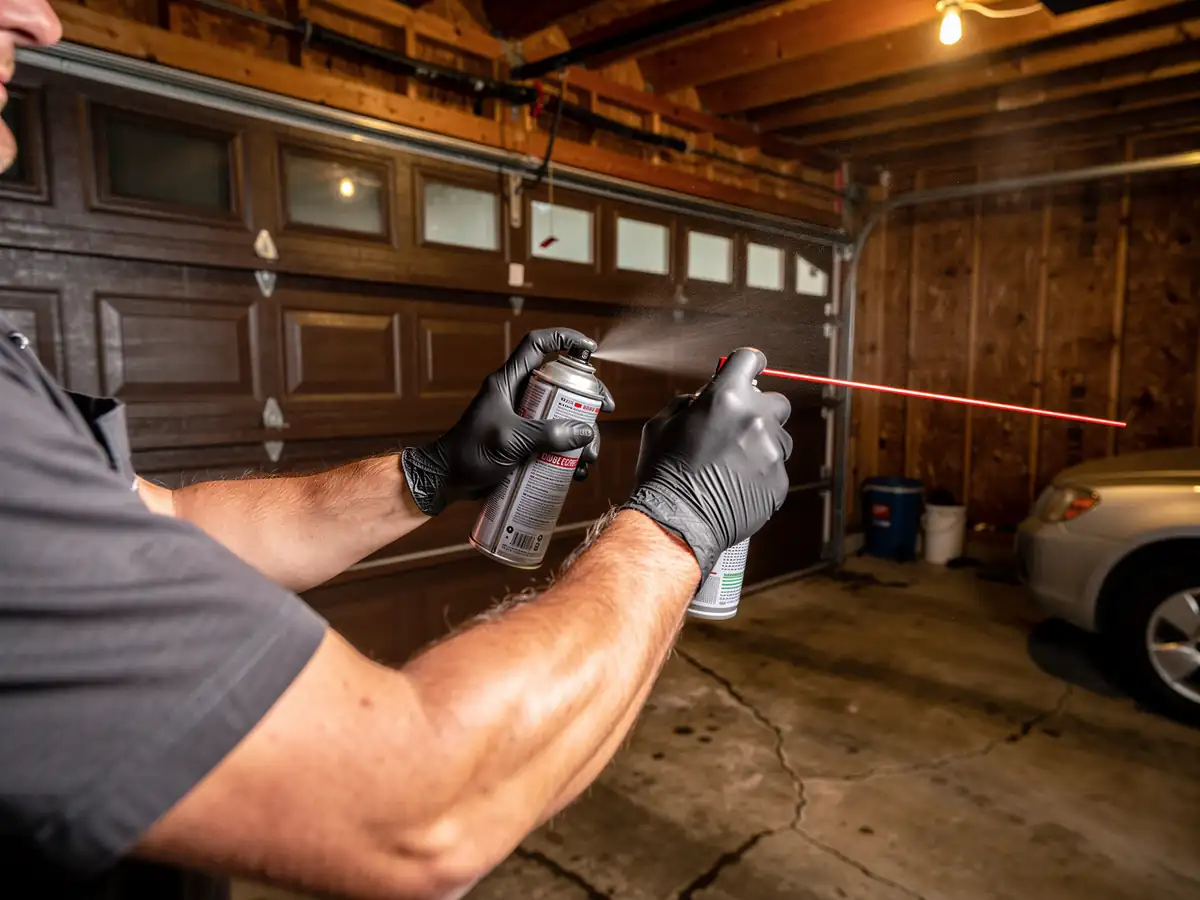
Not every noise or stiff spot needs a same-week call. If your door still opens and closes smooth and the spring isn't visibly gapped, a little WD-40 on the rollers and hinges can buy you time. A lot of the housing stock here went up between 1959 and 1999, with the median build year sitting around 1973 - so plenty of these doors and openers are original or close to it, and they've been running on the same hardware for decades without drama. If the door is quiet, level, and closes without reversing on its own, you're fine to wait. What you shouldn't wait on is a spring that's already separated, a cable that's frayed, or an opener that's grinding under load. Those get worse fast, especially once the cold sets in. We'd rather tell you to hold off and save the trip charge than run a call that doesn't need running - that's just how we'd want it done on our own house.
What Local Conditions Do
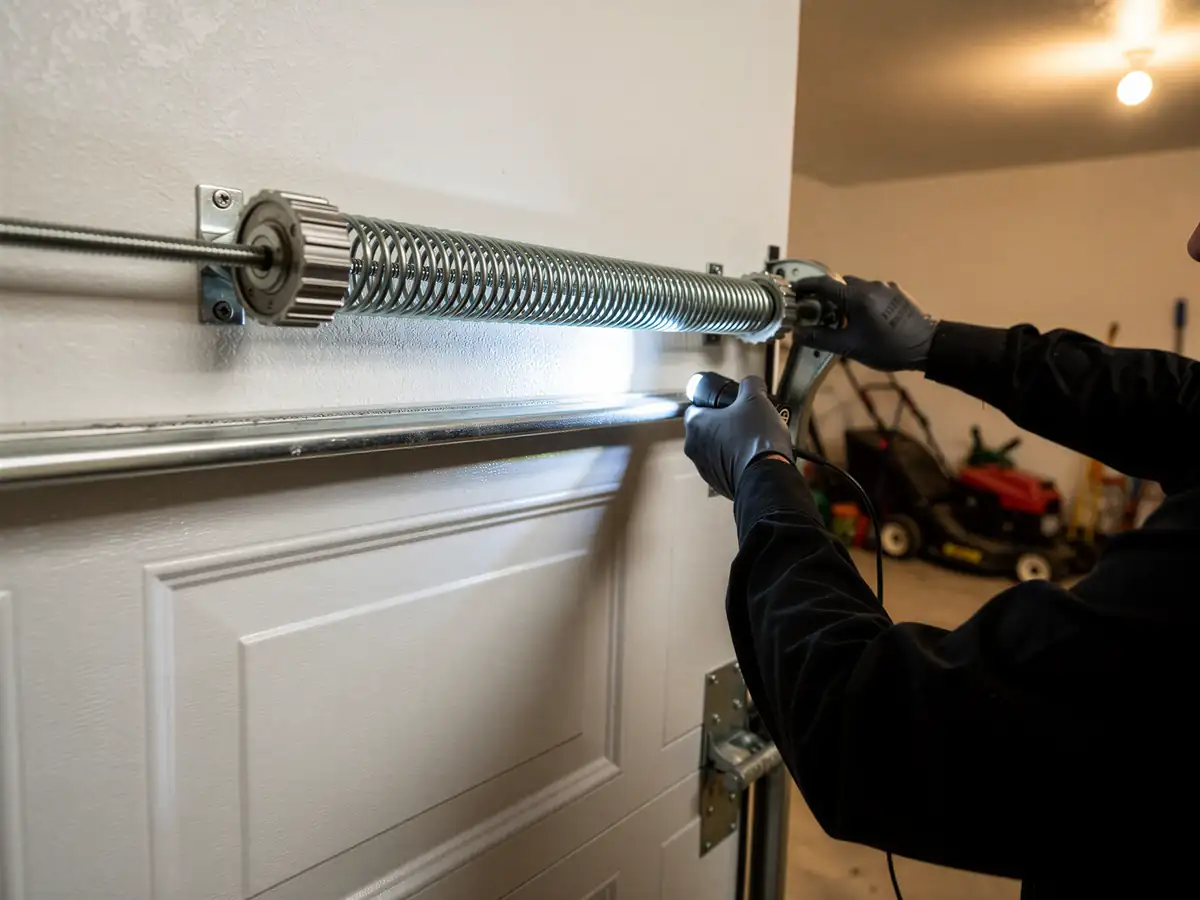
Edmond sits in a cold-moderate climate band, not the deep-freeze cold of the northern plains, but enough temperature swing through the winter to matter for steel and lubricant. Cold tightens galvanized torsion springs and stiffens standard grease on rollers and track, so a door that closed fine in October can start catching or hesitating by January. On older doors from the 1960s-70s stock common in this area, that stiffness shows up as the opener straining harder than it should, which shortens the life of the drive gear. A service call in this climate always includes checking spring tension under cold conditions, not just room temperature, because a spring that looks balanced on a mild afternoon can bind the next cold morning. We also check weatherstripping at the bottom panel, since original seals on a house this age have usually hardened and cracked from decades of temperature cycling.
What to Look At First
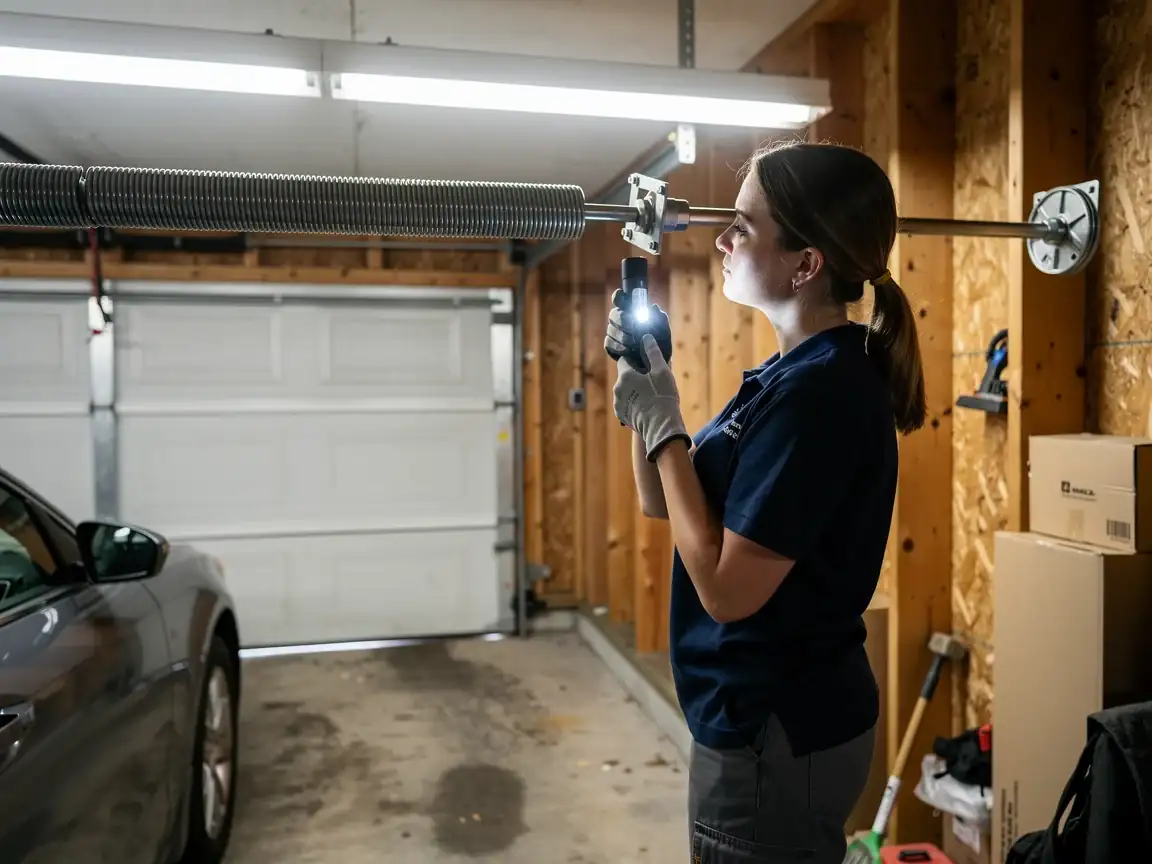
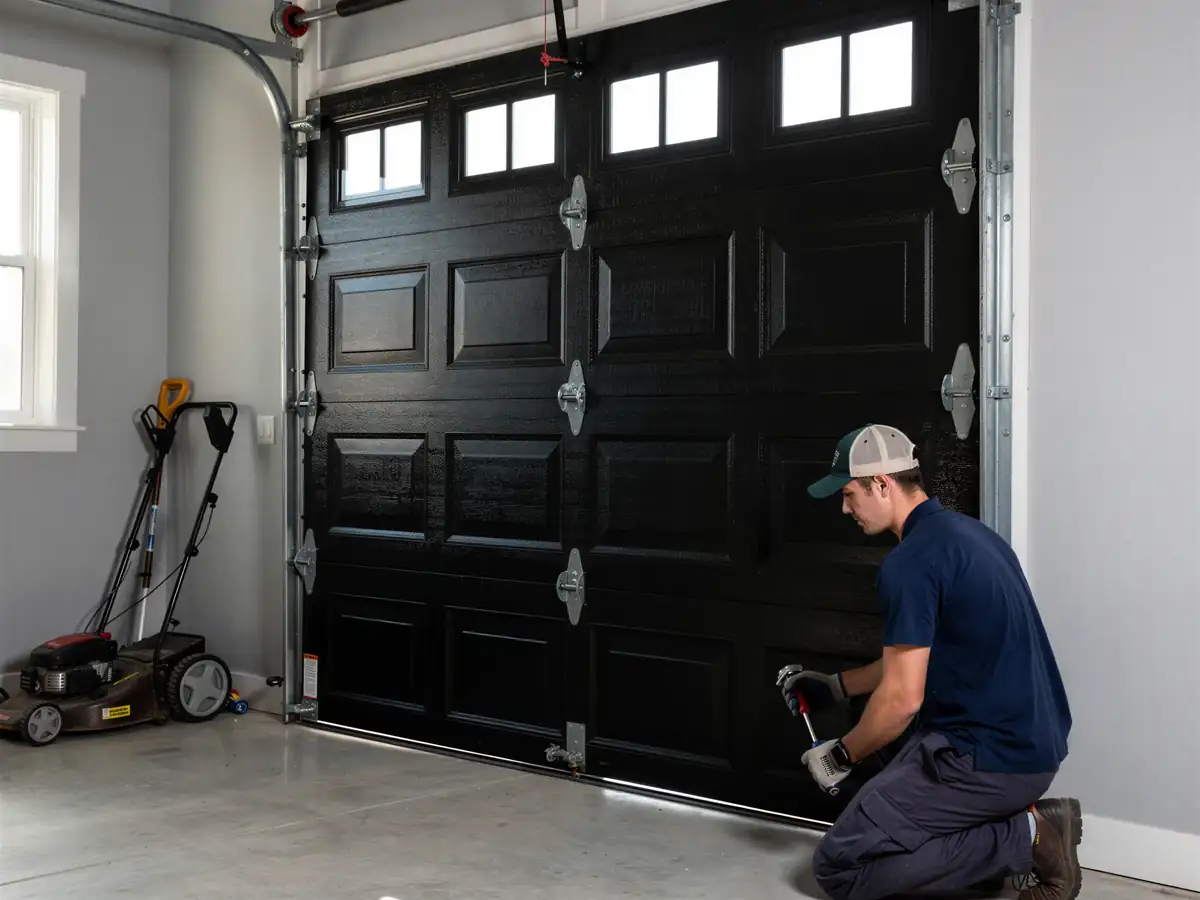
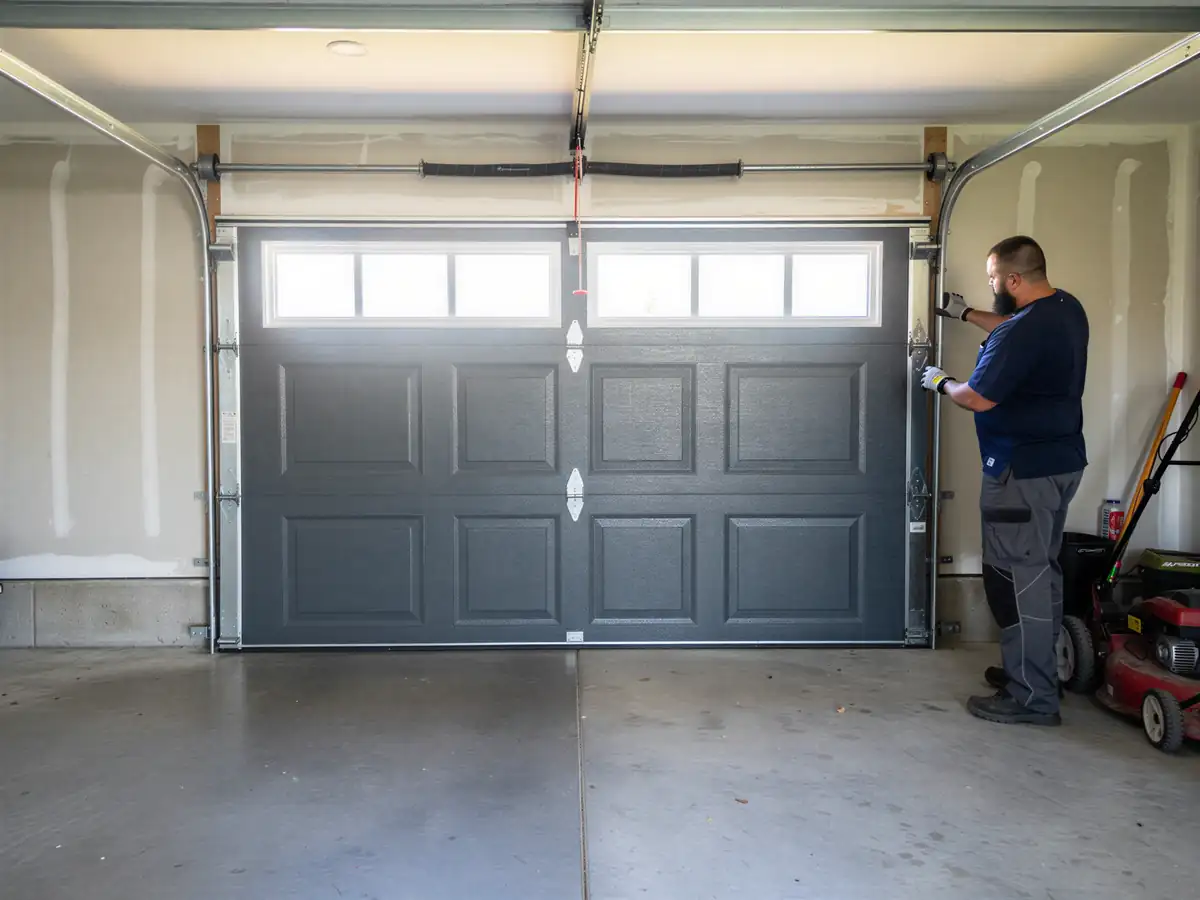
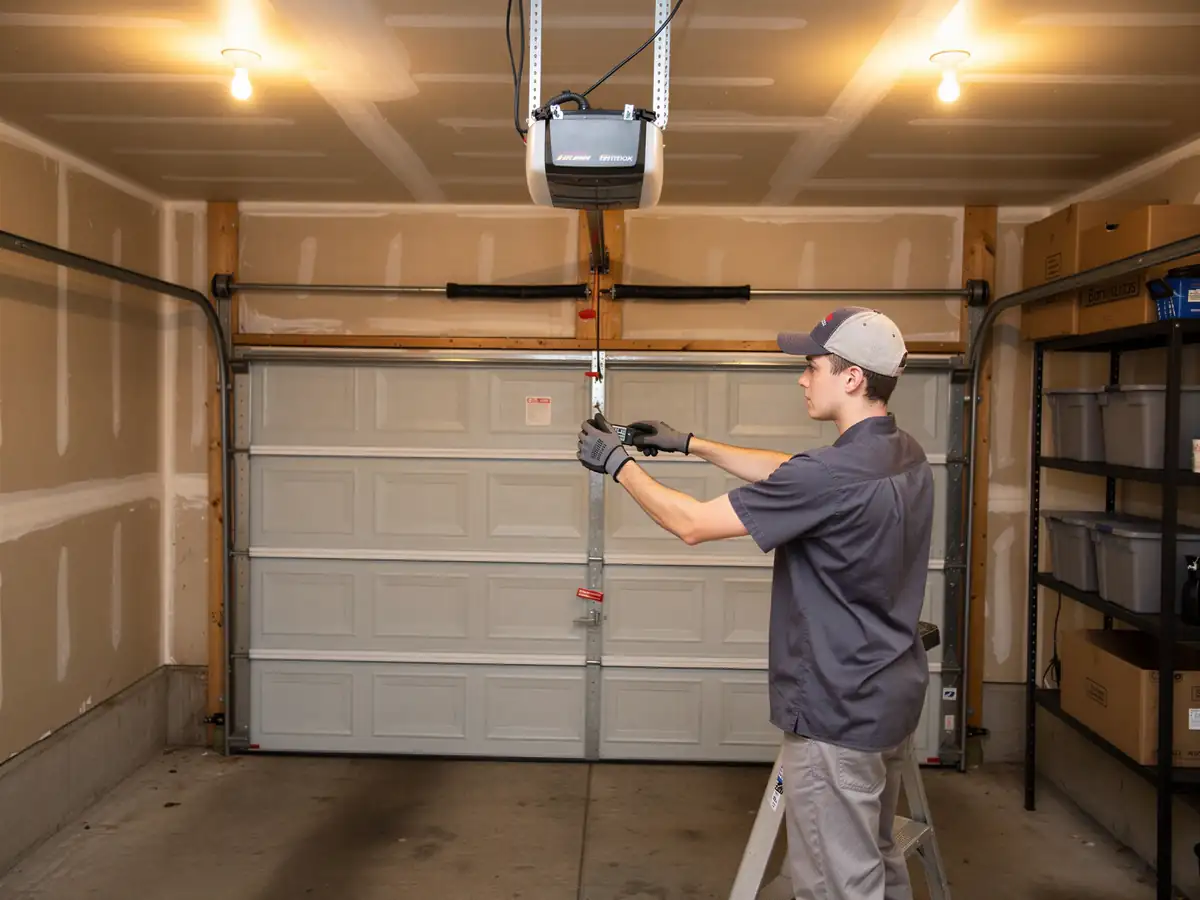
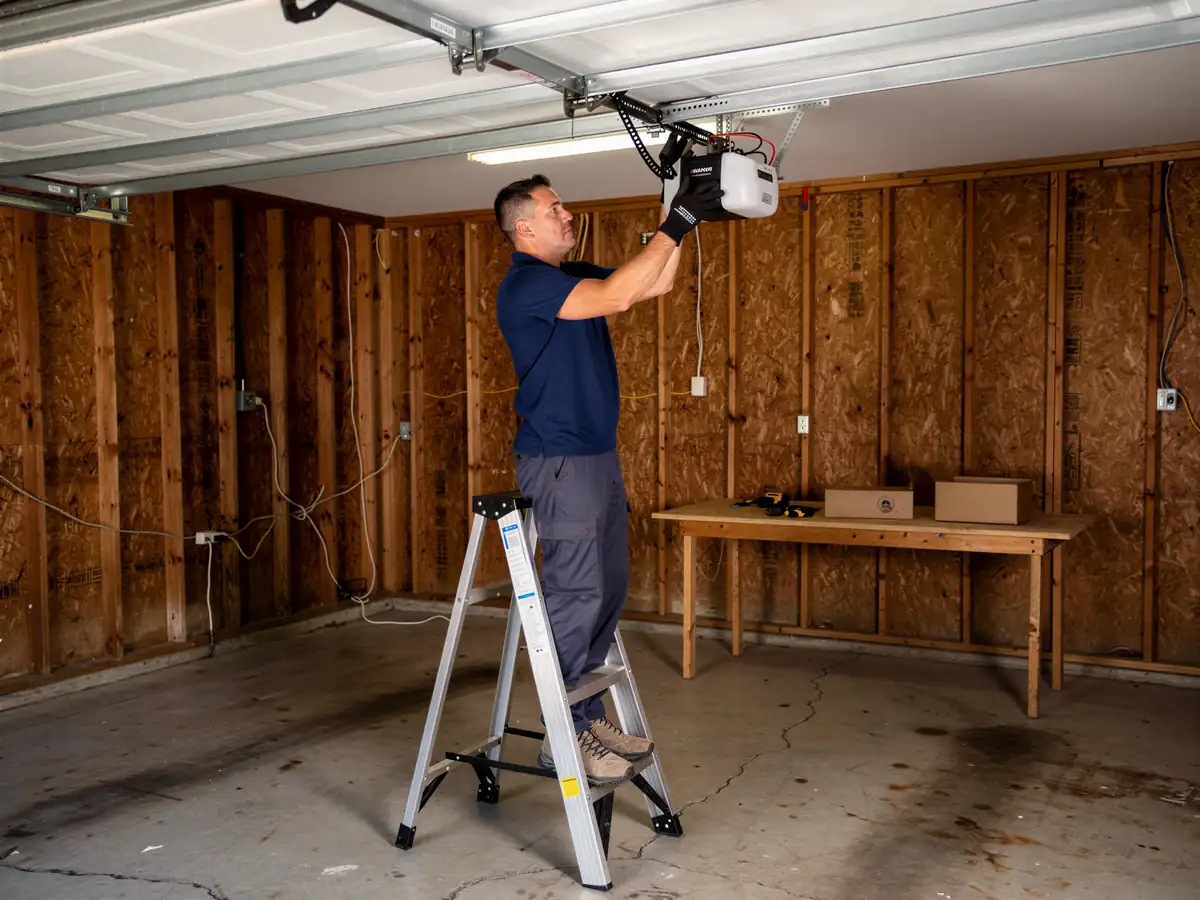
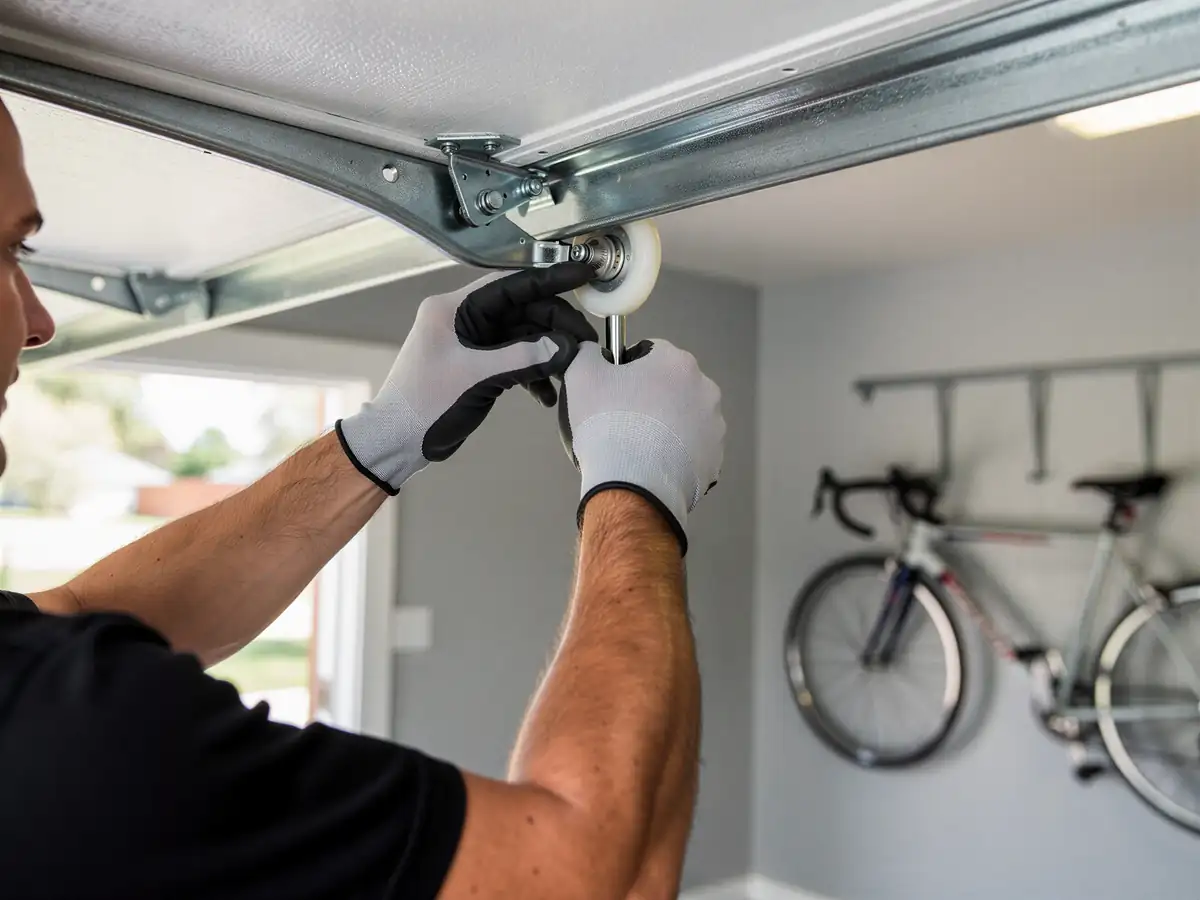
Start with the springs - on a door built anywhere near the median 1973 construction year, a standard torsion spring is rated for a set number of cycles and most of these are well past due, even if they haven't broken yet. Next, look at the bottom panel and rollers for rust pitting, which shows up more on original doors that have never been resealed. Check the opener's force setting if it's ever been adjusted, since over-tightened force on an older unit masks a spring that's already failing instead of fixing it. One honest limit: we don't carry replacement parts for every obsolete opener model still running in houses built before the 1980s, and sometimes the part has to be special-ordered, which can push a repair out by a few days. If that's the case, we'll tell you upfront rather than have you wait on a truck that isn't coming with the part.