Serving Edmond, OK & nearby
(405) 337-9834
Edmond, OK

Why Your Garage Door Keeps Jumping the Track in Edmond

Edmond's 1960s-70s housing stock and cold-moderate winters both push tracks out of line. Here's what causes it here and when it's safe to wait.

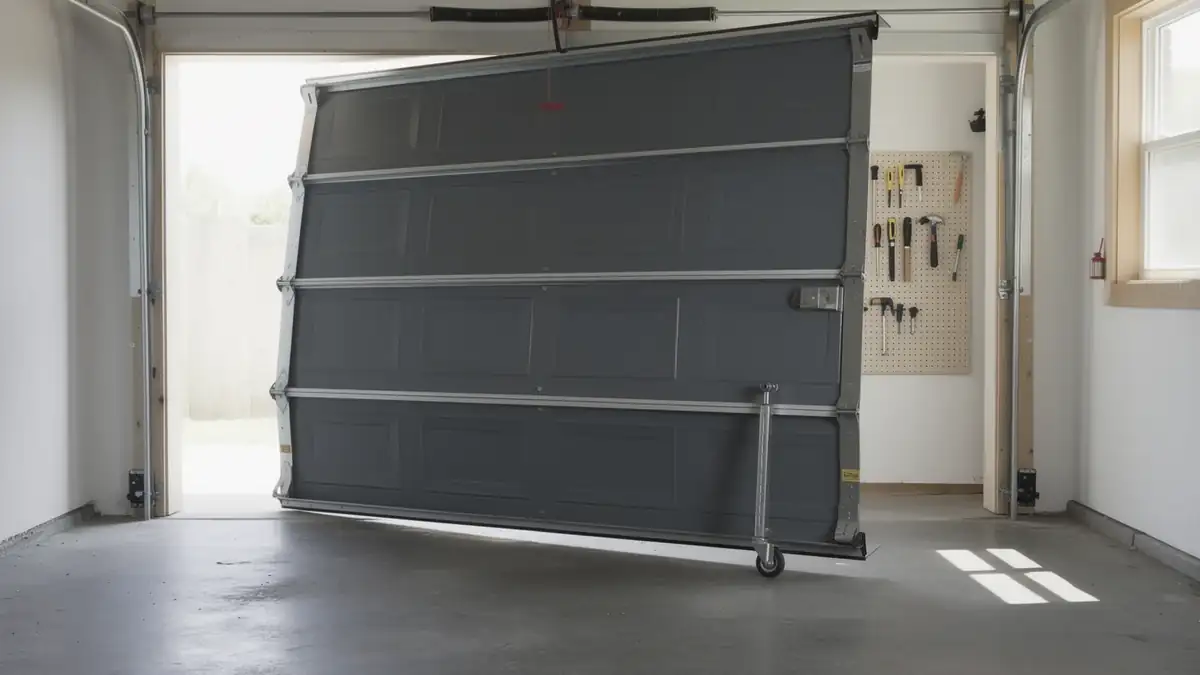
A gray garage door is partially open, with a roller stand supporting its bottom edge.

When Waiting Is Fine

Not every off-track door is an emergency. If the door still closes all the way and the rollers are only rubbing the edge of the track rather than hanging out of it, you can usually wait a week or two to get it looked at. A door that's been sitting fine since the 1970s on its original hardware isn't going to fail in the next 48 hours just because one roller has started tracking wide. What changes the math is if the door binds hard enough that the opener strains against it, or if a cable has started to fray near the drum - at that point the wait is over, because a track problem combined with a loaded spring system can let a panel drop. Most of what we see in Edmond sits in the middle: a door that's noticeably louder, pulls slightly to one side going up, or needs a shove partway through the cycle. That's wear showing up gradually on hardware that's been doing its job since the house was built, not a sudden break. If your door is quiet and square, there's no reason to call before you've read the rest of this page and checked the three or four things that actually cause it.

The Situation

Most of Edmond's housing went up between 1959 and 1999, with the median build year landing around 1973, and that's true across most of the roughly 20 named areas that make up the city. A door and track system installed in a house built in the early-to-mid 1970s has had five decades of thermal cycling to work bolts loose, bend a track bracket a few degrees, or wear a roller stem down to where it no longer sits flush in the channel. None of that shows up as a single dramatic failure. It shows up as the door riding slightly crooked, catching on one side, or popping off the lower track roller during the last foot of travel. Houses from this era typically used steel tracks bolted directly to wood framing rather than engineered jamb brackets, and after enough years those bolts back out a turn or two without anyone noticing until the door starts drifting. This isn't a defect in how the house was built - it's just what happens to track hardware that's been in service since before most of the neighborhood's current owners moved in.

What Local Conditions Do

Edmond sits in a cold-moderate climate band, which means the ground under a slab foundation goes through real freeze-thaw cycles most winters, not constant deep freeze and not a climate where the soil stays stable year-round. That cycling moves a slab a small amount, and a garage door track bolted to framing that sits on a shifting slab edge will move with it, even if only a fraction of an inch per cycle. Over a house built in the 1960s or 70s, that fraction adds up to a track that's no longer plumb the way it was the day it went in. You'll usually notice it first in late winter or early spring, right after a stretch of freezing nights followed by a thaw - the door that closed fine in October suddenly needs a nudge to clear the track guide. Summer heat does the opposite, expanding metal brackets slightly and sometimes masking the exact same misalignment for a few months. Neither extreme breaks a track on its own. It's the repeated swing between the two, year after year, that walks bolts loose and nudges brackets out of line on hardware this old.

What to Look At First

Before assuming the track itself is bent, check the brackets that hold it to the frame - on a house from this era they're often lag-bolted straight into wood, and those bolts are the first thing to work loose after years of freeze-thaw movement. Grab the bracket with your hand while someone runs the door partway and see if it flexes. If it does, that's usually a tightening job, not a replacement. Next, look at the rollers themselves: stems worn thin or wheels that have gone oval from age will ride wide in the channel even on a perfectly straight track, and on original 1960s-70s hardware that's a common failure point simply from decades of cycles. Last, sight down the track from the bottom - a track that's visibly bowed or kinked, as opposed to just loose at the brackets, usually means something hit it at some point, and that's a repair we can't just re-tighten our way out of. One honest limit here: if the vertical track itself is bent rather than just loose, straightening it rarely holds for long, and replacing that section is usually the better call than fighting it twice.
How it works

From “it’s stuck” to “it’s fixed”

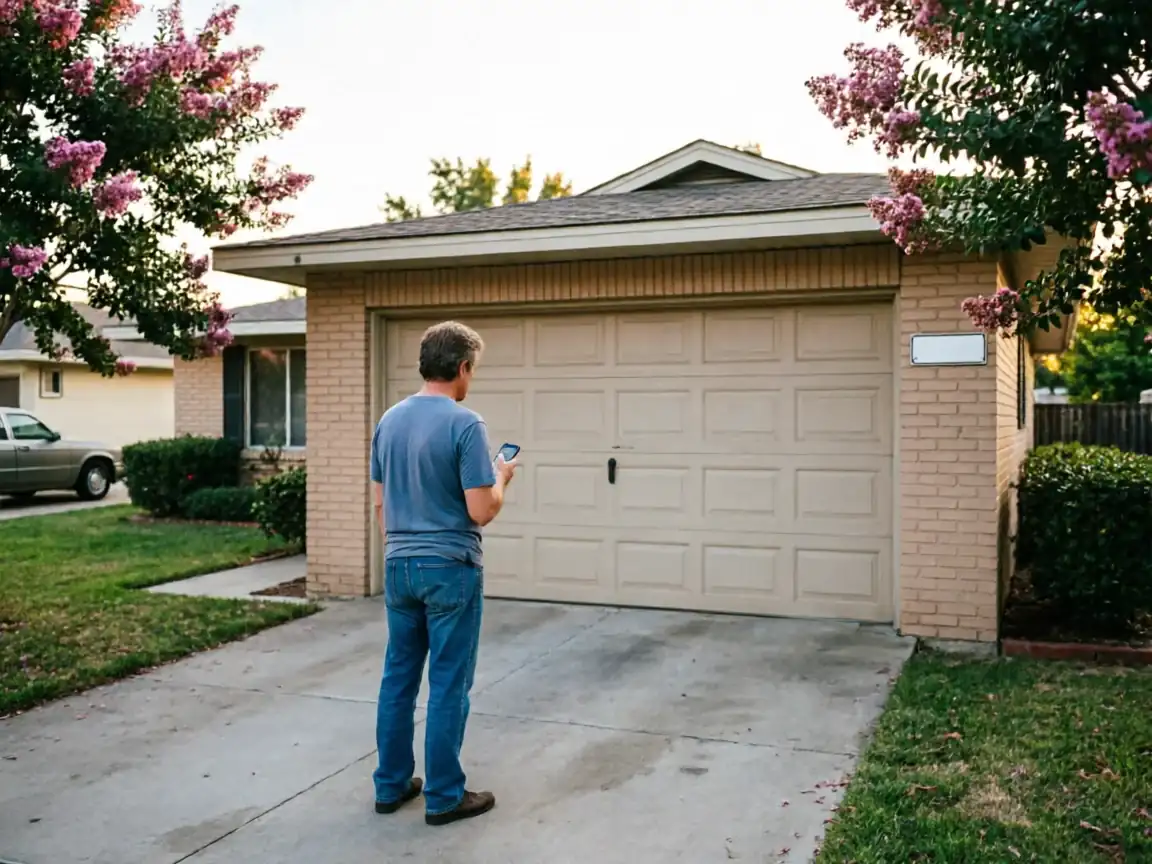
A man stands in a driveway looking at his phone in front of a garage door.

Tell us what’s wrong

Describe the symptom - won’t open, loud bang, opener runs but the door won’t move.

A technician shines a flashlight on a garage door torsion spring.

On-site diagnosis

A technician tests the door under power and by hand and finds what actually failed.

A technician talks to a woman in front of a brick house with an open garage.

Clear, up-front plan

You get the fix that’s needed and what drives the cost - before any work starts.

A technician points at an open white garage door with windows from inside a garage.

Repaired & tested

The repair is done, the door is set true and tested, and the work area left clean.

Not sure which repair your door needs in Edmond, OK? Describe what it’s doing - every job starts with a diagnosis.

How we work

What to expect

Diagnosis firstEvery visit starts by finding what actually failed - not a pre-written parts list.
The right part for the doorSprings and openers matched to the door’s weight and age, so the fix holds up.
Straight answersWhen a repair makes more sense than a replacement - or the reverse - you hear it plainly.
Clean, careful workTension released safely, hardware set true, the door tested under power before we leave.
What we do

Garage Door Services

Repair and installation work for Edmond homes and businesses.

A technician kneels to work on the bottom panel of a black garage door.

Garage Door Repair

Edmond homes built between 1959 and 1999 often run original torsion hardware that struggles through cold winters. Edmond Garage Door Pros repairs it right.

Learn more
A technician adjusts a closed gray garage door with windows in a garage.

Garage Door Installation

New garage door installation for Edmond homes built 1959-1999, sized for original openings and framed for cold-climate wind load. Call for a measured quote.

Learn more
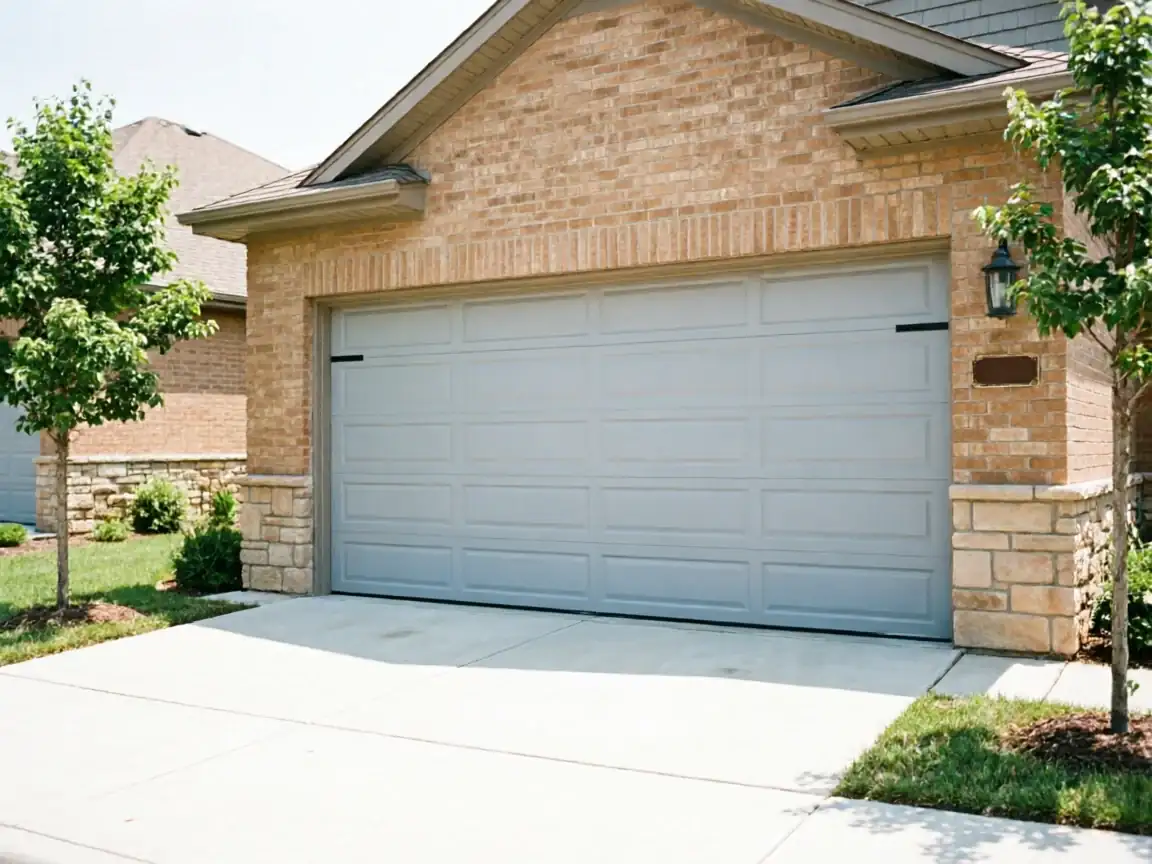
A light gray garage door is on a brick house with stone accents.

Garage Door Service

Garage door repair and tune-up service for Edmond homes built mostly in the 1960s-70s, where original torsion springs and openers are now past their working life.

Learn more
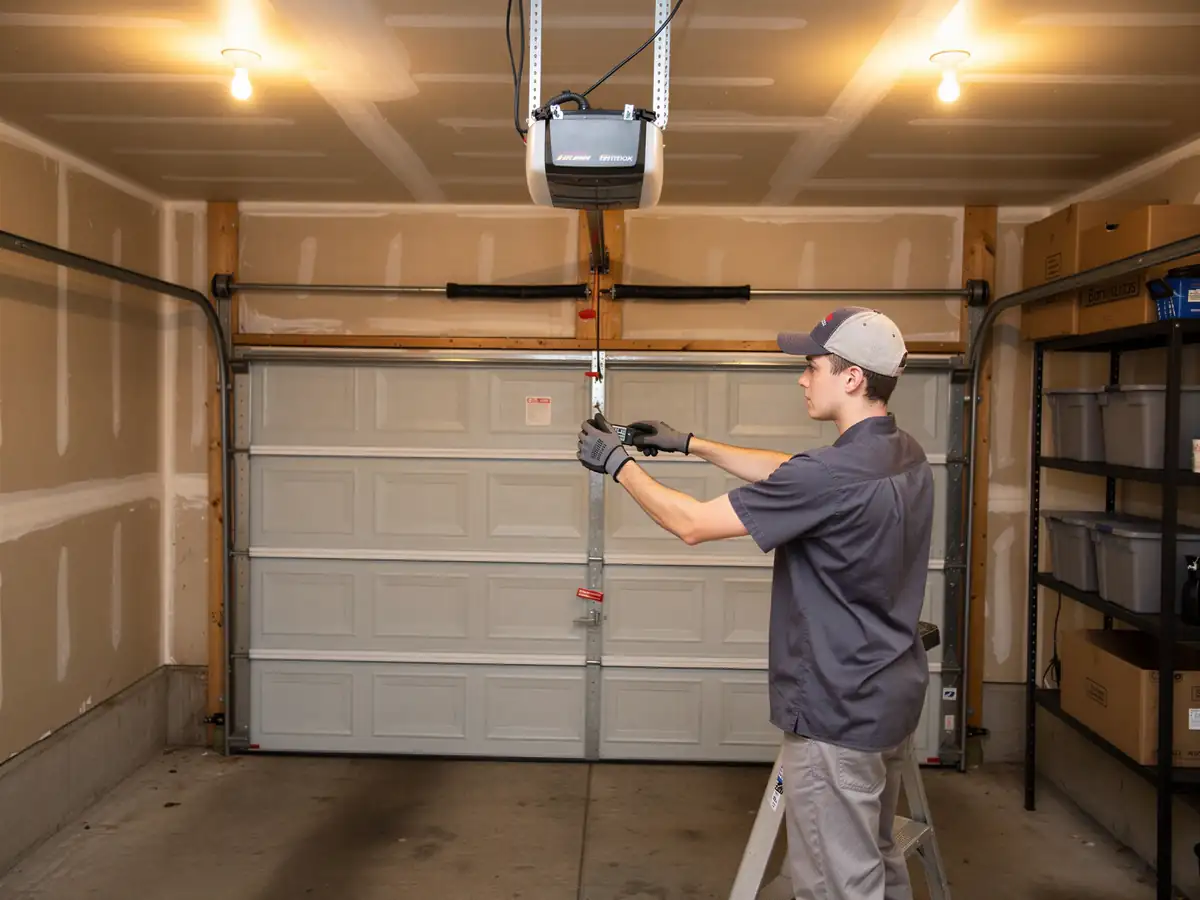
A technician on a ladder adjusts a garage door opener's safety sensor.

Opener Repair

Opener repair for Edmond-area homes built mostly in the 1960s-70s, where original hardware and cold winters wear out drive gears and circuit boards together.

Learn more
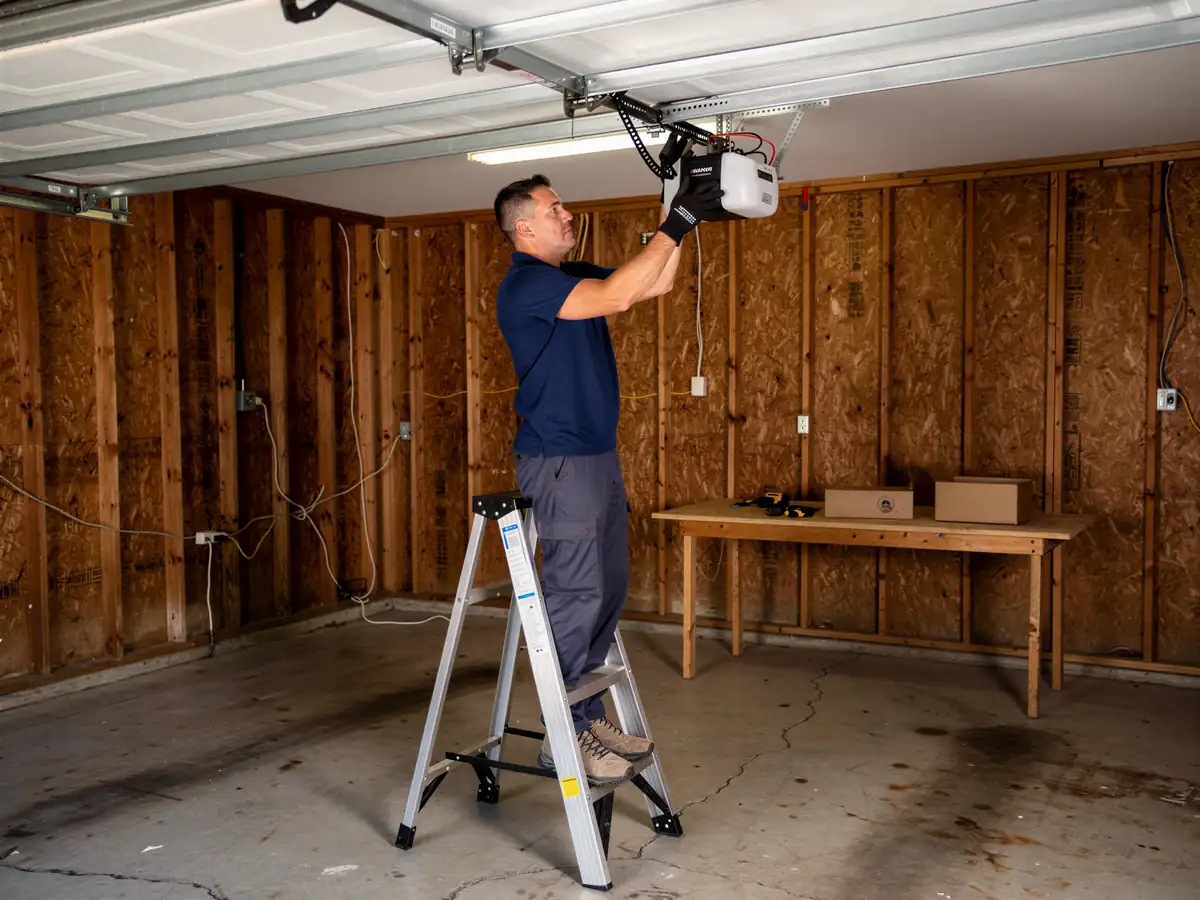
A technician on a ladder installs a garage door opener in a garage.

Opener Installation

Opener installation for Edmond's 1960s-90s housing stock and cold-moderate winters. Belt, chain, and screw-drive units matched to your door's age and track.

Learn more
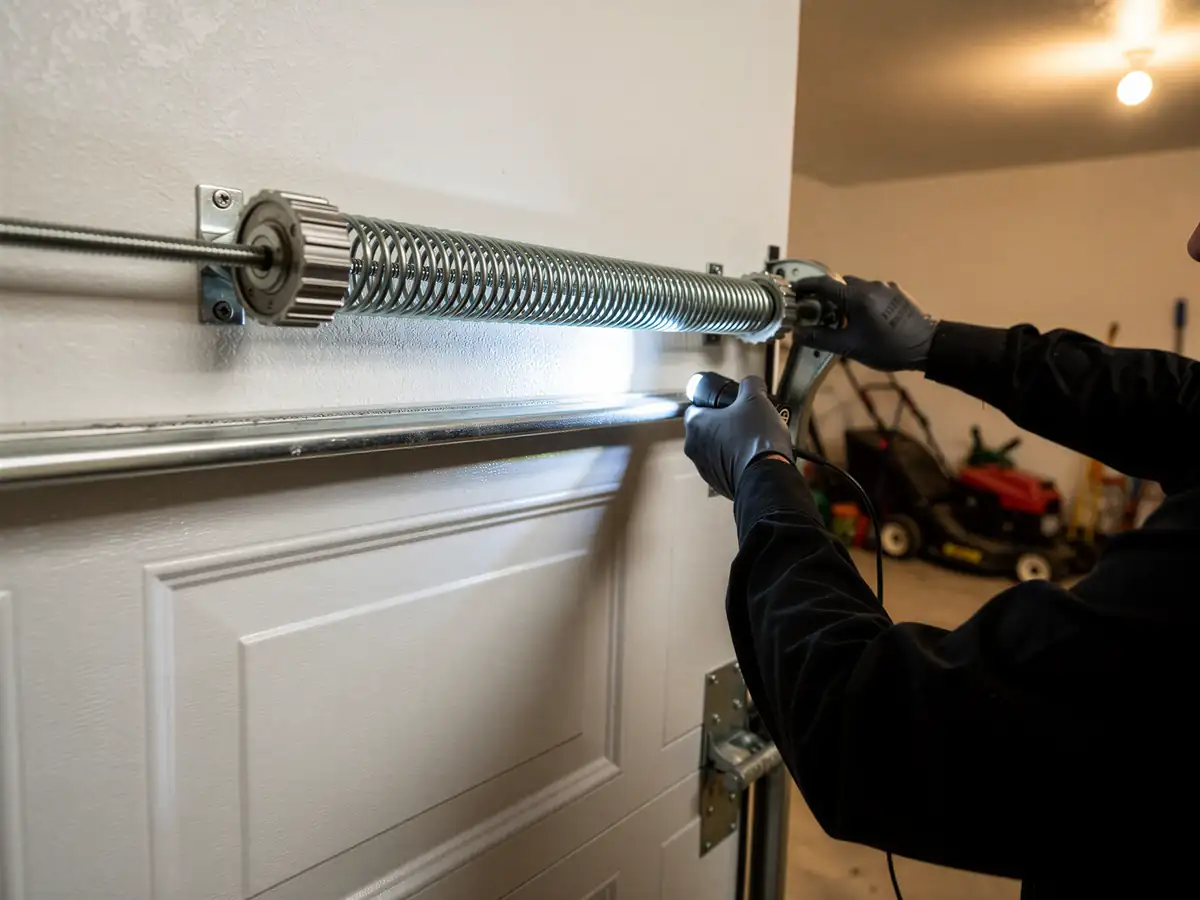
A technician in black gloves works on a garage door torsion spring.

Spring Repair

Broken torsion or extension spring on an Edmond, OK garage door? We explain what's involved, what to watch for, and why this area's housing stock sees it so often.

Learn more
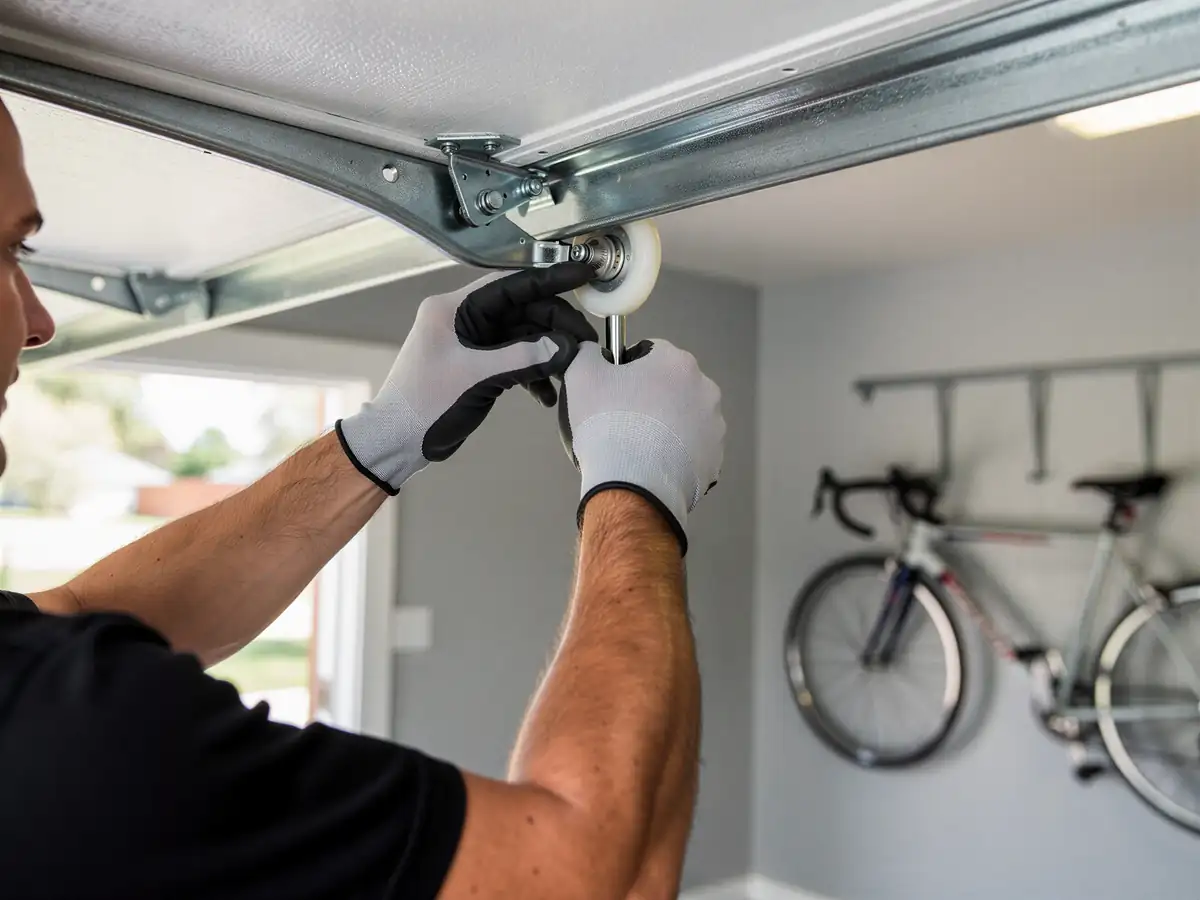
A technician in gloves adjusts a garage door roller on its track.

Roller Replacement

Steel rollers on 1960s-70s Edmond homes wear out and bind. We replace them with nylon rollers built for cold-moderate swings. Service across the Edmond area.

Learn more
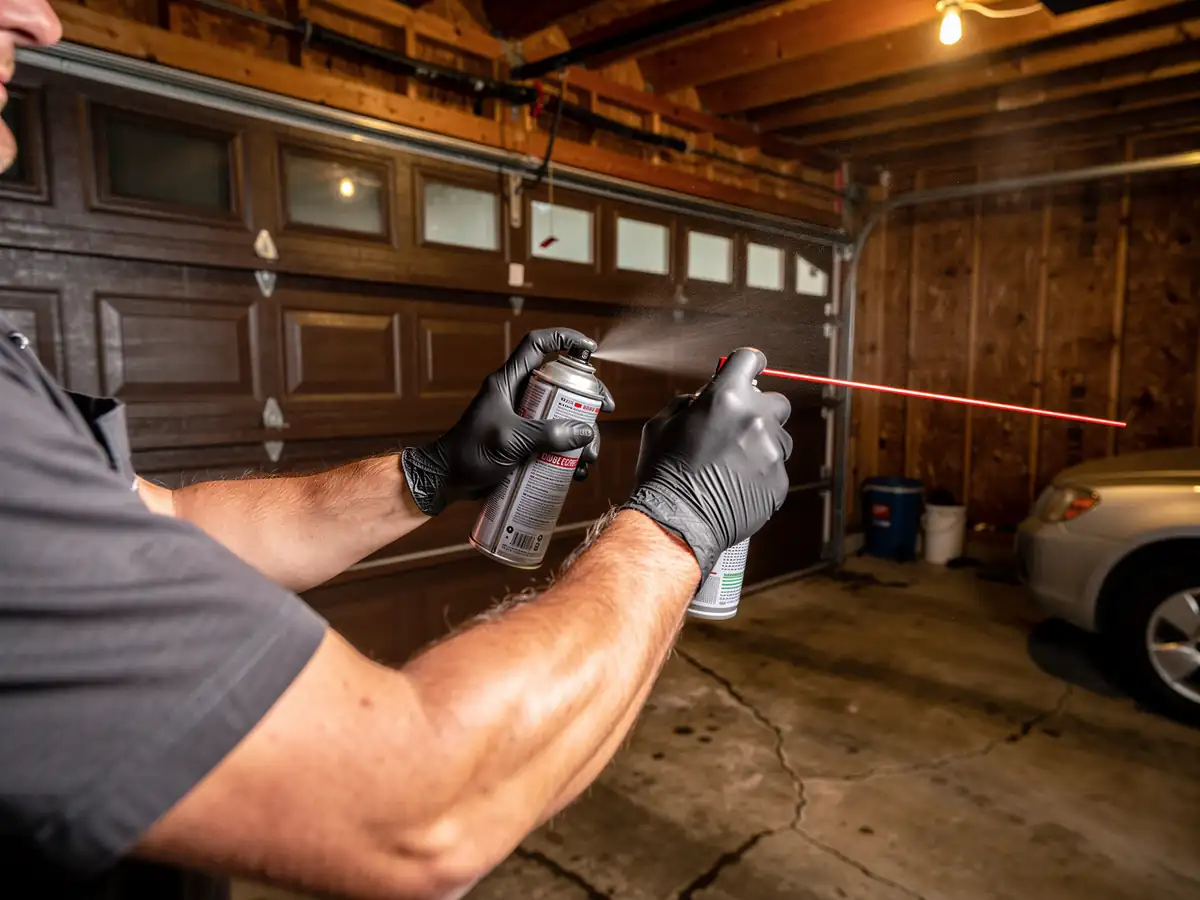
A technician sprays lubricant from two cans in a garage with a brown door.

Maintenance

Garage door maintenance for Edmond, OK homes built mostly 1959-1999 in a cold climate band - what a real tune-up covers, what fails first, and when it's a repair call instead.

Learn more
Questions

Frequently asked

Straight answers about garage door repair in Edmond. Still unsure? Ask us directly.

Why did my garage door suddenly start coming off the track this winter?

In Edmond's cold-moderate climate, the freeze-thaw cycle through winter and early spring shifts slab edges slightly, and on houses built in the 1960s-70s era, track brackets bolted to wood framing move with it. A door that ran fine all summer can start drifting once that cycling starts, especially if the bolts were already a little loose.

Is a bent track always a full replacement?

Not always, but a visibly bowed or kinked section rarely stays straight after you bend it back - it tends to drift again within months. If the bend is minor and the rest of the track is sound, straightening can buy time. If it's pronounced, replacing that section holds up better than repeated re-bending.

My door only comes off track on one side - does that mean one bracket is bad?

Usually, yes. On Edmond's older housing stock, it's common for one side's brackets to loosen before the other, especially the side that gets more direct sun or sits closer to a slab edge. Check that side's bolts first before assuming the whole track needs attention.

Ready to get your garage door sorted?

Tell us what it’s doing and where you are in Edmond - we’ll take it from there.

Request a QuoteCall