The Complications
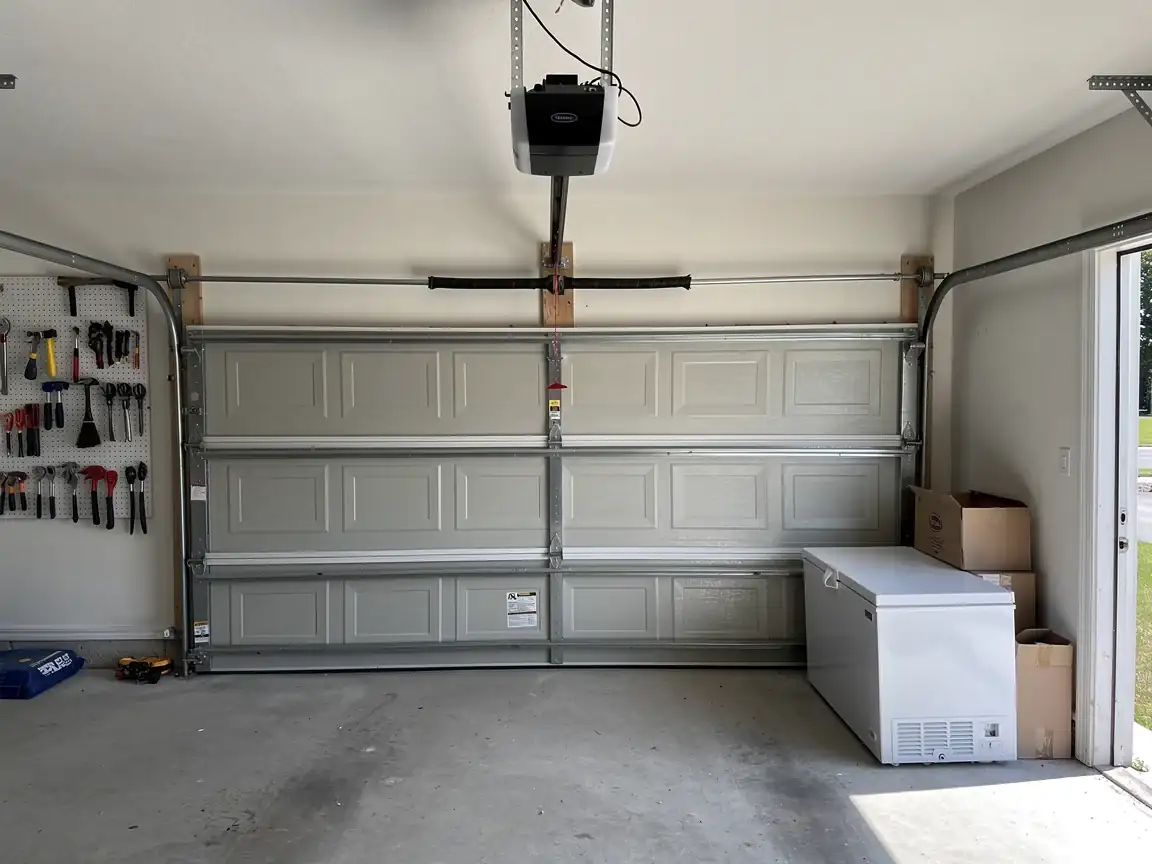
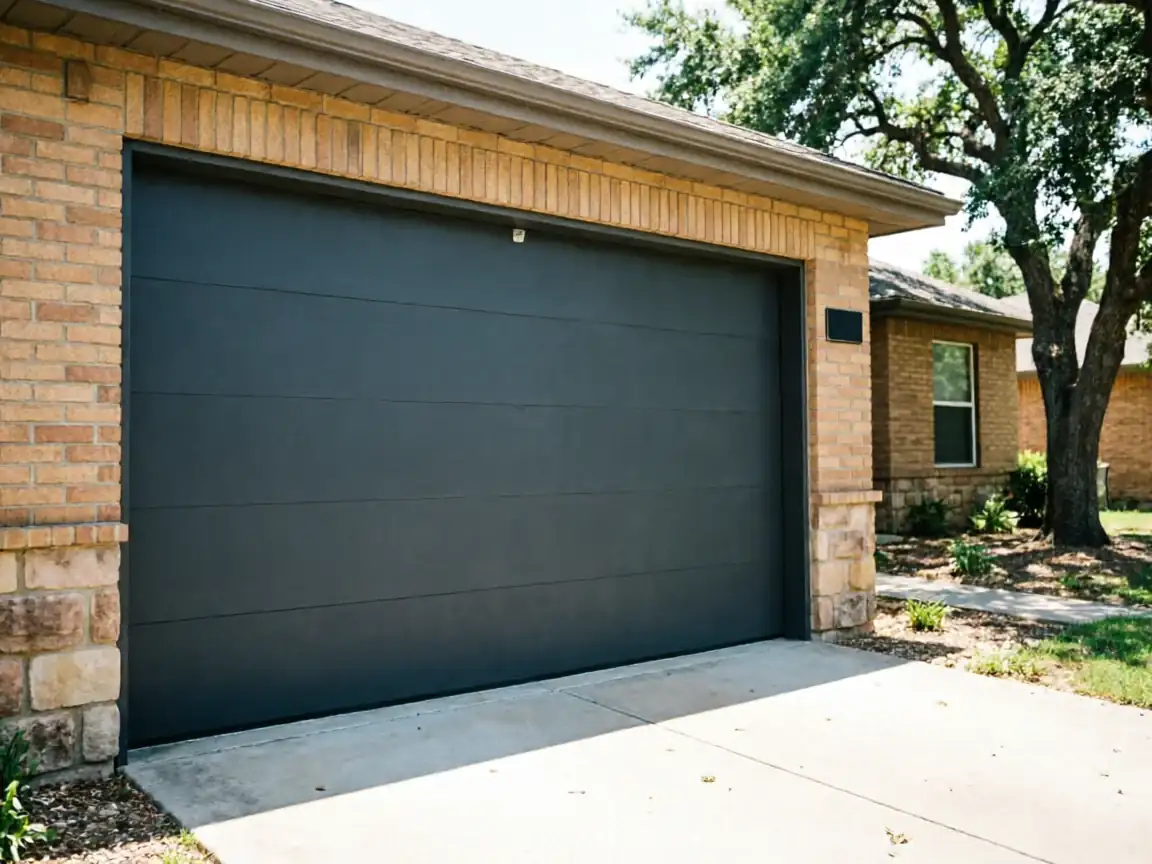
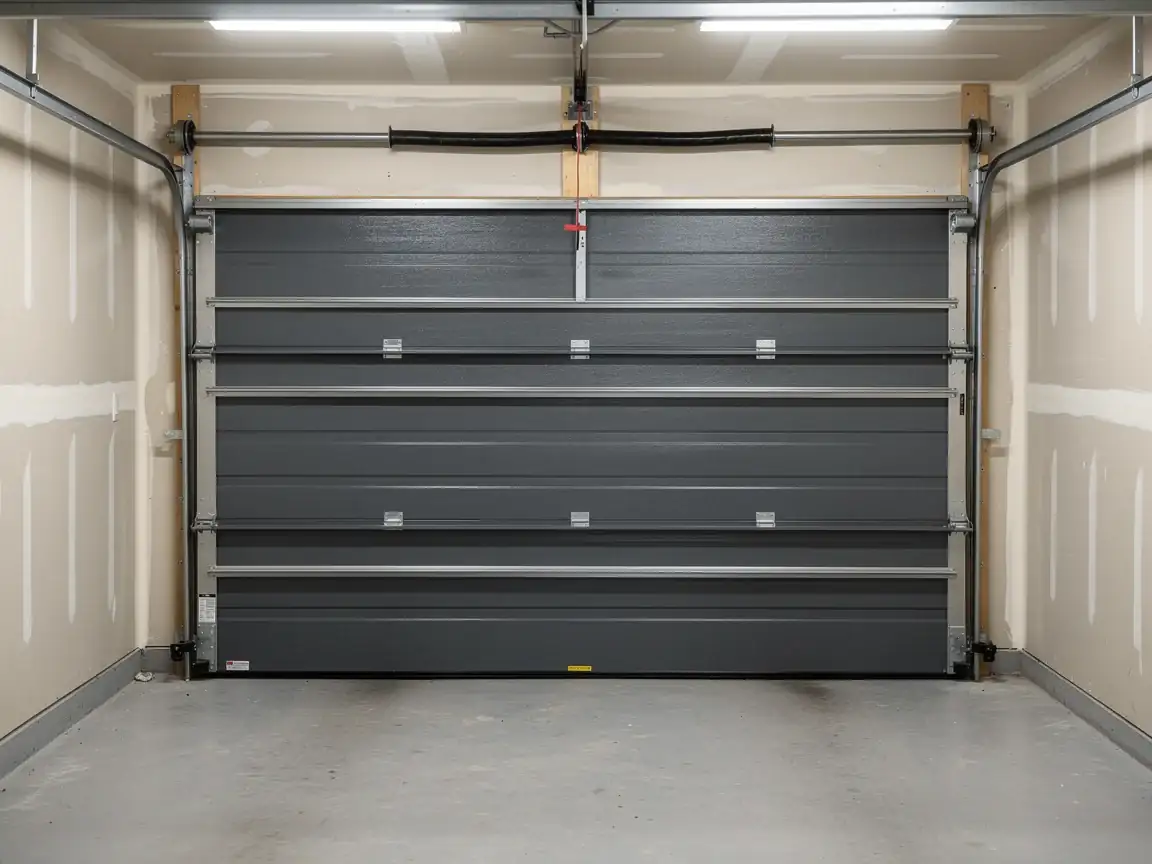
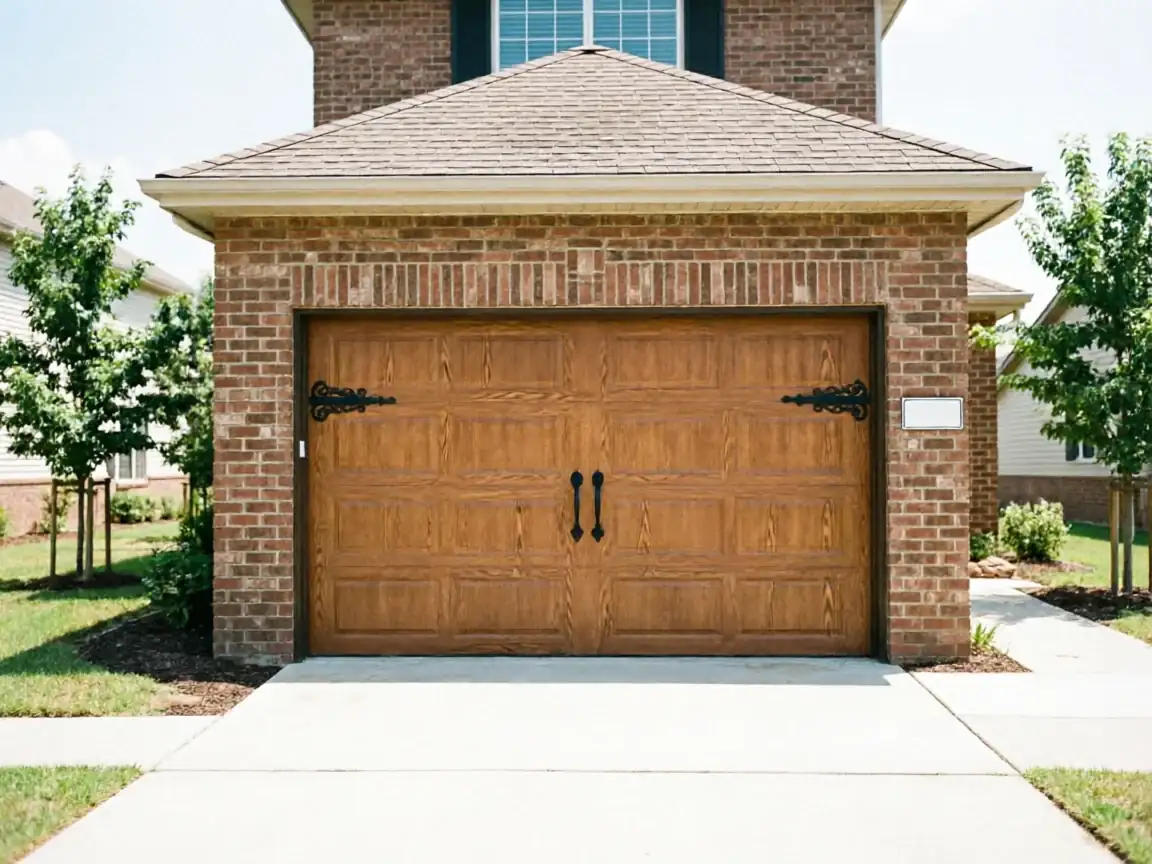
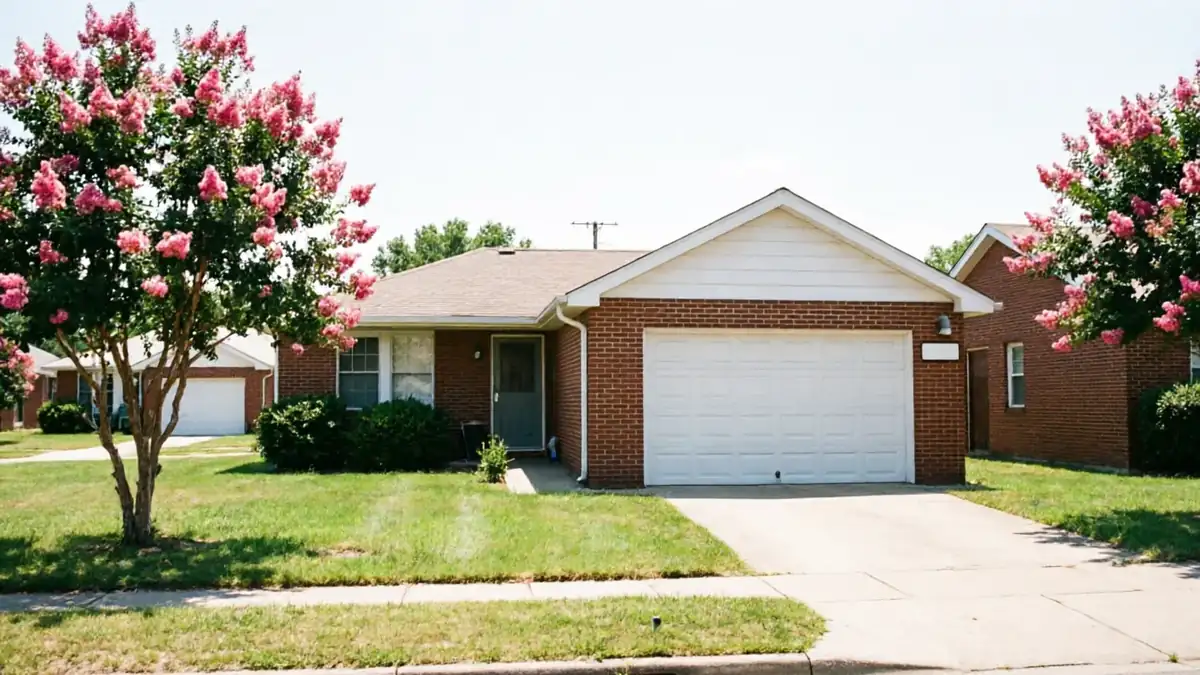
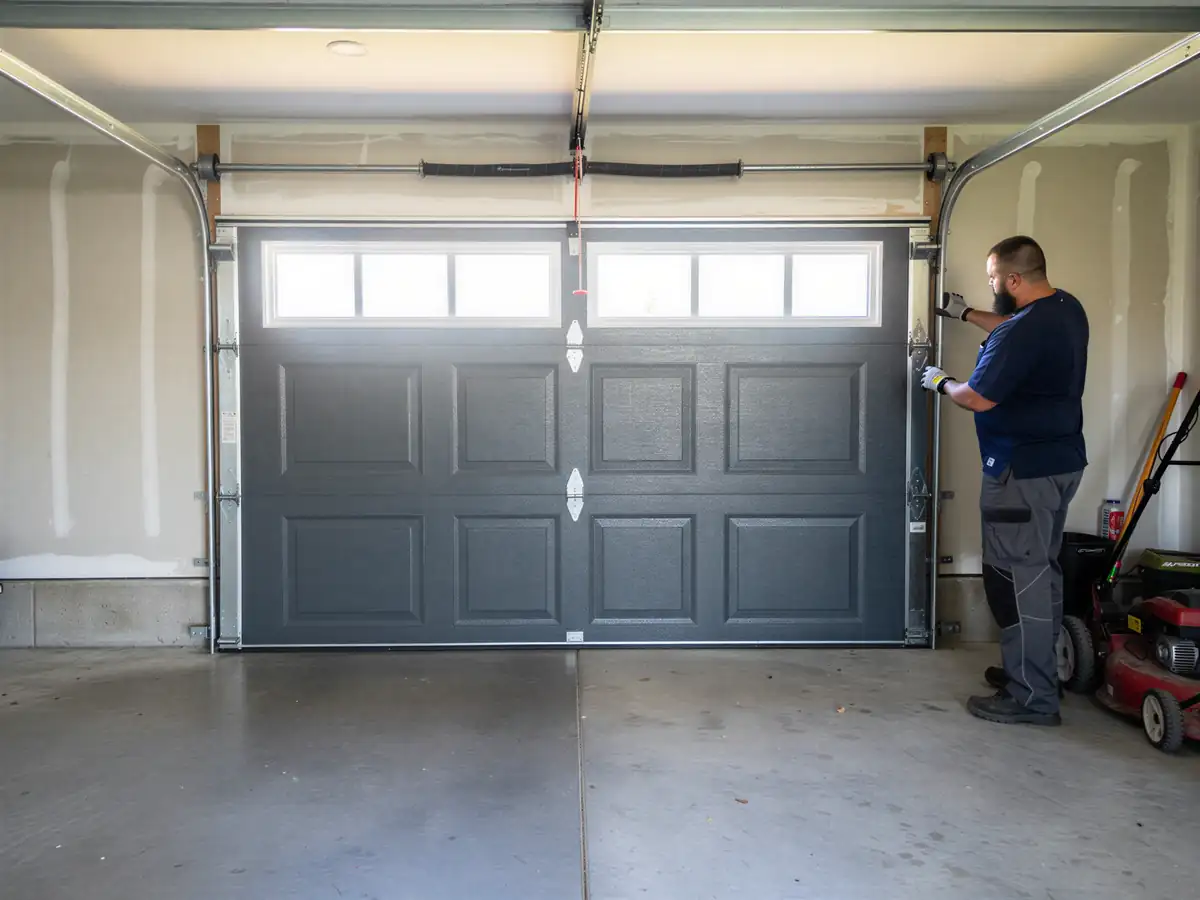
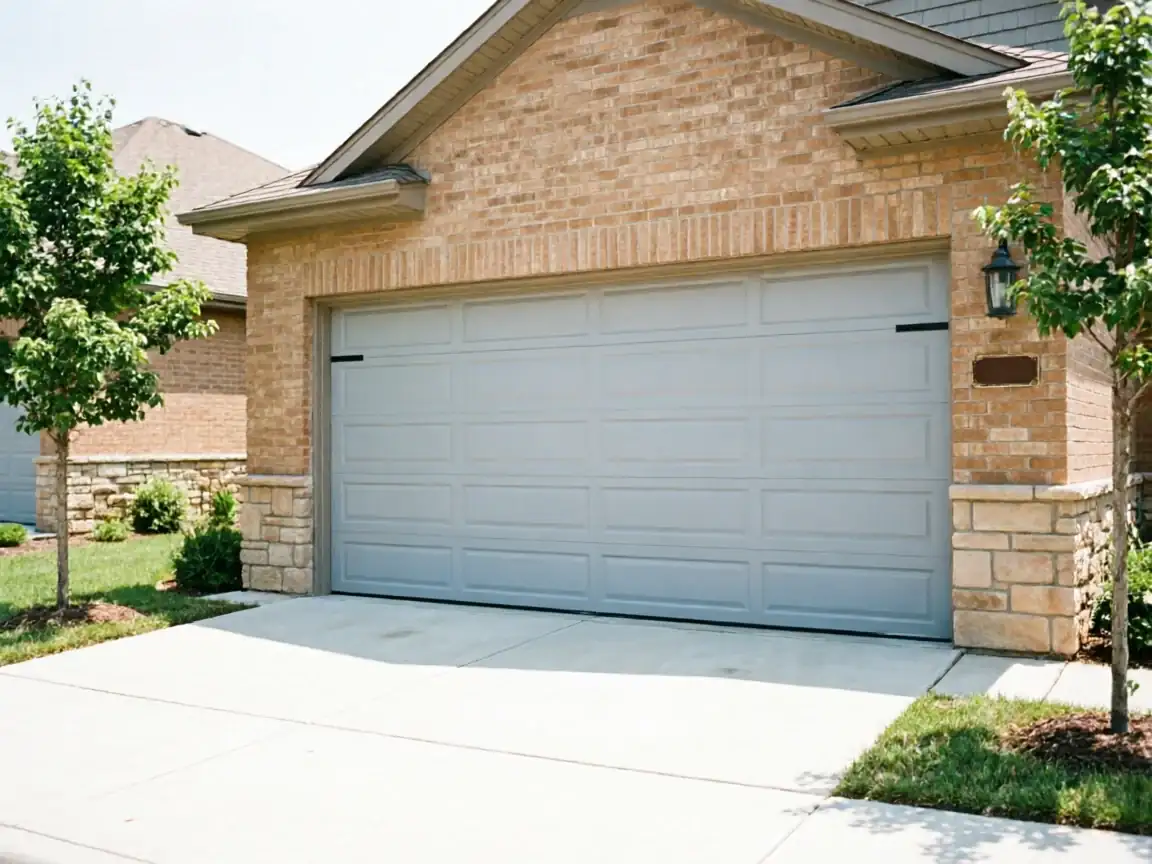
Piedmont's housing stock skews newer than most of the towns we cover out of Edmond. Where a lot of this service area was built in the 1960s and 70s, Piedmont's median year built runs closer to 1999 - call it a generation younger. That matters for garage doors because it changes what's actually hanging in the opening. A house from 1999 almost never has the old side-mounted torsion hardware or the heavy one-piece slab doors that show up in the older pockets of this area. You're more likely looking at a sectional steel door on a standard torsion spring mounted above the opening, paired with a chain or belt-drive opener from that era or a replacement installed sometime since. The complication isn't finding parts - that hardware is common. It's that a lot of these openers and springs are now over twenty years old, which is right around when steel springs fatigue and circuit boards in older openers start failing regardless of how well the door was maintained. Cold snaps make brittle springs worse, and this area sits in a moderate-cold climate band where temperature swings put extra stress on aging steel. We're not guessing at a torsion conversion job here the way we might two towns over - we're usually dealing with a door that was built right the first time and is just getting old.
What the Fix Involves
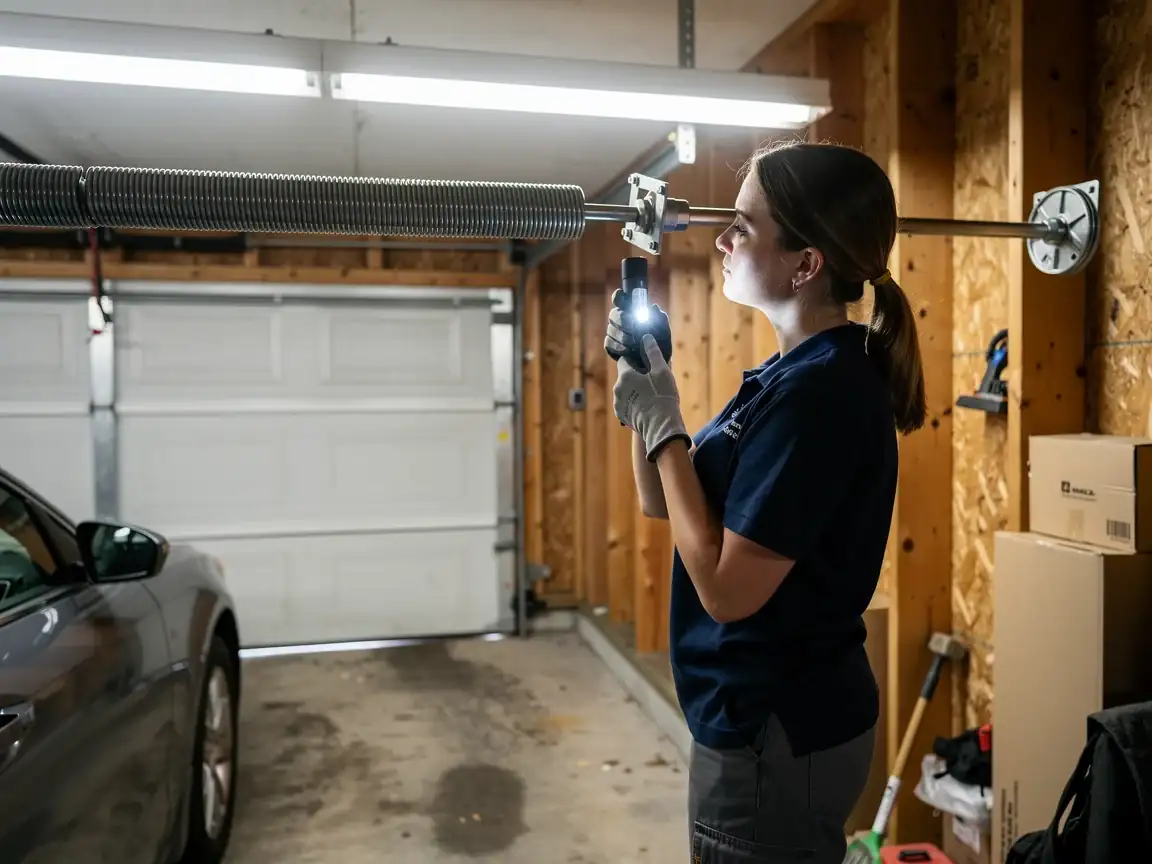
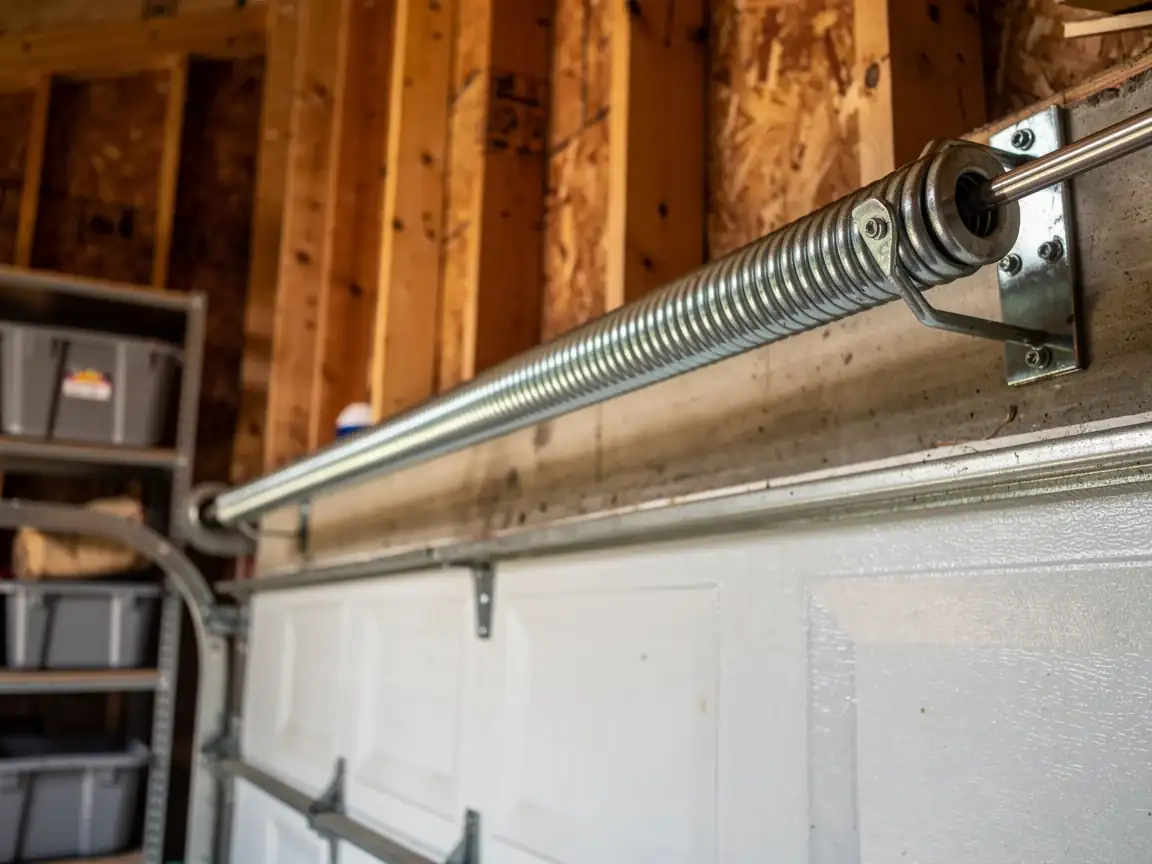
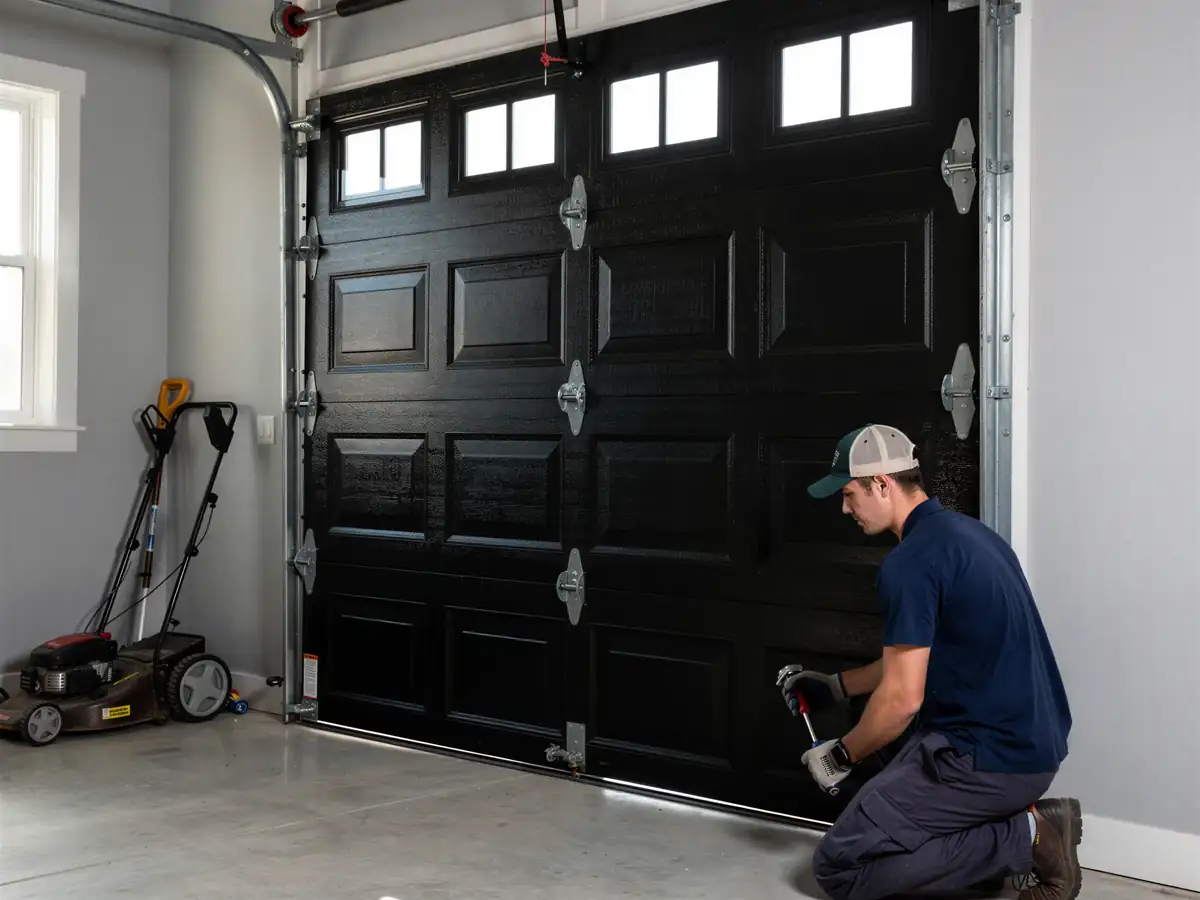
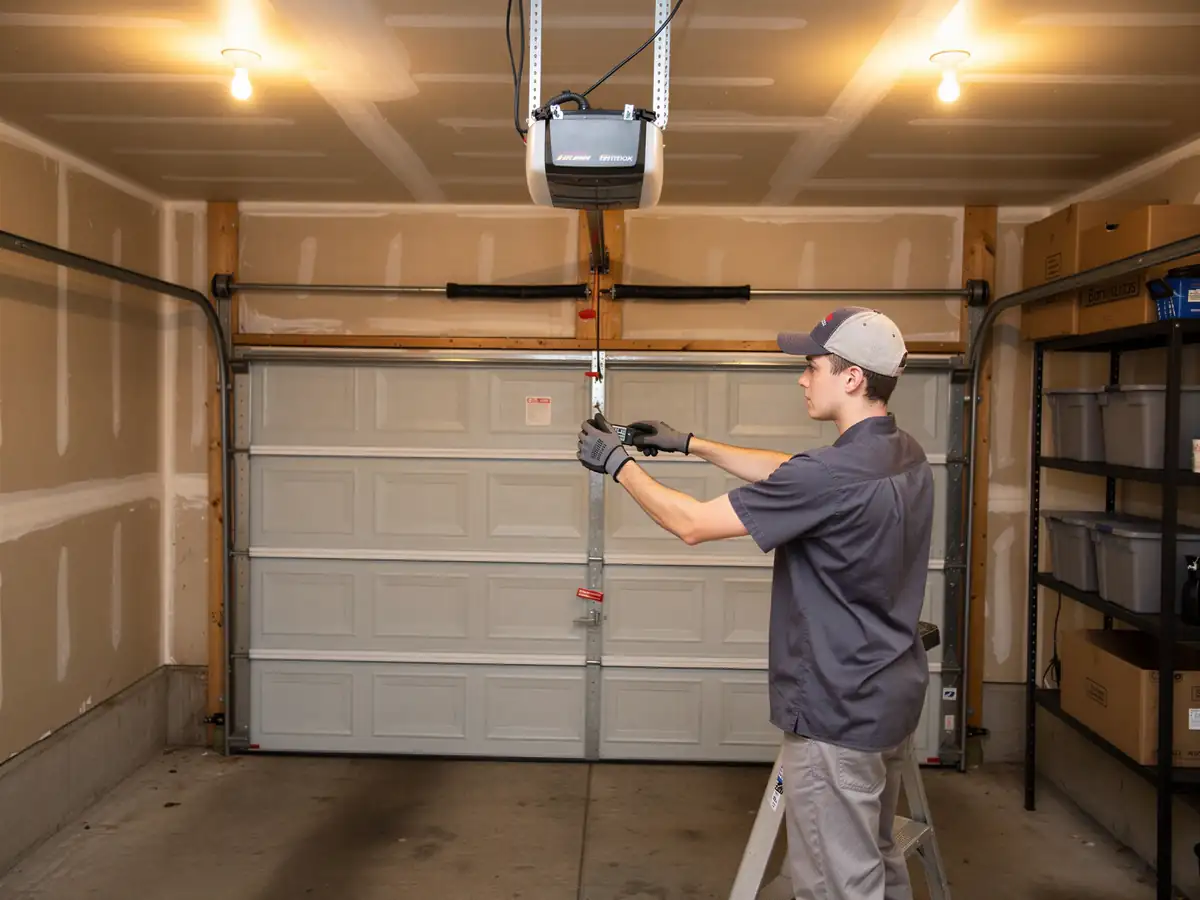
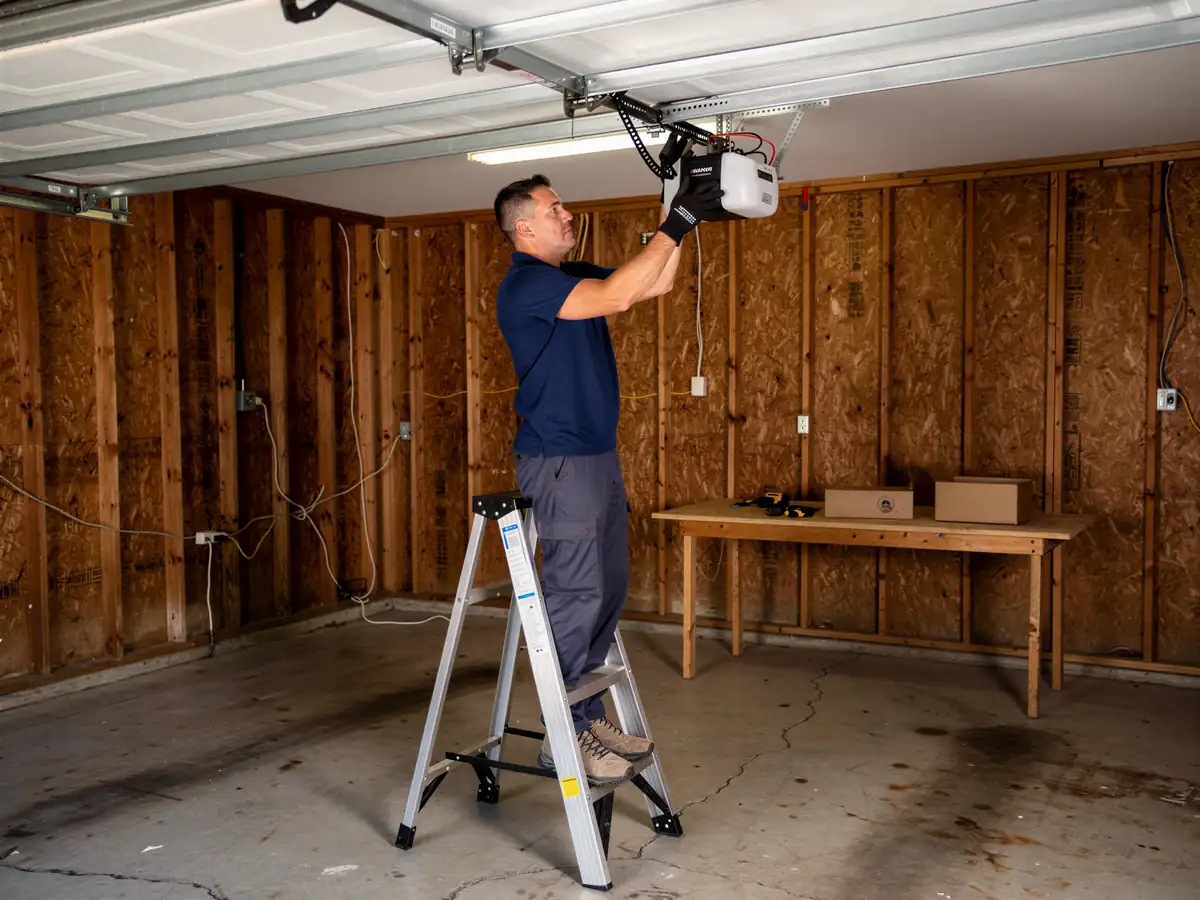
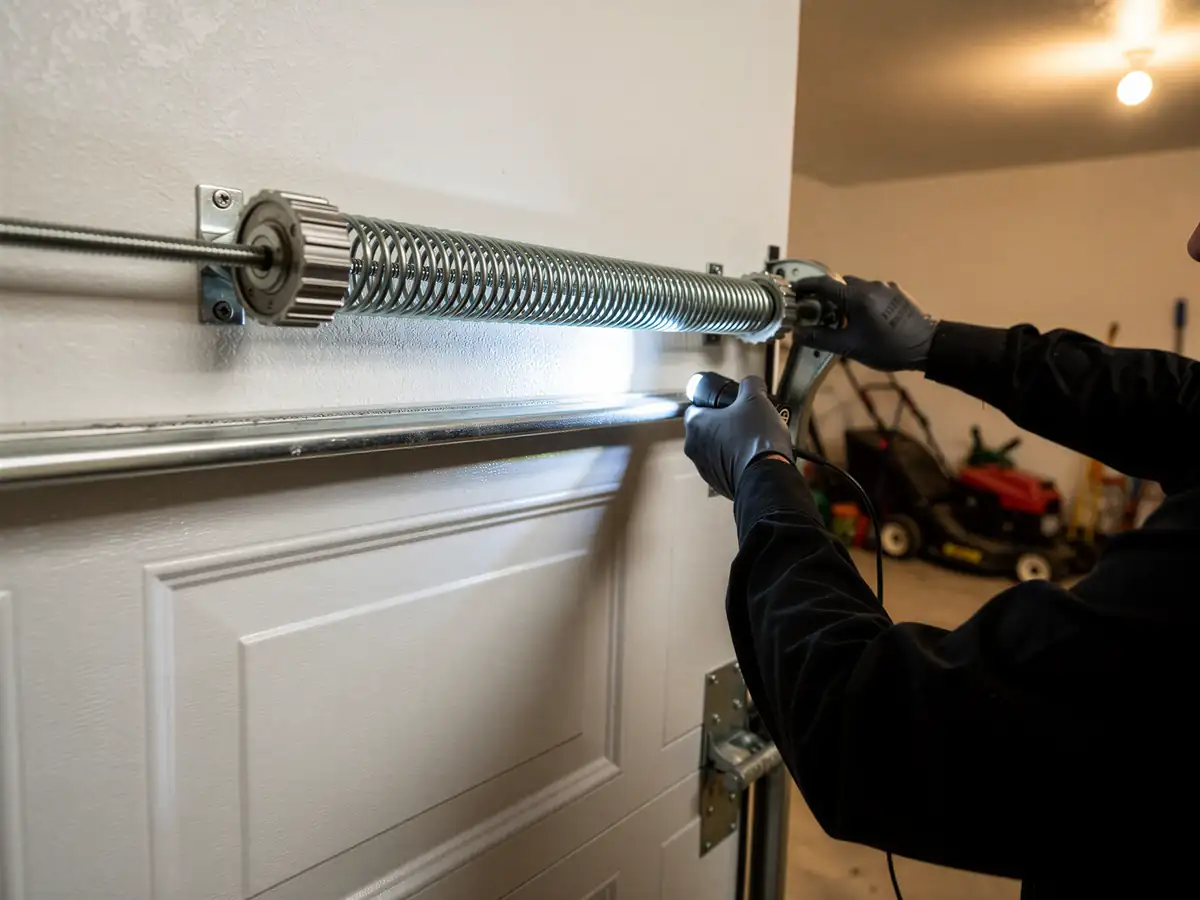
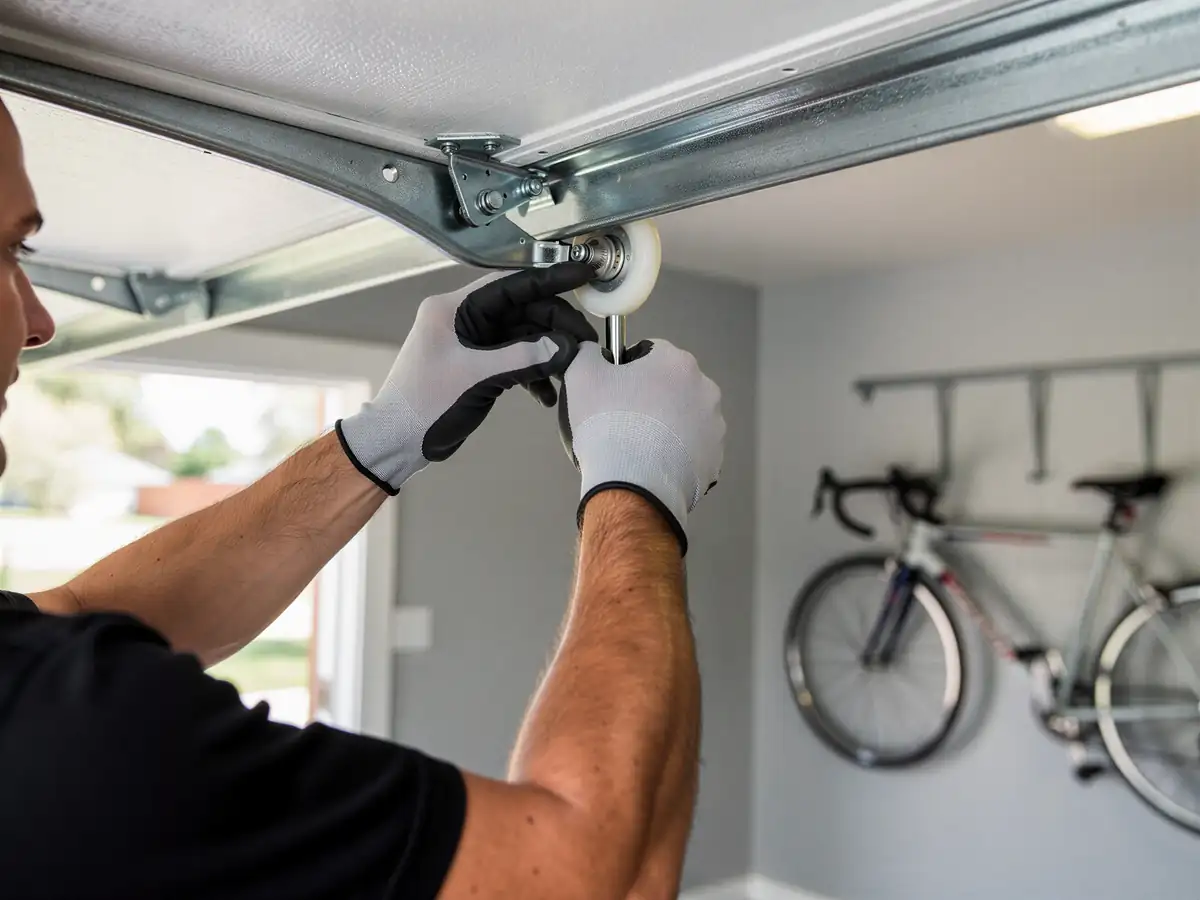
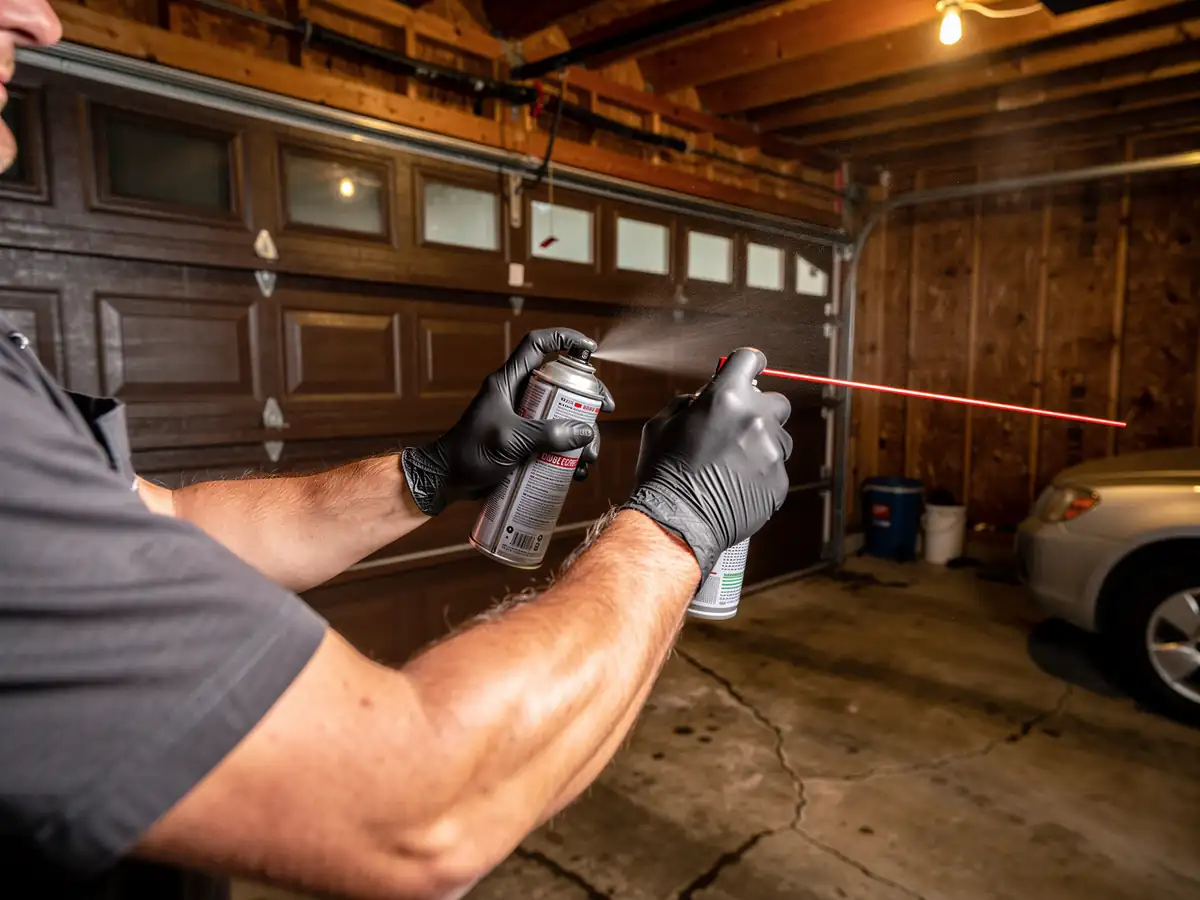
Most calls in Piedmont start the same way: we check the spring wind and weight rating against the door size, since an incorrectly sized spring is a common cause of a door that feels heavy or won't stay open on its own. On a standard torsion setup this is a controlled job - unwind the old spring, measure the shaft, set the new spring to the correct turns for the door weight, and check cable tension on both sides so the door doesn't rack sideways when it travels. If the opener is original to the house, we test the logic board and the safety reversal sensors before touching the spring, because a slow or unsafe close is often the opener, not the door. Track alignment gets checked too; a door built on standard horizontal track from this era holds alignment well if it's never been hit, so if we find it bent or bowed we're usually looking at impact damage rather than age. We don't replace a whole door over a single bad roller or a stuck sensor - the fix matches what's actually wrong, not the biggest ticket on the truck.
What You Pay
We don't post Piedmont-specific pricing here because job cost depends on what's actually broken - a single spring replacement, a full cable and drum job, and an opener board swap are three different bills. What we can say is that this area's household income runs meaningfully higher than the broader service area median, and that tends to show up in the choices homeowners make here: more often opting for a full opener replacement with battery backup rather than patching a failing board, and more often replacing both springs on a double door at once rather than just the broken one. Neither is required - a single spring or a board repair is a legitimate fix on its own - but we'll quote both options on site so you're deciding with real numbers in front of you, not guessing.
What You Are Seeing
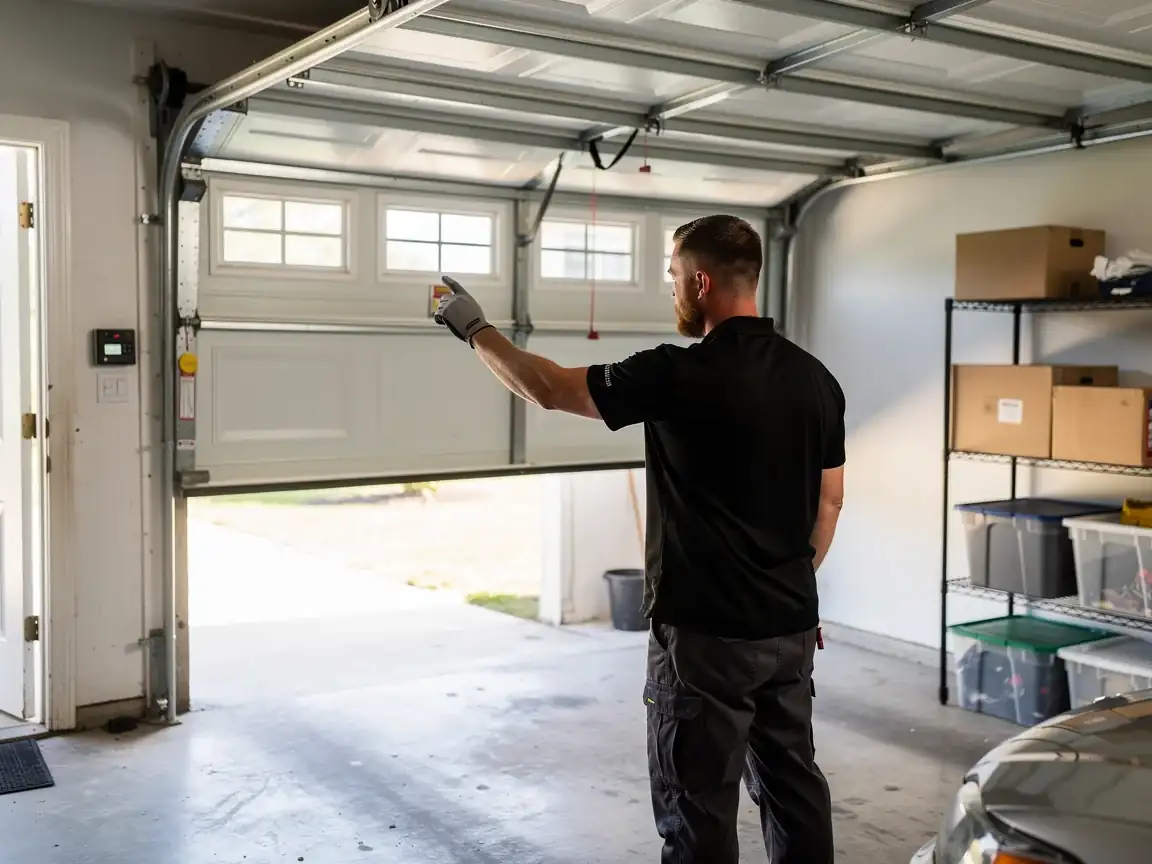
If your garage door in Piedmont is sagging unevenly, slamming the last foot instead of lowering gently, or reversing before it ever touches the floor, that's usually a spring or sensor issue on a door of this era, not structural damage to the panels themselves. A loud bang followed by the door refusing to open at all is the classic sign of a broken torsion spring - common on doors from the late 90s now that they're old enough for steel fatigue. If the opener runs but the door doesn't move, or moves and then stops short, that's more often the opener's drive mechanism or a misaligned sensor than the door hardware. Cold mornings can make a tired spring feel worse than it is, since steel stiffens and a borderline spring that works fine in summer can bind in freezing weather. None of these point to needing a whole new door - on a house this age, most of what we see is a worn part doing exactly what worn steel does, not a door that's failed.