Serving Edmond, OK & nearby
(405) 337-9834
Edmond, OK

Garage Door Maintenance for Midwest City Homes

Midwest City's median income sits below Edmond's, which changes the repair-or-replace math on 1970s doors. Here's what upkeep actually looks like 15 miles out.

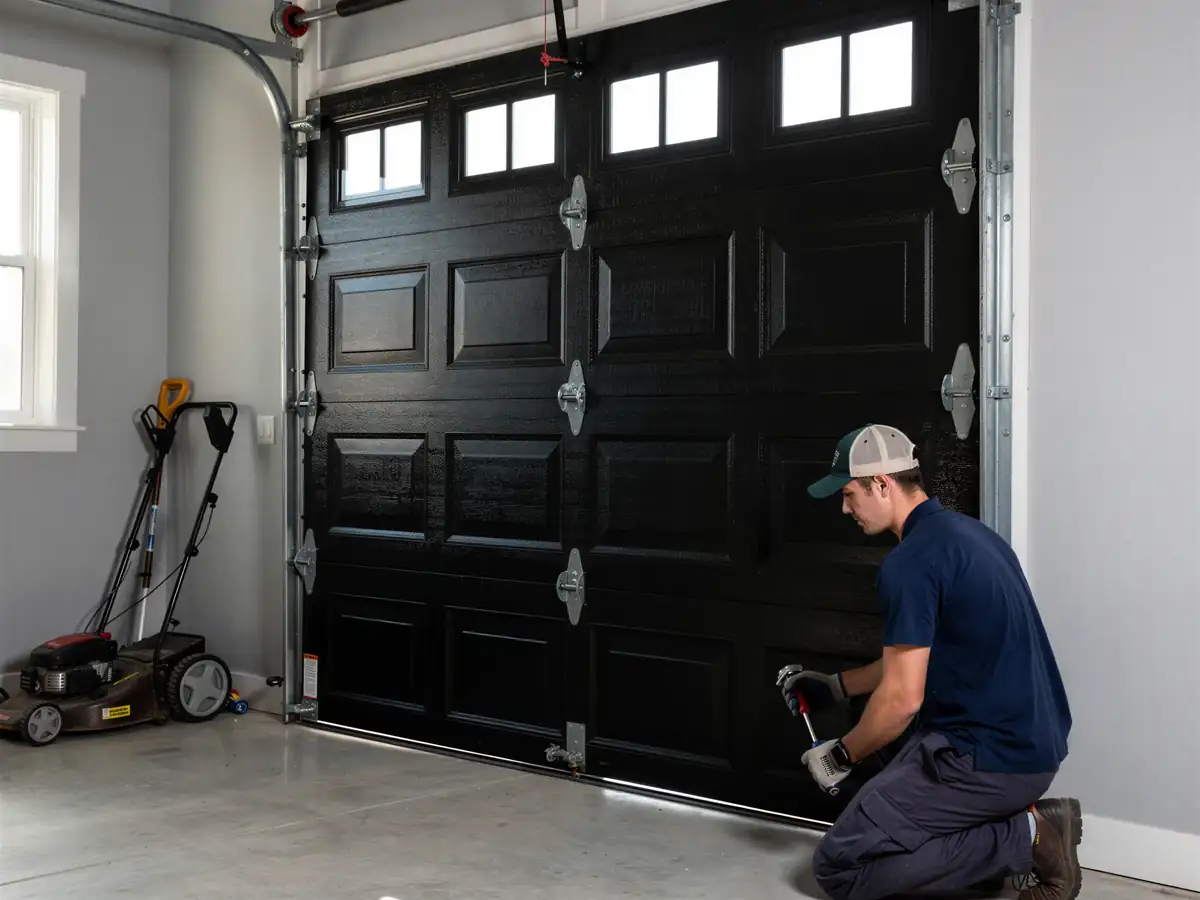
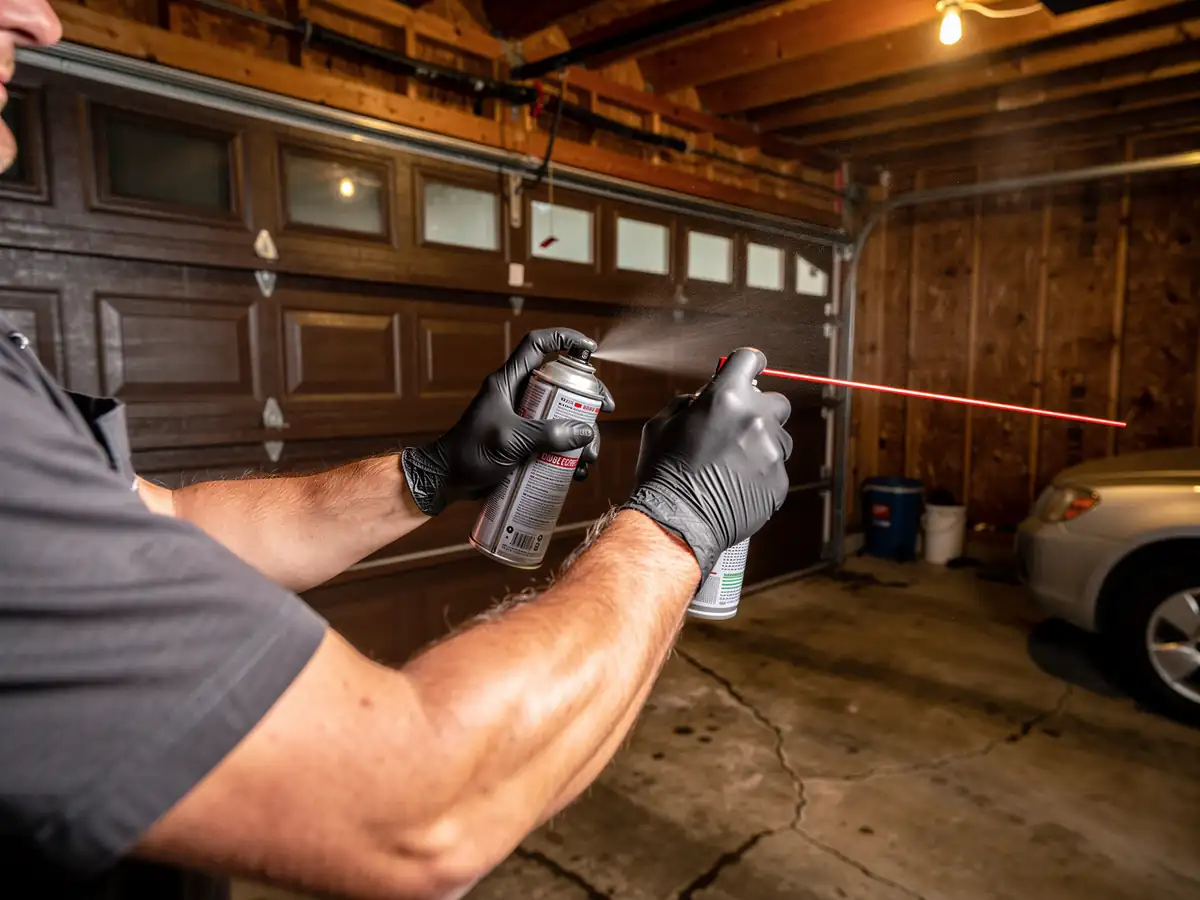
A technician sprays lubricant from two cans in a garage with a brown door.
Edmond, OK
8 services
6 service areas
Diagnosis first, then the fix

What You Are Seeing

Median household income in Midwest City runs about $57,739, a few thousand under the $60,822 figure for the wider service area. That gap matters more than it sounds like it should, because it sets where the repair-or-replace line falls. A $400 spring and roller job pencils out easily against a $57,739 income. A full door and opener replacement is a harder call, and it's the call a lot of owners here are actually weighing when they notice their door grinding, sagging on one side, or taking an extra second to catch. Most of what you're seeing isn't failure yet - it's wear that hasn't been serviced. Rollers wearing grooves into track, hinges loosening enough to let a panel flex, a torsion spring that's lost tension but hasn't snapped. None of that shows up as a dead door. It shows up as a door that's slower, louder, and a little less square than it was a year ago. Catching it here, before the spring goes or the opener motor burns out trying to lift a door that's fighting its own hardware, is the whole point of a maintenance visit instead of an emergency one.

How Long You Are Without the Door

We're coming from Edmond, 15 miles out, so a maintenance visit here gets scheduled rather than dispatched same-hour. That's a real tradeoff worth naming plainly: if a spring lets go and the door won't open at all, you're waiting on a drive, not a knock on the door in twenty minutes. For routine upkeep - lubrication, hardware tightening, balance and cable checks - that drive time is a non-issue because it's planned in advance, not an emergency. Where it matters is if a maintenance visit turns up something that can't wait, like a cable fraying close to failure or a spring with visible gap in the coils. In that case, we'll tell you straight whether it's safe to keep using the door until the next available slot or whether it needs to come off the schedule and get handled sooner. We won't invent a window we can't hit. The honest version is that Midwest City isn't a same-day market for us - it's a planned-route market, and maintenance is exactly the kind of work that plans well.

The Complications

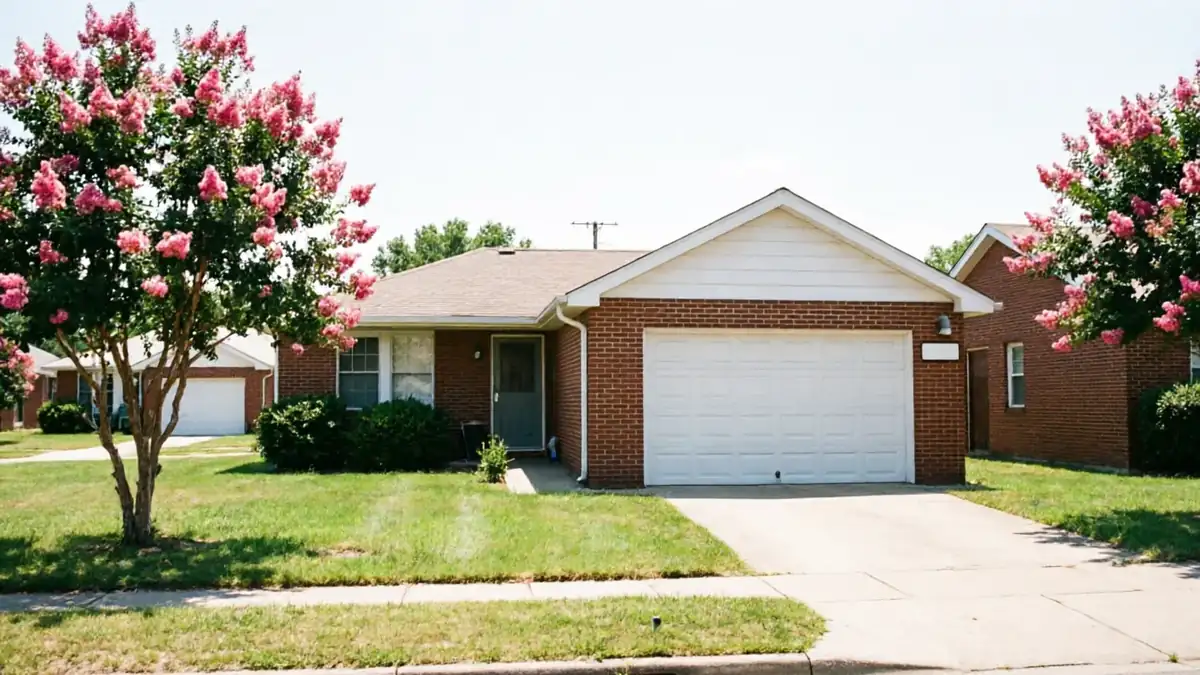
Houses in this part of the metro were mostly built in the 1960s and 70s, and Midwest City's own median year built lands at 1974 - squarely in that window. Doors and openers from a remodel or replacement on a house that age often sit on hardware that was sized for a lighter door or an older opener spec, which means a maintenance tech sometimes finds a mismatch: a newer insulated door hung on a torsion spring rated for the original lighter panel, or an opener bracket that's been reinforced once already with whatever was on hand at the time. None of this is dangerous by itself, but it complicates a routine check, because balance and tension numbers that look fine on paper can be wrong for the actual door hanging on them. Cold-moderate winters here also mean lubricant that was fine in August gums up by January, and metal hardware contracts just enough to change roller clearance season to season. A maintenance visit that doesn't account for both the age mismatch and the seasonal swing is really just a visual check, not a tune-up.

What the Fix Involves

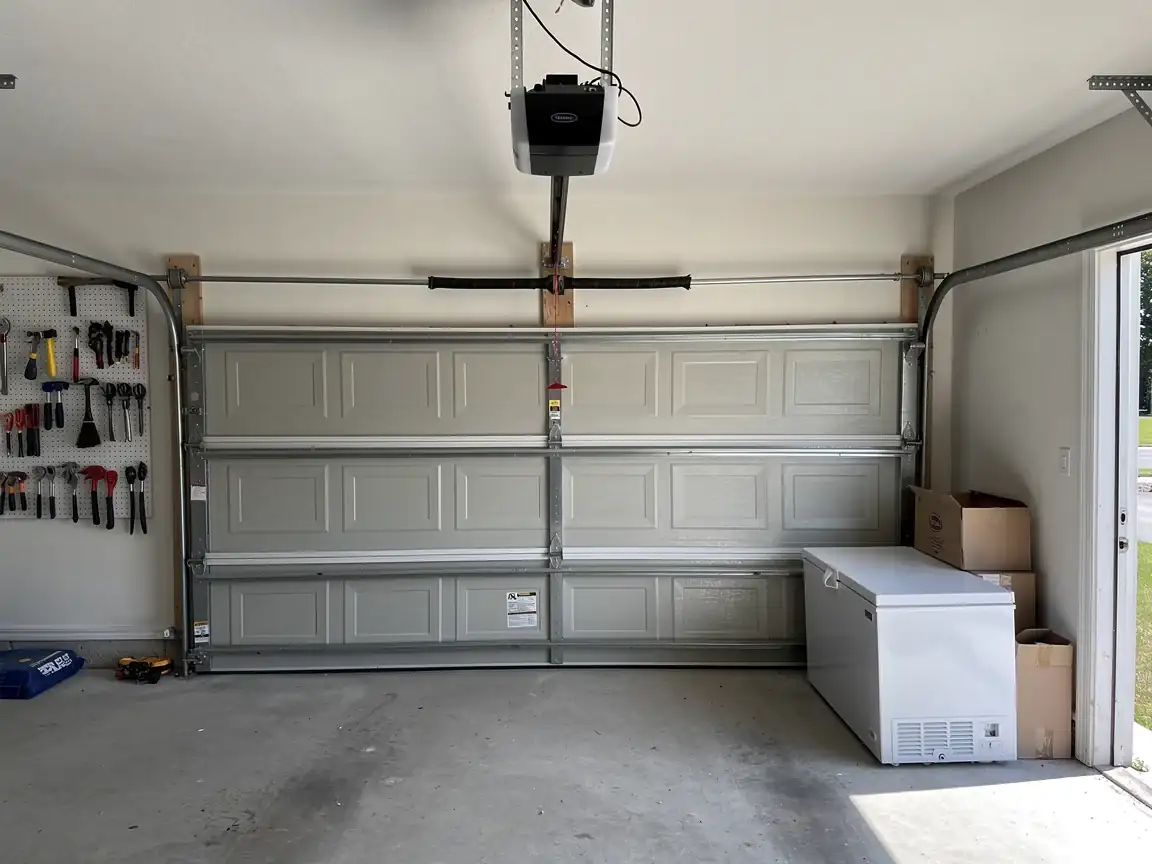
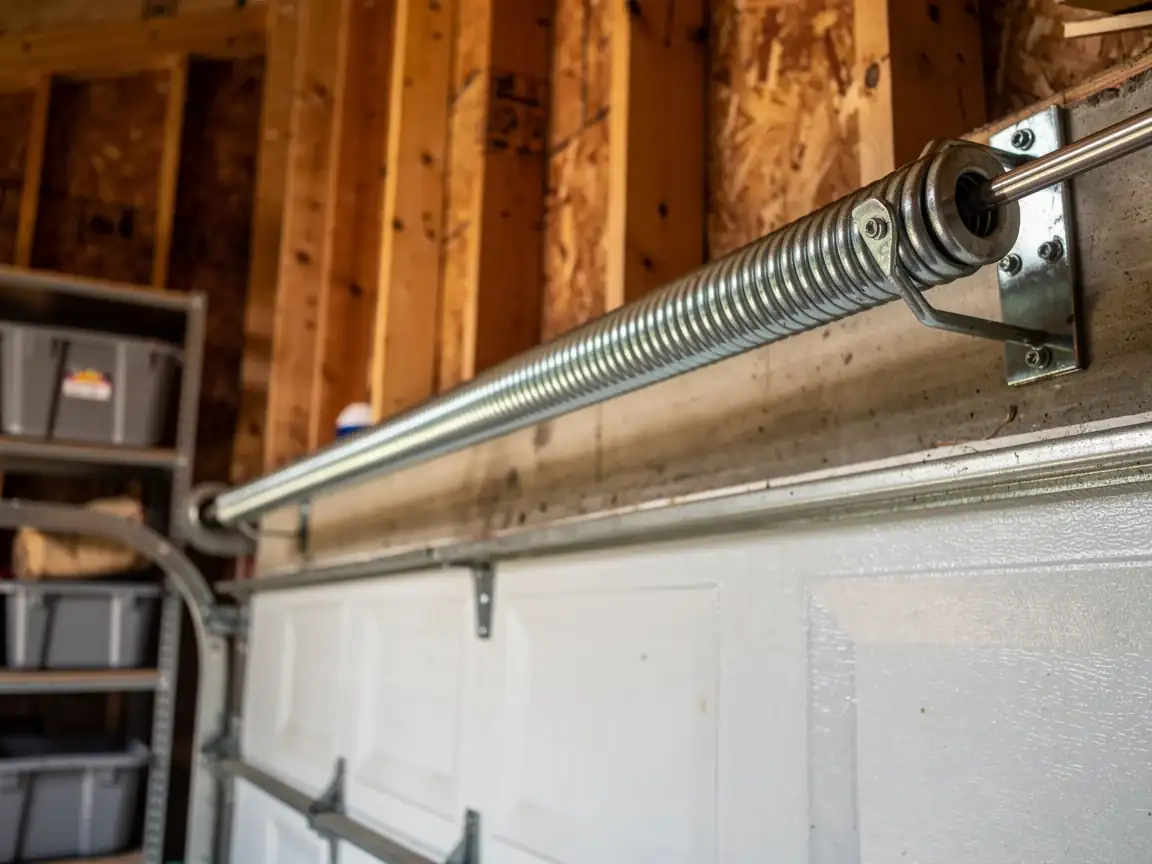
A real maintenance visit means lubricating hinges, rollers, and the torsion spring itself with the right lubricant for cold-moderate winters - not a general-purpose spray that stiffens up at the first freeze. It means checking spring tension against the actual door weight, not an assumed one, which matters given the hardware mismatches common on 1960s-70s housing stock. It means tightening the lag bolts and hinges that work loose from thousands of open-close cycles, inspecting cable fray at the drum, and testing the auto-reverse safety sensors, which age out of alignment on their own over a few years regardless of how the door looks. What it doesn't involve is replacing parts that aren't worn. If a spring still has life in it, we won't swap it just because it's old; that's a repair sold as maintenance, and it's not how we price a visit. The honest limitation here: a maintenance check can catch a spring that's close to failing, but it can't tell you the exact day it'll go. Springs fail on a cycle count, not a calendar.

Can You Do This Yourself

Some of it, yes. Wiping down and lubricating the track and rollers with a garage-door-specific lubricant is a fifteen-minute job most owners can do twice a year. Visually checking for frayed cable, rust on the spring coils, or a hinge with play in it doesn't take tools, just a flashlight and a few minutes. What you shouldn't do yourself is touch the torsion spring itself - adjusting or replacing it under tension is the one job in this list that causes real injuries, and it's not a skill worth learning on your own garage. Testing the auto-reverse safety feature is safe and worth doing monthly: run the door down onto a 2x4 laid flat on the ground and confirm it reverses on contact. If it doesn't, that's not a DIY fix - it's a sensor alignment or a logic board issue that needs a tech. The honest line: lubrication and inspection are yours to do; anything involving the spring, the cable, or the opener's internal settings isn't.

What Causes It Around Here

Two things stack up in Midwest City specifically. First, the housing age: with a median build year of 1974, a large share of doors and openers here are either original-era hardware that's been patched over decades or newer doors retrofitted onto that older hardware without a full system match. Second, the cold-moderate climate band means real seasonal swing - lubricant behavior, metal contraction, and humidity all shift from summer to winter, and hardware that's fine in July can bind in January. Put those together and you get a predictable failure pattern: hinges and rollers wear faster on older track geometry, springs lose tension at a rate that doesn't match newer manufacturer tables, and opener sensors drift out of alignment with seasonal temperature swings rather than all at once. None of this is unique to one house - it's a pattern across the 1960s-70s stock that makes up most of this part of the metro, and it's why a maintenance visit here is checking against the age of the hardware, not just the age of the door.
How it works

From “it’s stuck” to “it’s fixed”

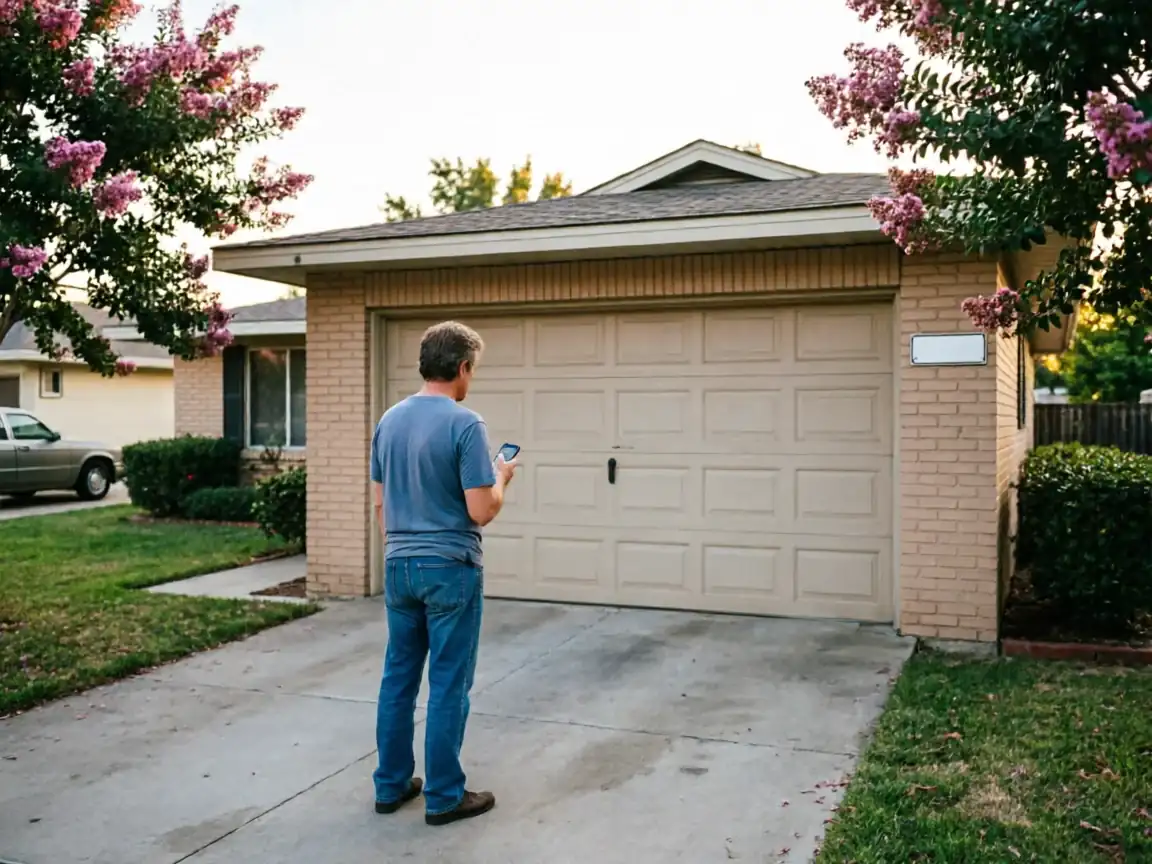
A man stands in a driveway looking at his phone in front of a garage door.

Tell us what’s wrong

Describe the symptom - won’t open, loud bang, opener runs but the door won’t move.

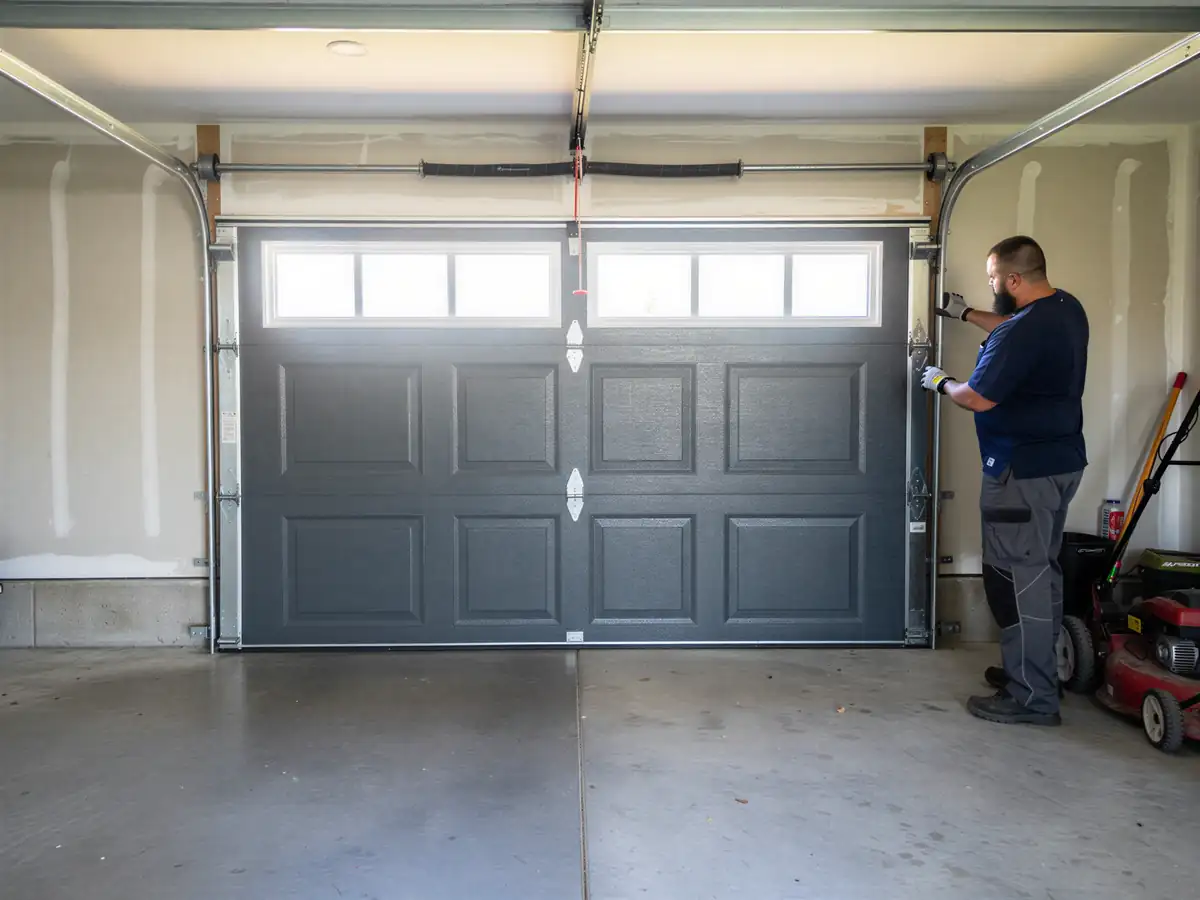
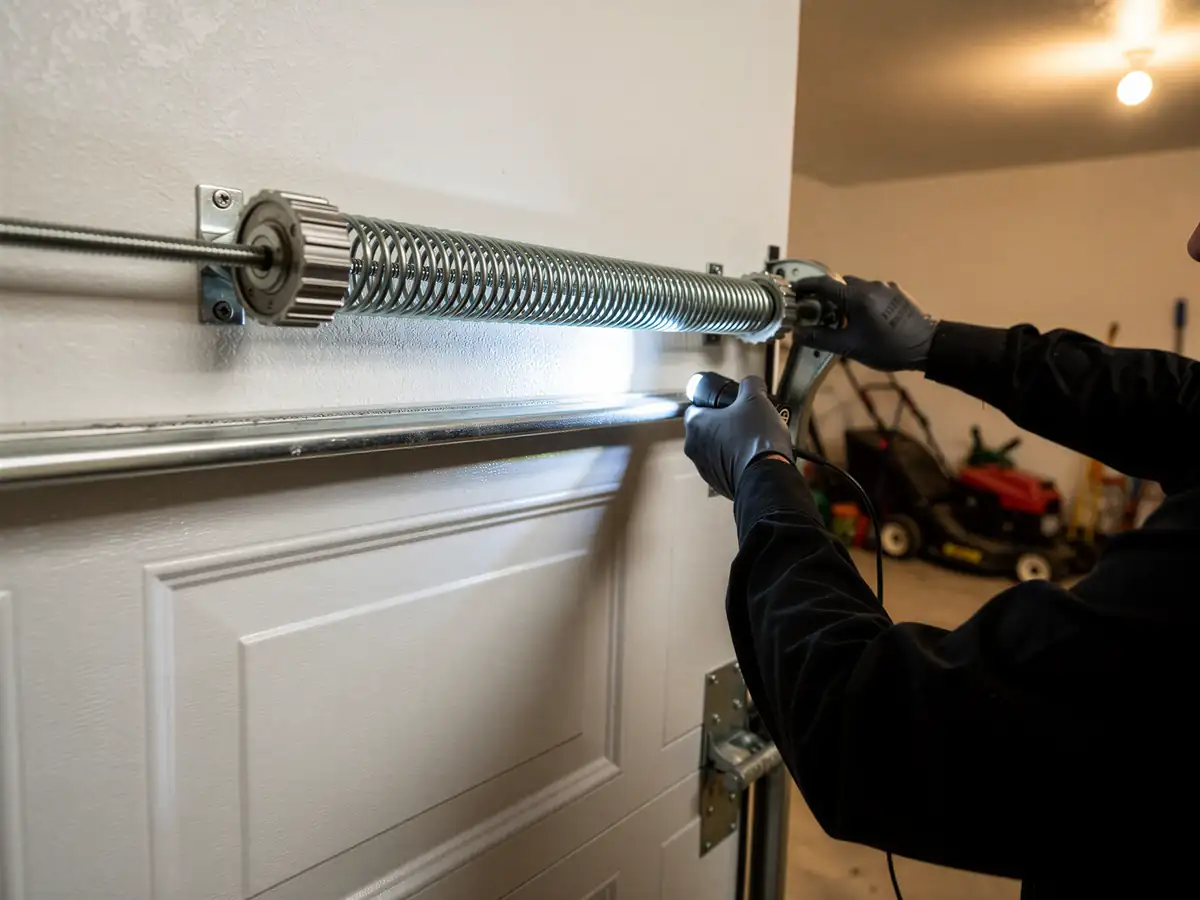
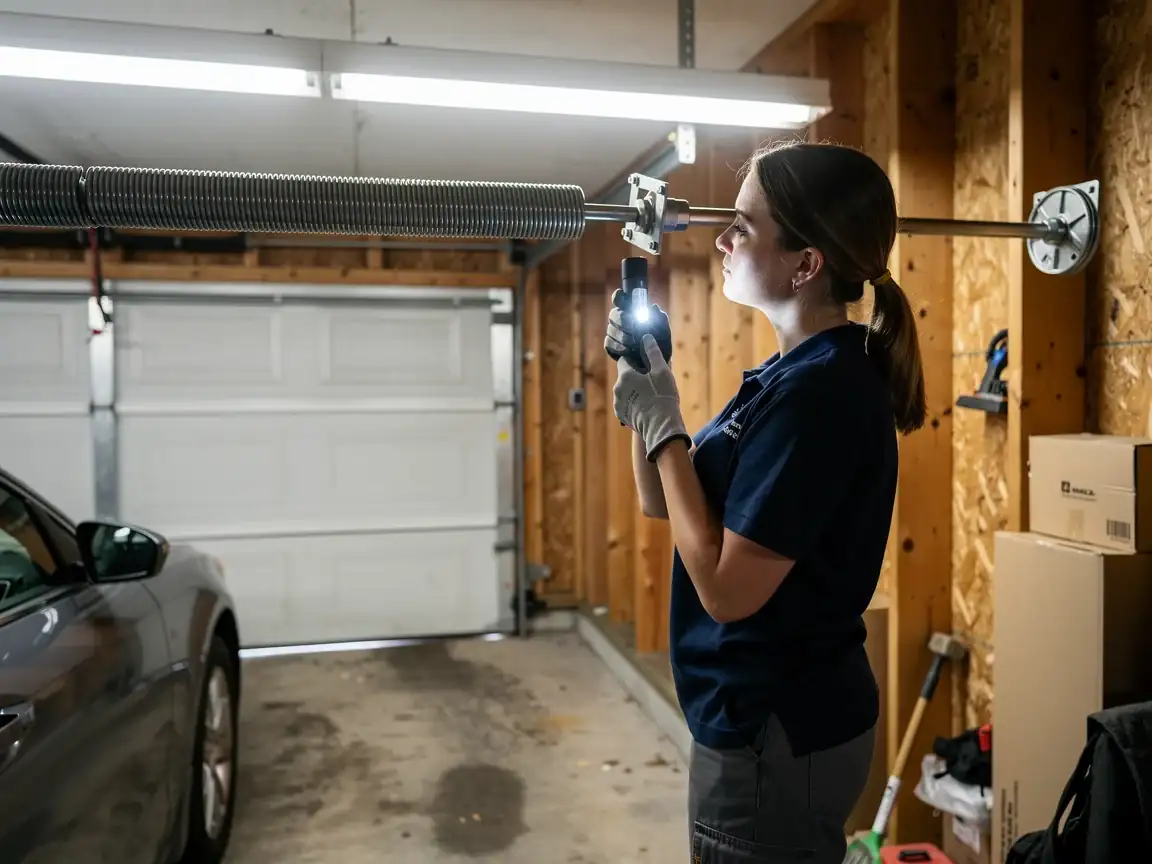
A technician shines a flashlight on a garage door torsion spring.

On-site diagnosis

A technician tests the door under power and by hand and finds what actually failed.

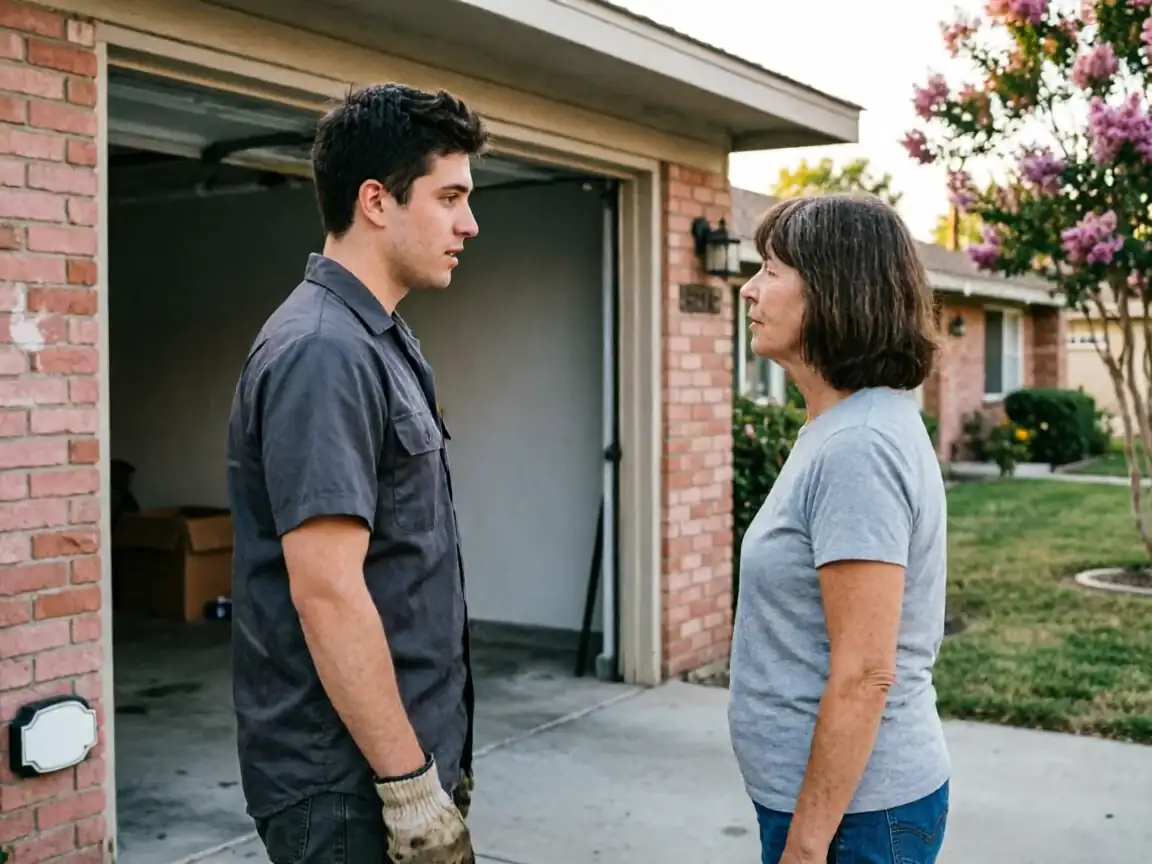
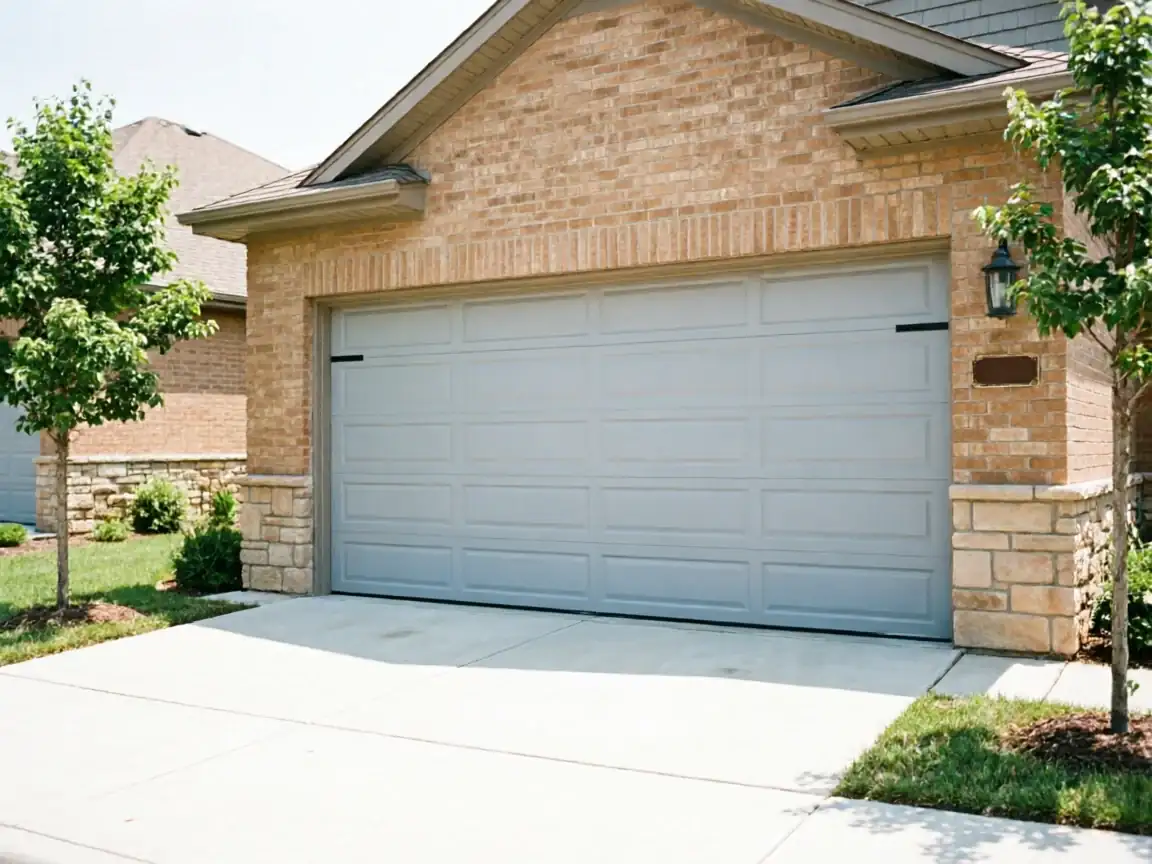
A technician talks to a woman in front of a brick house with an open garage.

Clear, up-front plan

You get the fix that’s needed and what drives the cost - before any work starts.

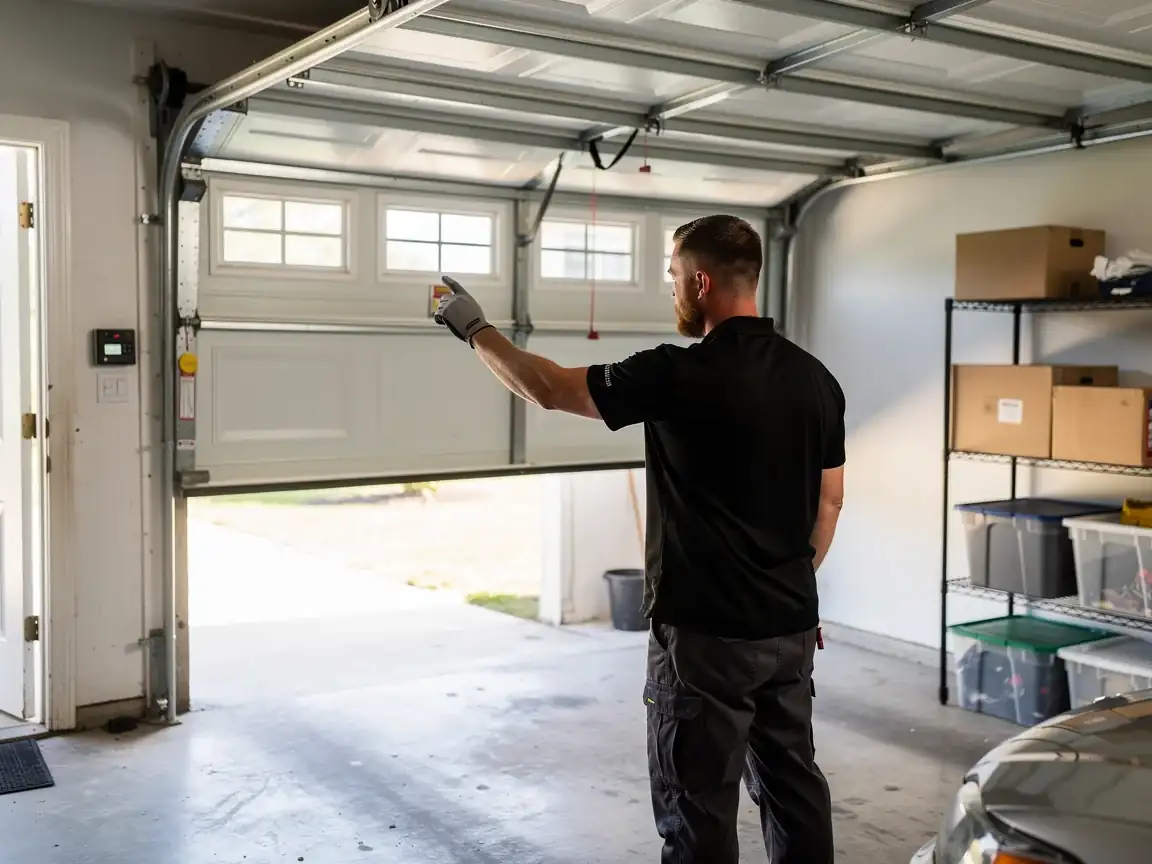
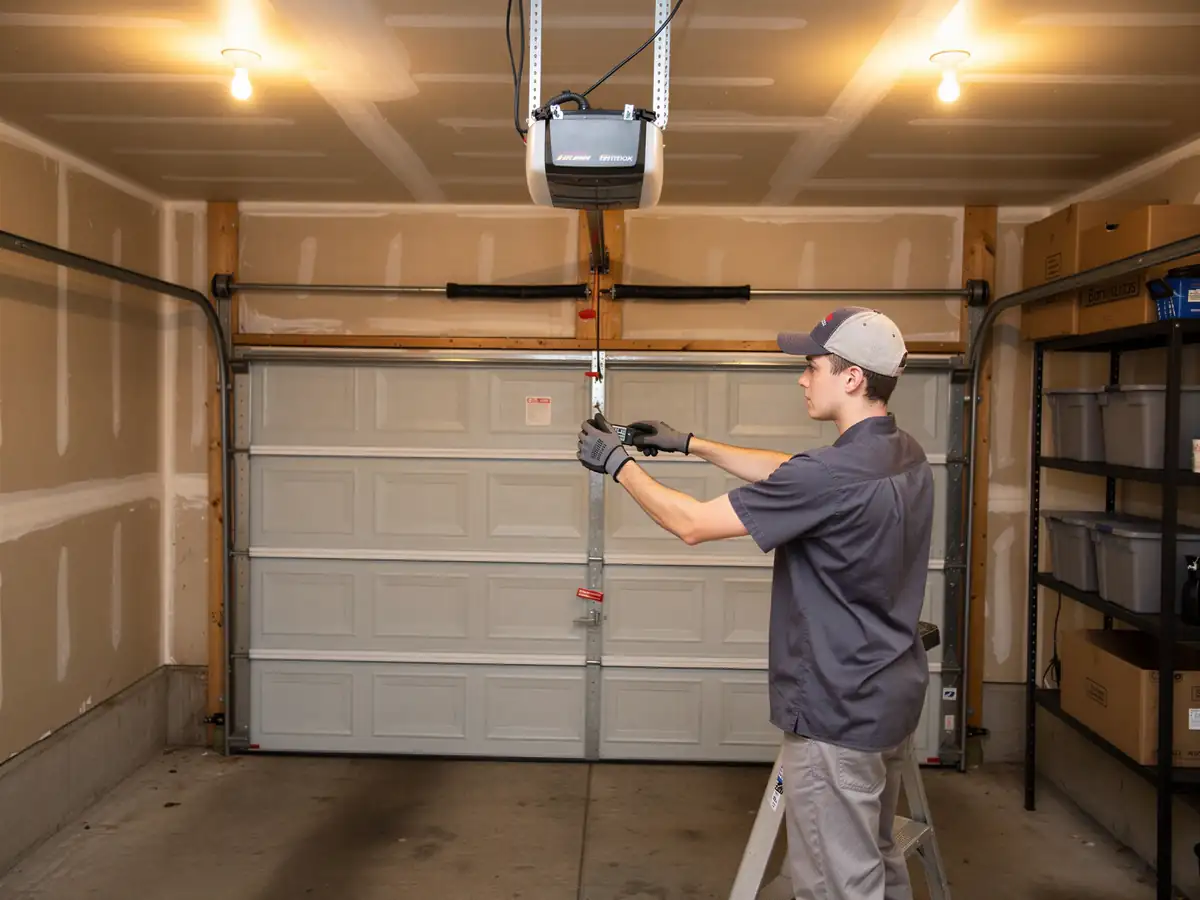
A technician points at an open white garage door with windows from inside a garage.

Repaired & tested

The repair is done, the door is set true and tested, and the work area left clean.

Not sure which repair your door needs in Edmond, OK? Describe what it’s doing - every job starts with a diagnosis.

How we work

What to expect

Diagnosis firstEvery visit starts by finding what actually failed - not a pre-written parts list.
The right part for the doorSprings and openers matched to the door’s weight and age, so the fix holds up.
Straight answersWhen a repair makes more sense than a replacement - or the reverse - you hear it plainly.
Clean, careful workTension released safely, hardware set true, the door tested under power before we leave.
90,092
Residents in Edmond
8Garage door services
6Neighborhoods & suburbs
OKServing Edmond, OK
Questions

Frequently asked

Straight answers about garage door repair in Edmond. Still unsure? Ask us directly.

Is a maintenance visit worth it if my door still works fine?

Yes, especially on houses from the 1960s-70s era common here. A working door can still have a spring near the end of its cycle life or sensors drifting out of alignment. Catching that during a scheduled visit costs far less than an emergency call after the spring lets go or the opener fails mid-cycle.

Why does the service area's median income matter for maintenance decisions?

At $57,739 median household income in Midwest City, a full door or opener replacement is a bigger financial decision than it is in higher-income parts of the metro. That's exactly why routine maintenance - catching wear before it becomes failure - makes more financial sense here than waiting for a breakdown and facing a replacement bill.

How often should I schedule maintenance given you're coming from Edmond?

Twice a year is standard for cold-moderate climates like this one - once before winter to check lubricant and tension, once after to check for cold-weather wear. Since the visit comes from Edmond, 15 miles out, scheduling ahead rather than waiting for a problem keeps you off the emergency list.

Can you tell me exactly when my spring will fail?

No, and anyone who tells you an exact date is guessing. Springs fail on a cycle count, not a calendar date. A maintenance check can tell you if a spring looks close to the end of its life based on coil condition and tension, but it can't give you a firm expiration date.

Ready to get your garage door sorted?

Tell us what it’s doing and where you are in Edmond - we’ll take it from there.

Request a QuoteCall