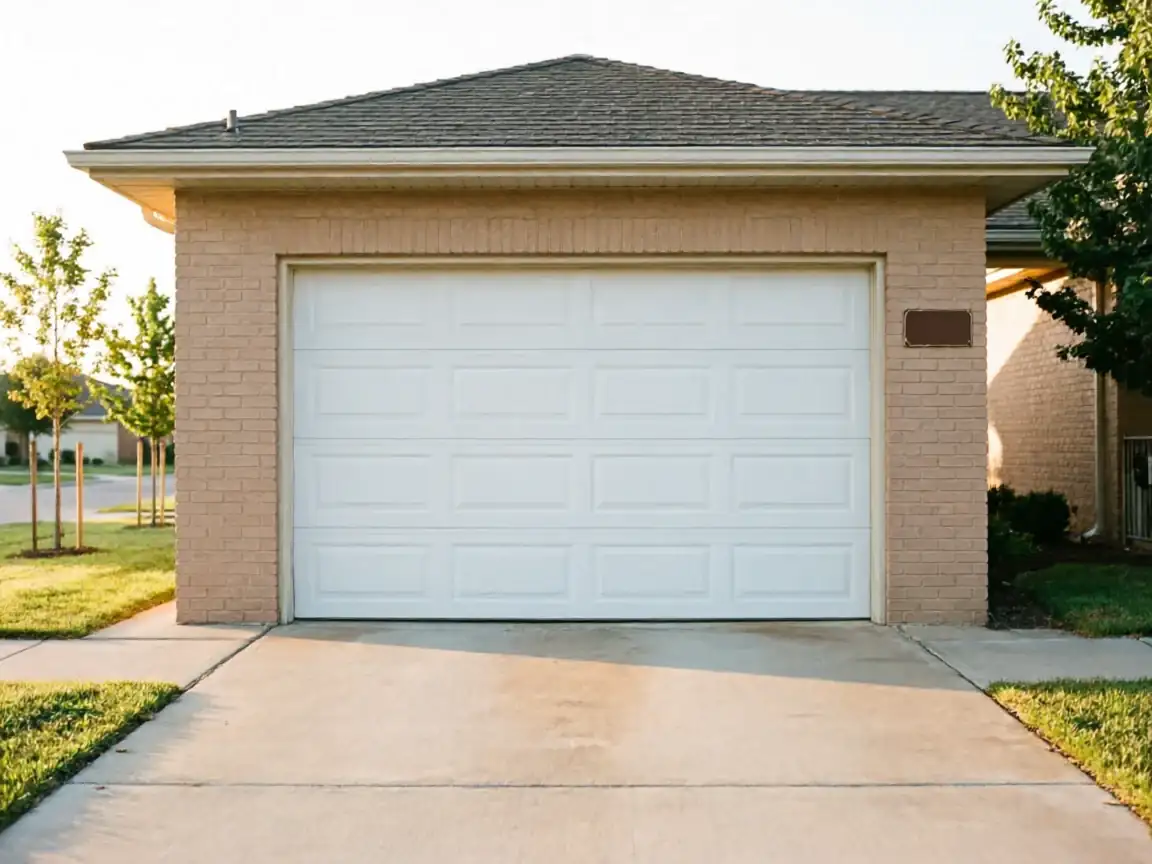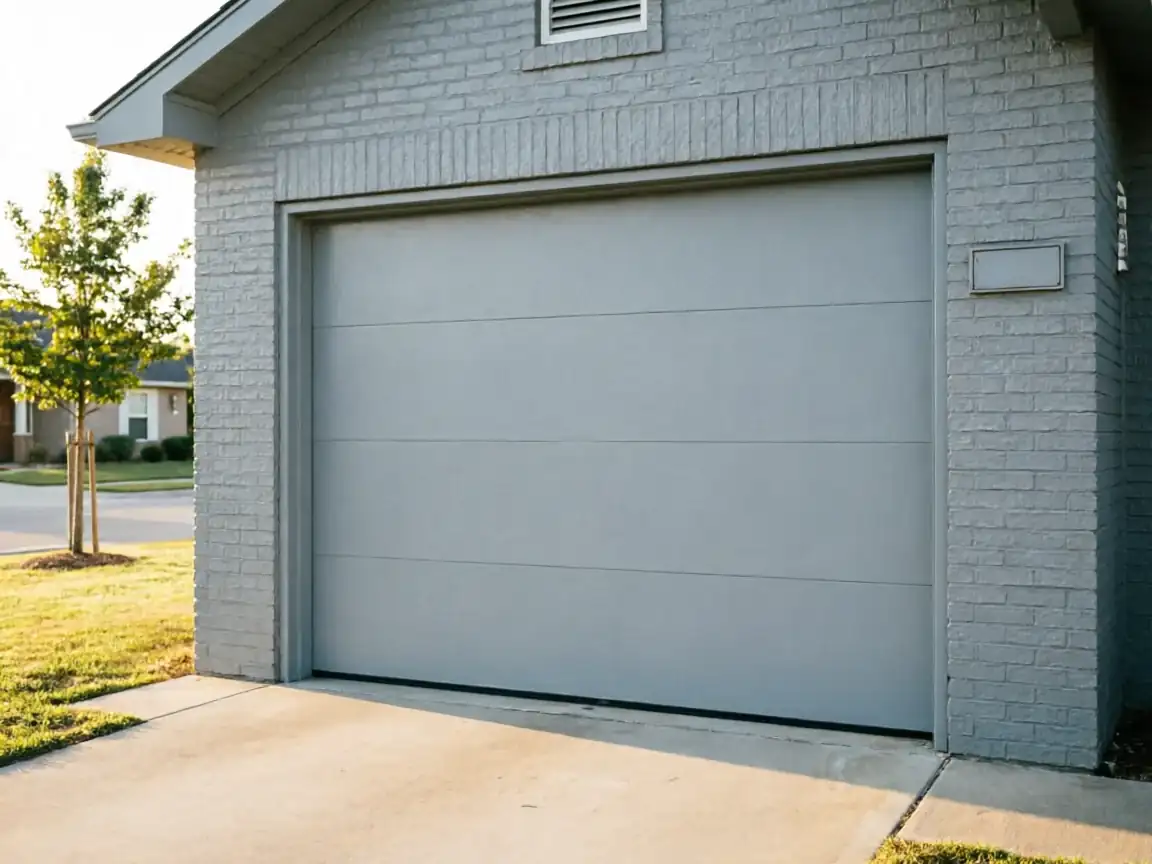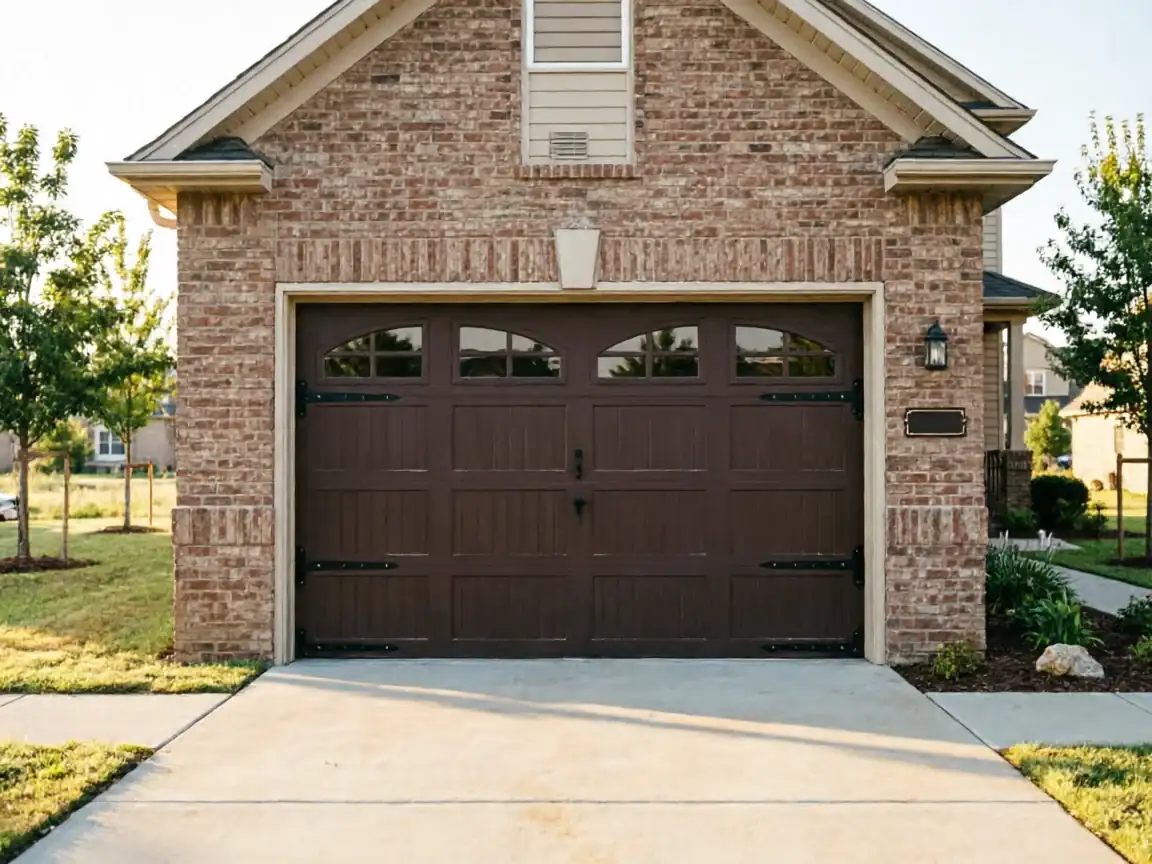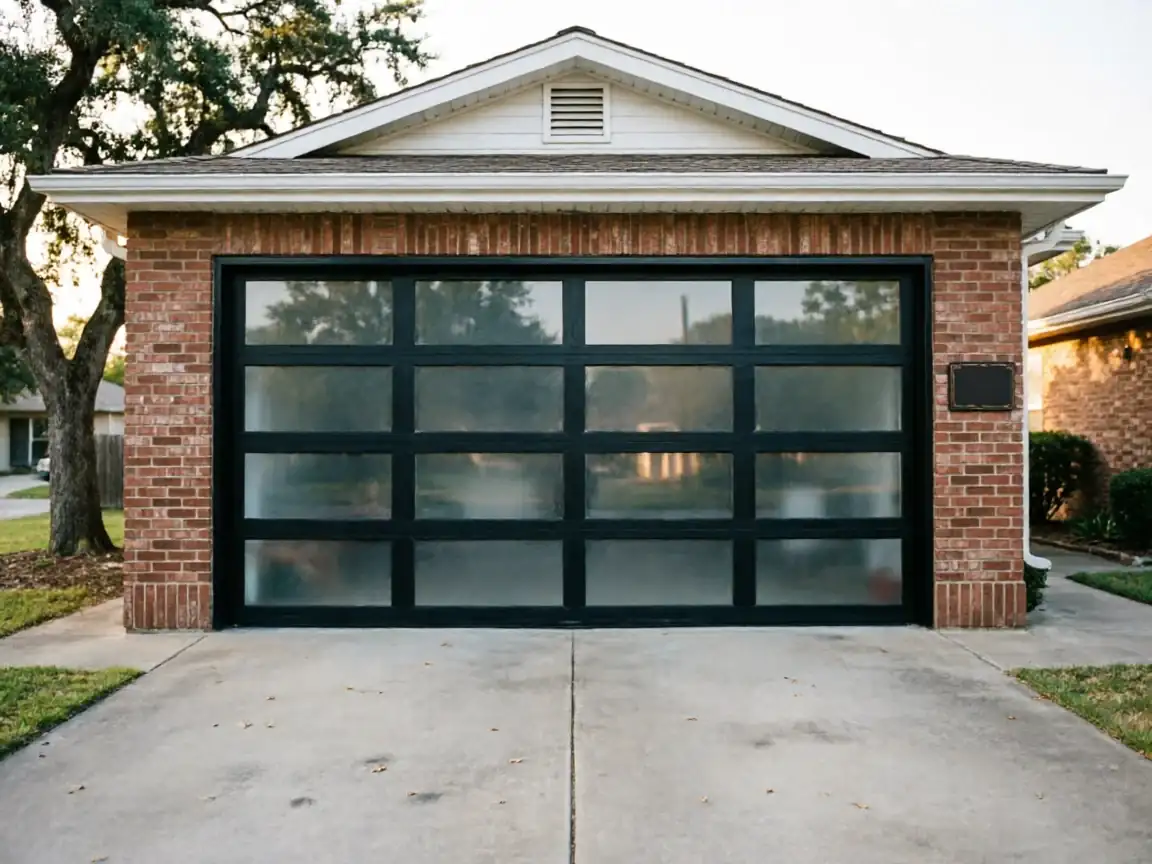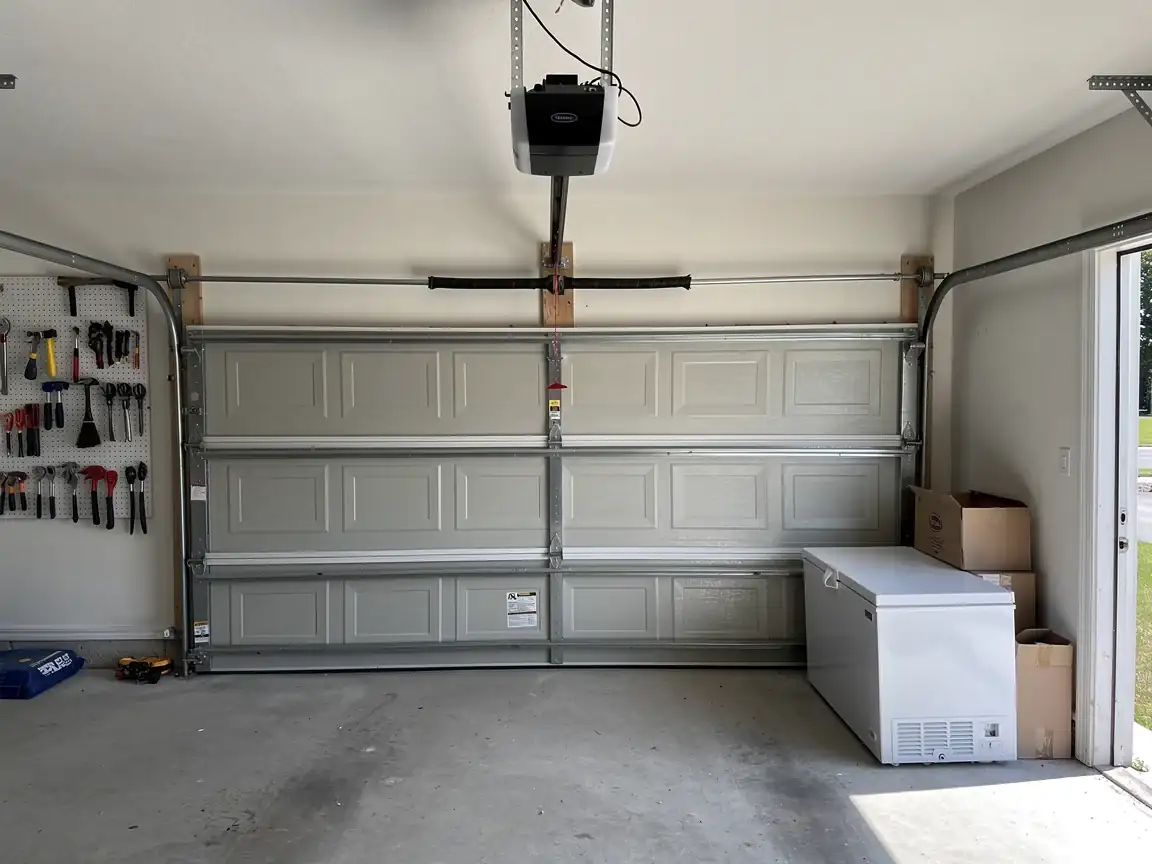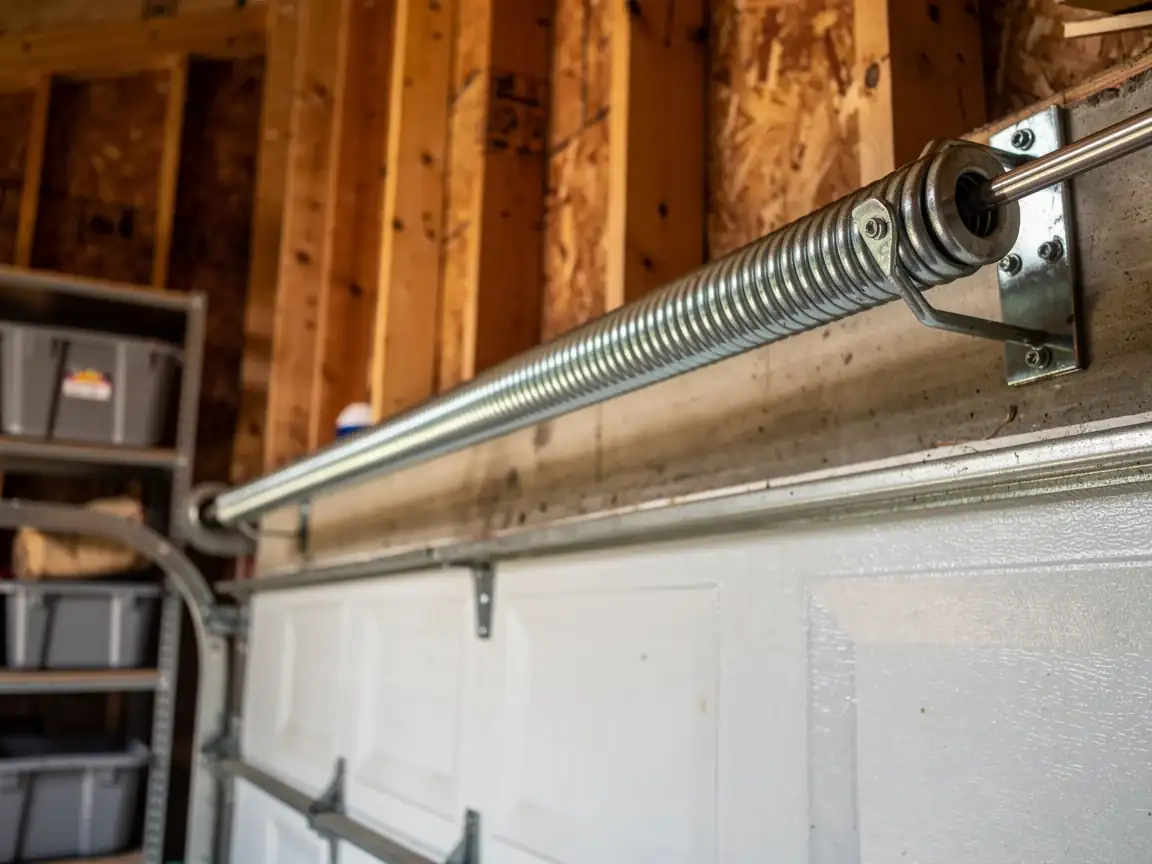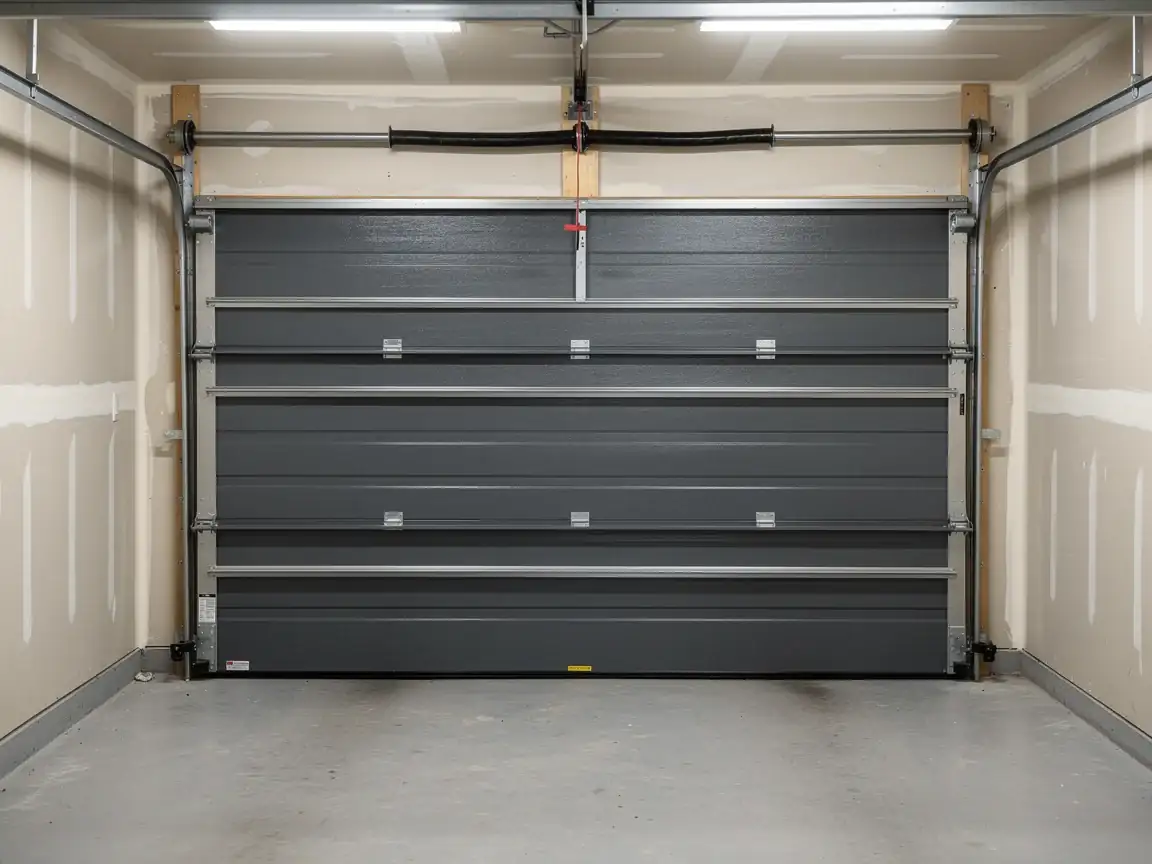
What You Are Seeing
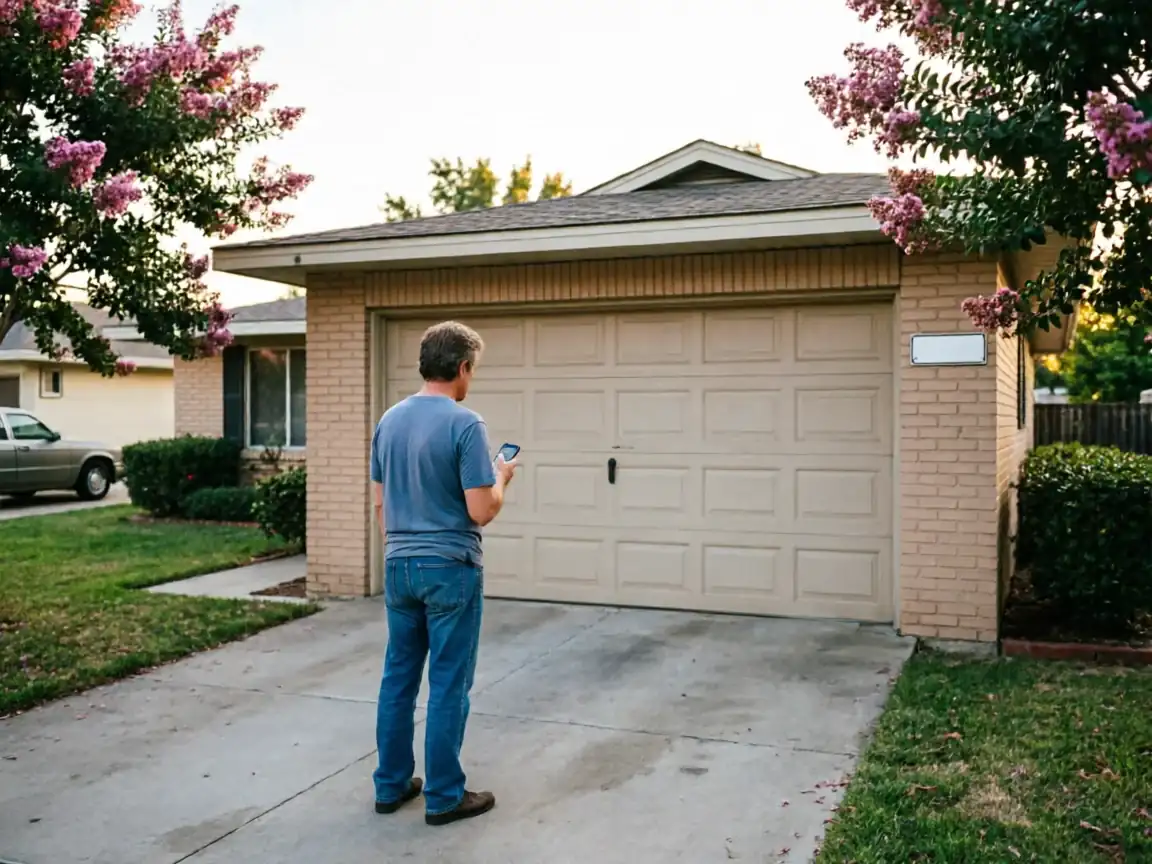
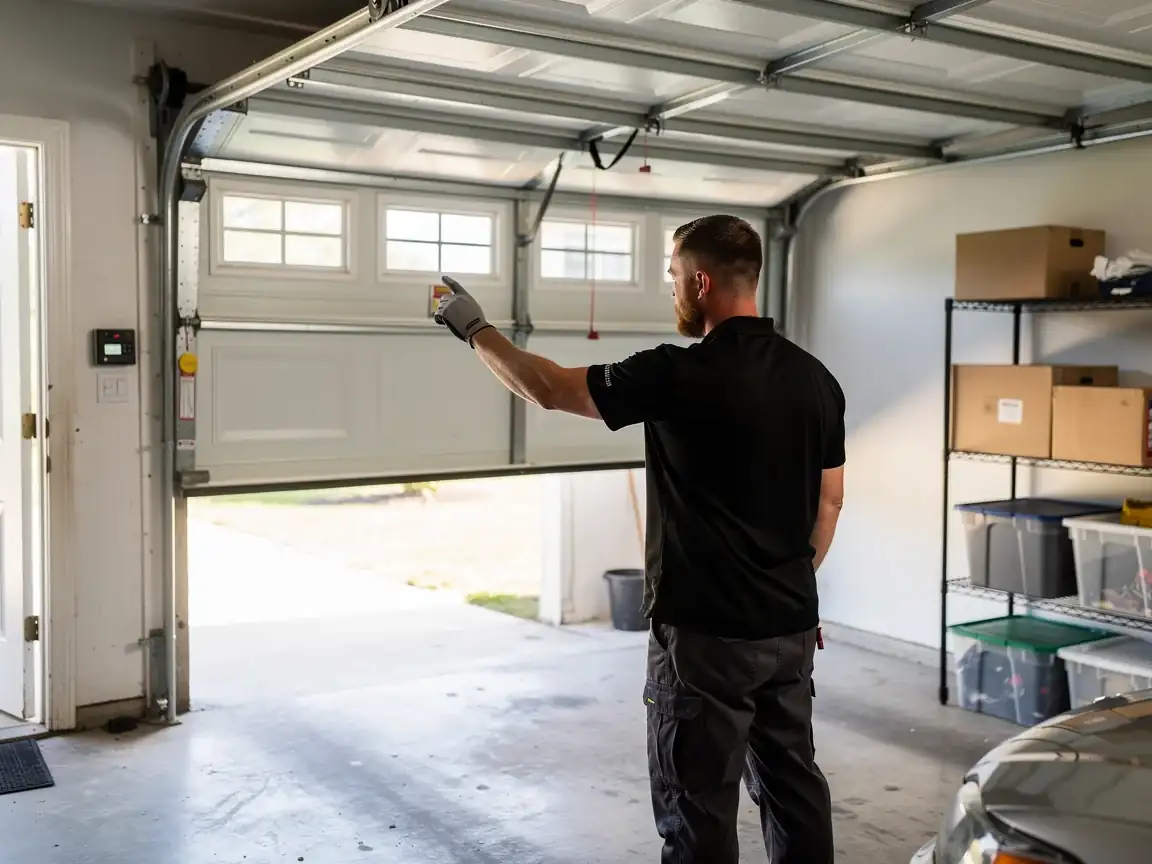
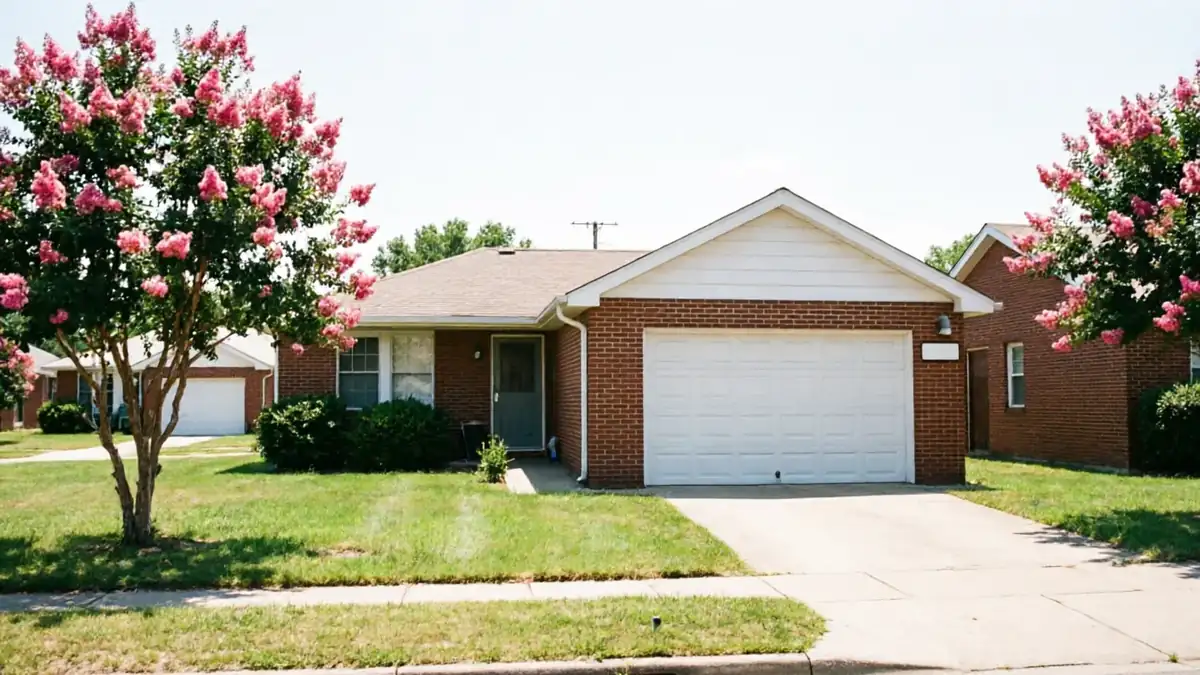
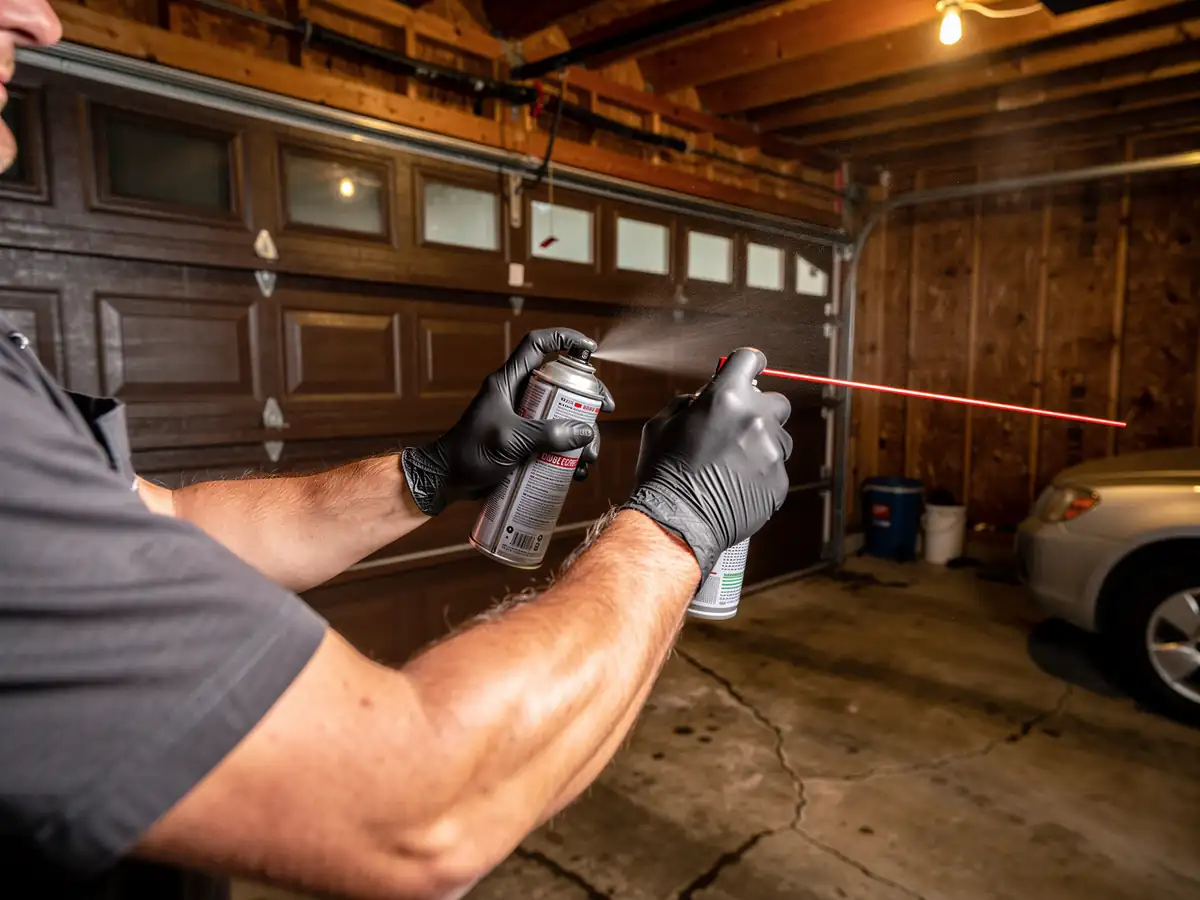
If your house in Midwest City went up anywhere near the neighborhood median of 1974, there's a decent chance the rollers riding in your track right now are the same steel rollers that shipped with the door. Nobody thinks about rollers until they start sounding like a shopping cart with a bad wheel, or the door starts hopping instead of gliding as it clears the bend into the horizontal track. Steel rollers on bare metal stems wear a flat spot over enough winters, and once that flat spot forms, every open and close hammers the track a little more. You'll hear it before you see it: a grinding or clunking right as the door crosses from vertical to horizontal travel. Some owners also notice the door running noticeably rougher on one side than the other, which usually means that side's rollers gave out first. None of this is dramatic on its own, which is exactly why it gets ignored for a year or two longer than it should.
The Complications
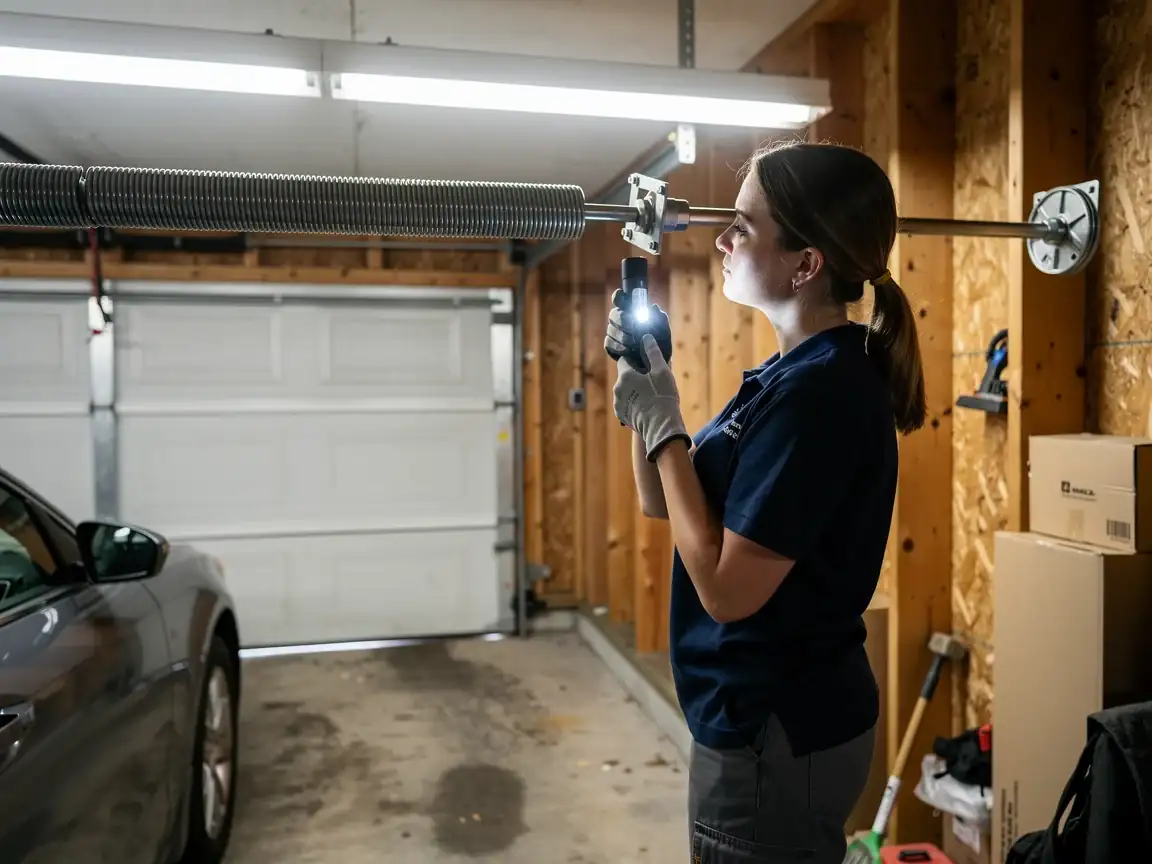
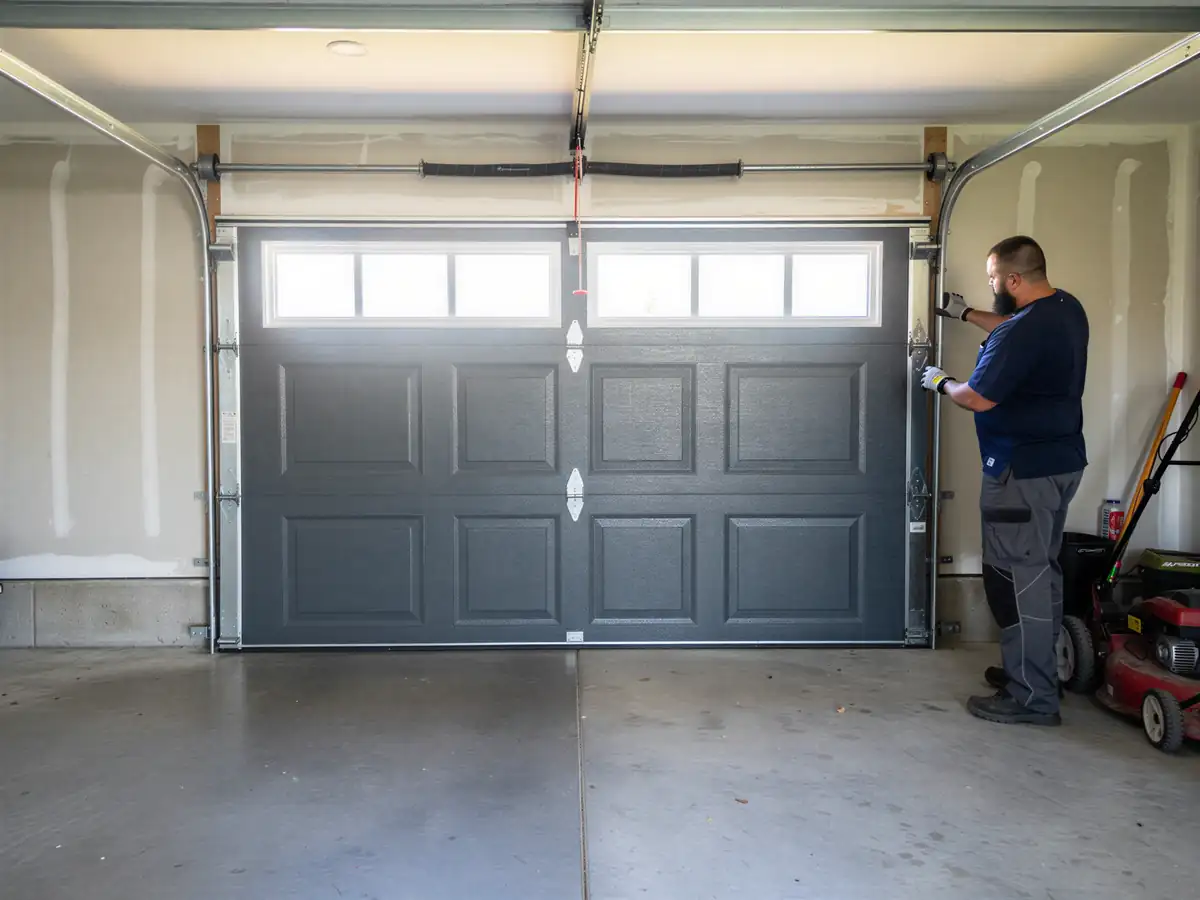
Worn rollers rarely fail alone. By the time a steel roller is loud enough to notice, it's usually been grinding against the track wall for a while, and that can bow the track or wear the horizontal rail unevenly. On a lot of the 1960s-70s stock across this area, the track brackets themselves are the originals too - lightweight by today's standard and prone to loosening once a bad roller starts pulling sideways instead of rolling straight. If the door is a double, one bad roller near the bottom corner puts extra twisting load on the bottom bracket and the cable drum above it, so what looks like a $20 roller problem can turn into a bent track or a stressed cable if it's been running rough for months. We check the track straightness and the bracket fasteners any time we're replacing rollers - swapping the roller and ignoring a bent track just moves the noise six inches down the rail.
What the Fix Involves
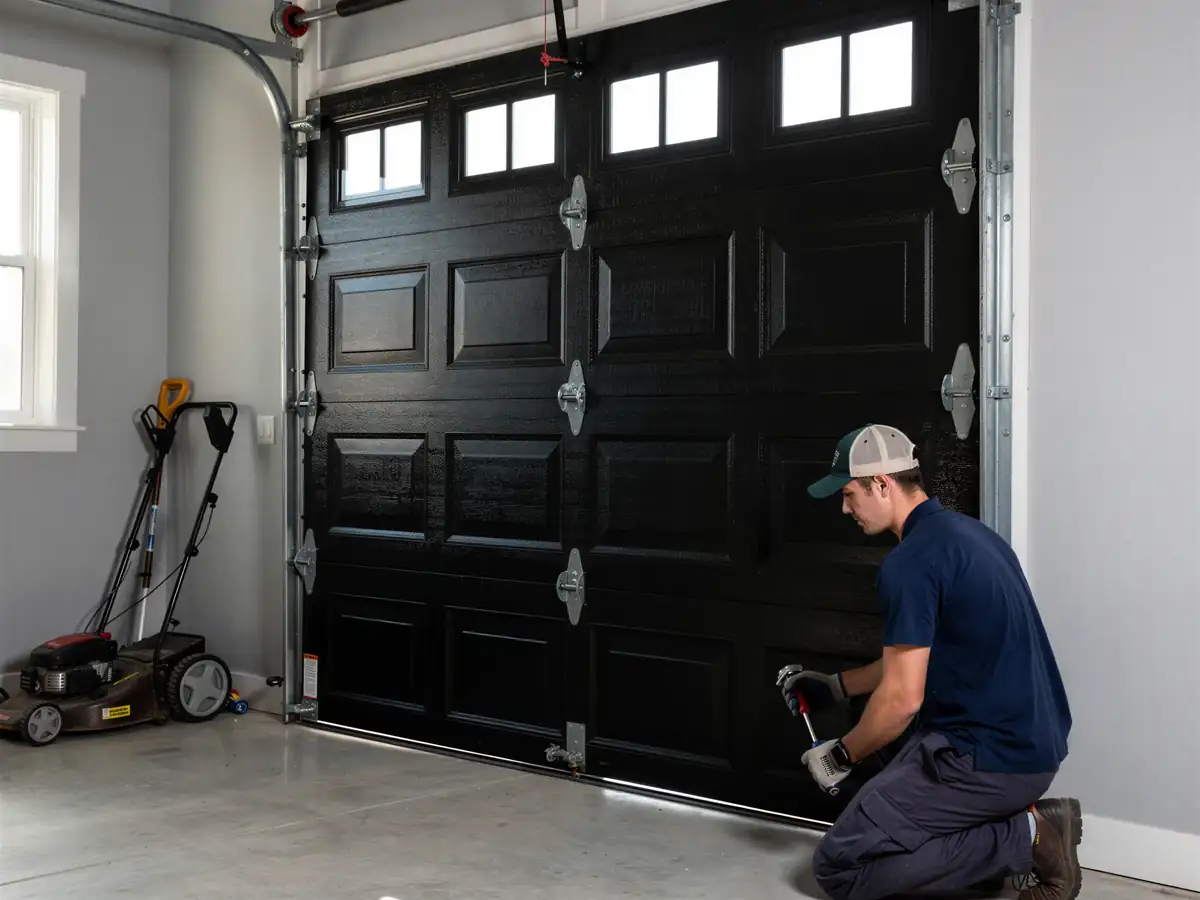
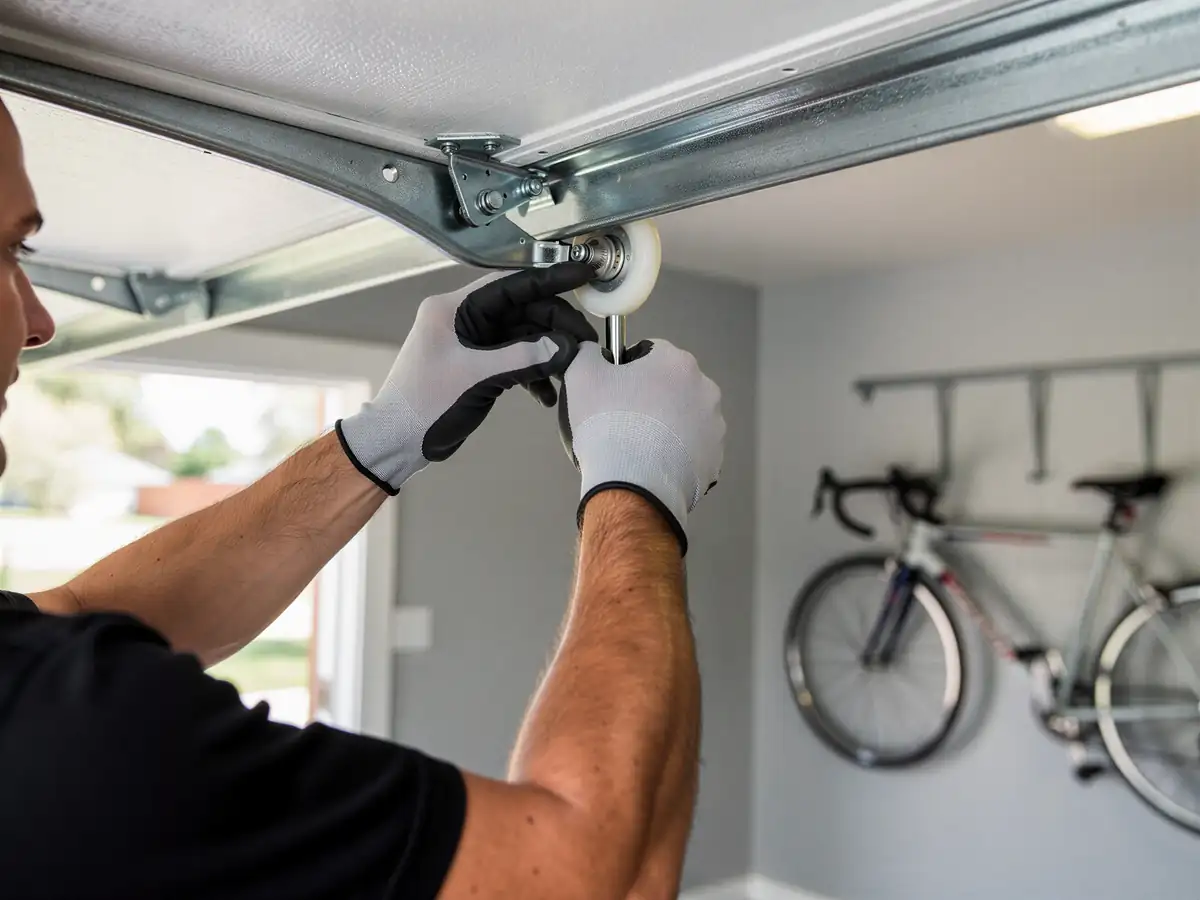
We pull the old rollers, check each track section for straightness, and replace the roller set with sealed nylon rollers on the stem - quieter running and no metal-on-metal wear going forward. If a bracket is loose or a track section is bent from the old rollers riding rough, we true it up or swap the bracket while we're in there, since a new roller in a bent track just wears unevenly again. We also check that the cable drums and bottom brackets weren't pulled out of square from a roller that's been binding, especially on doors that have been making noise longer than the owner admits to. This is a full panel-by-panel check of both tracks, not just a one-roller swap, because a mismatched set of rollers rarely stays quiet for long.
What Causes It Around Here
Cold, moderate winters mean the grease in old roller bearings thickens up and the metal contracts slightly every heating season, which accelerates wear on rollers that are already past their life. Combine that with a median household income here of $57,739 and 24,599 households, a lot of them in homes built when steel rollers were standard equipment, and you get a steady stream of original hardware finally giving out after decades of seasonal cold and heat. It's not a defect specific to any one builder - it's just what happens to steel-on-steel hardware left in place for 50 winters.