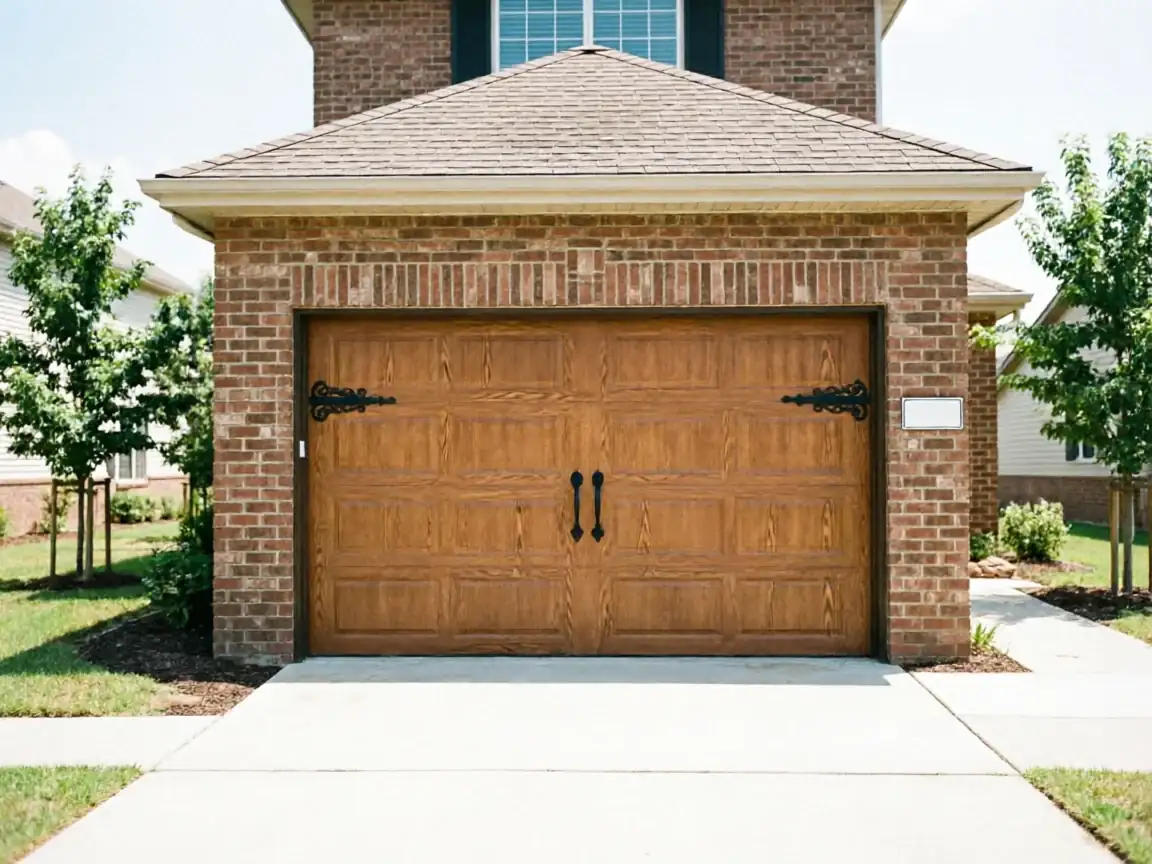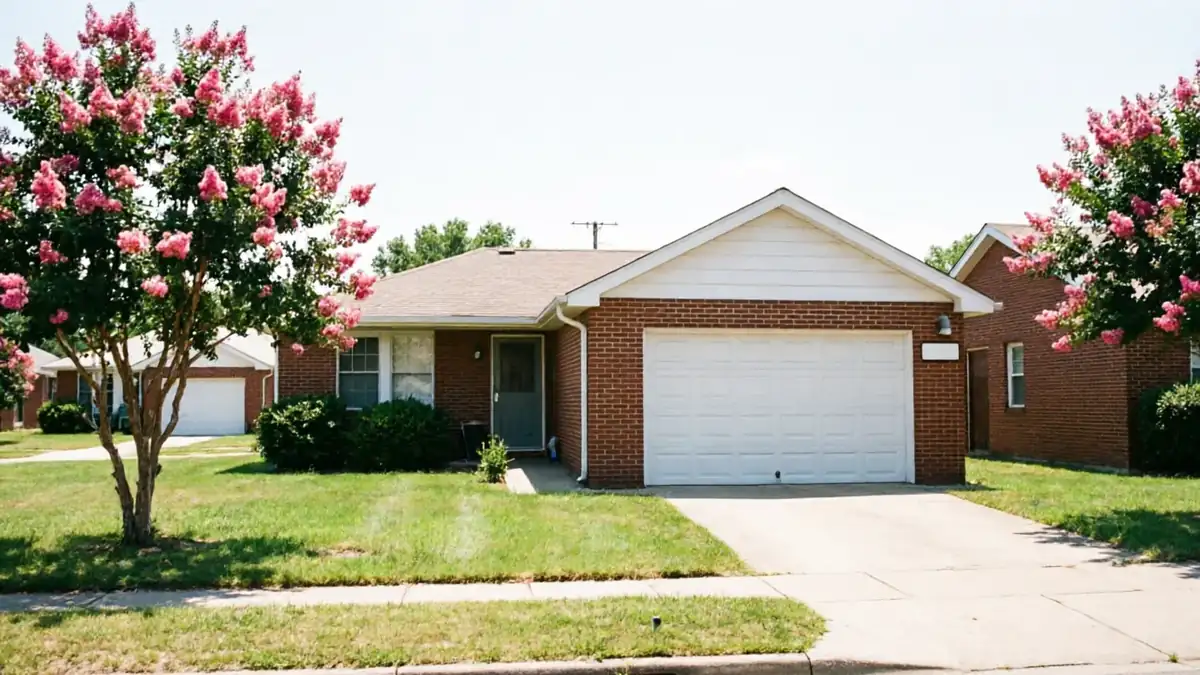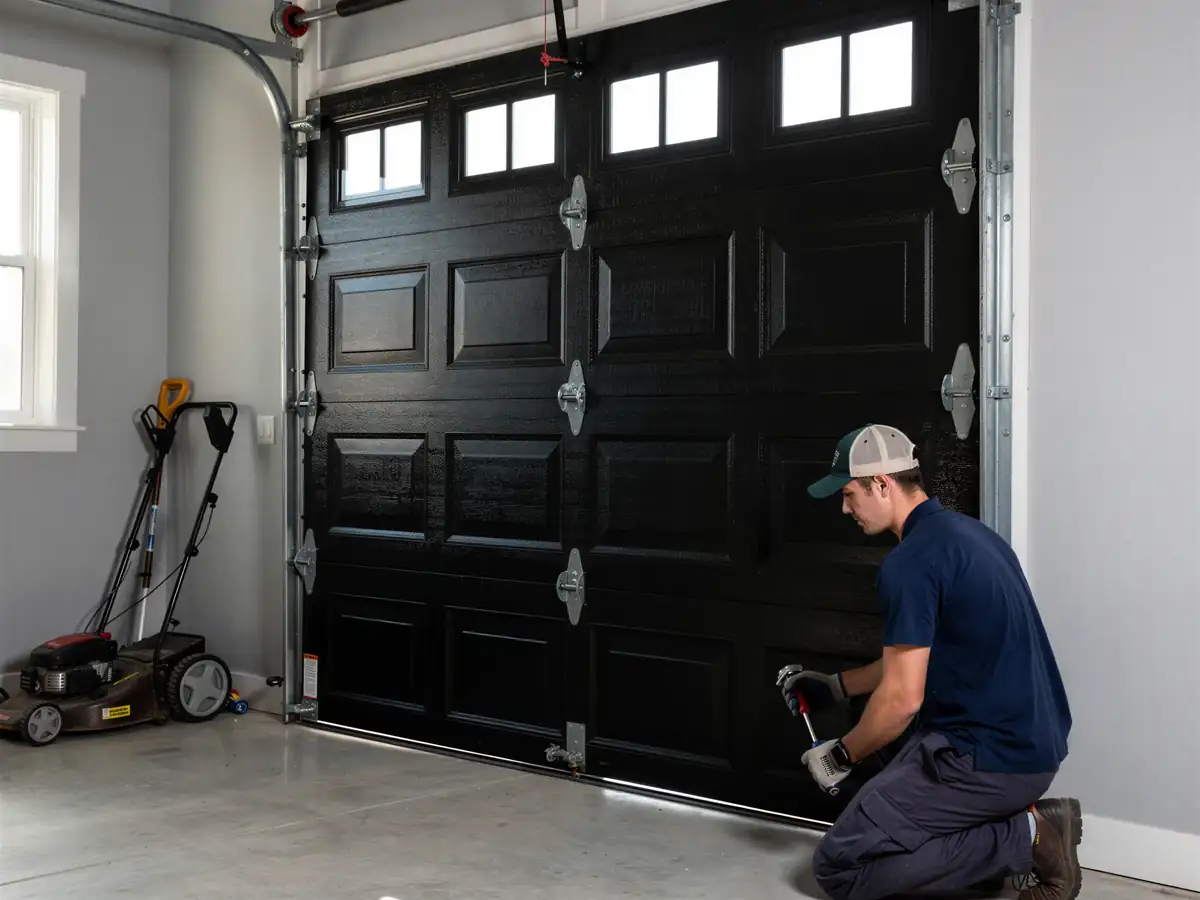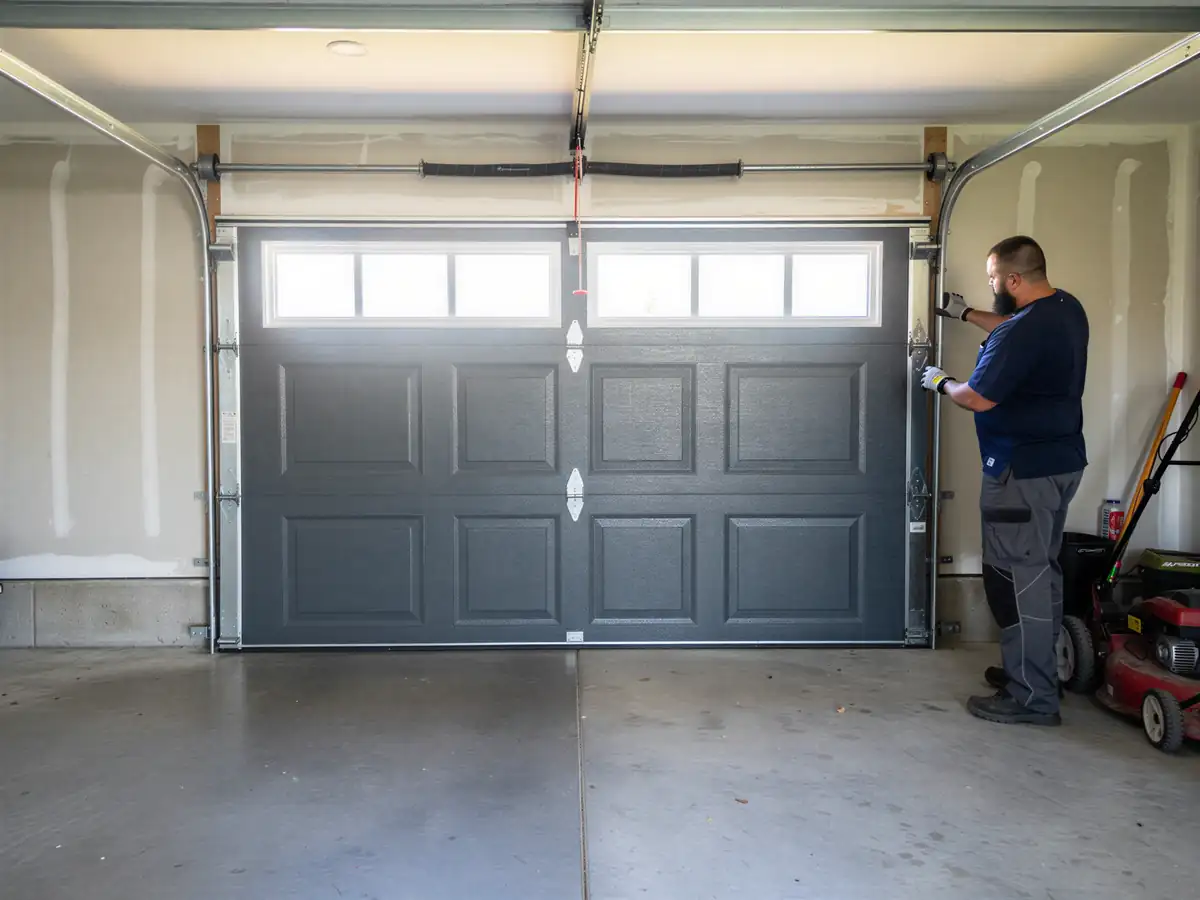
What You Are Seeing
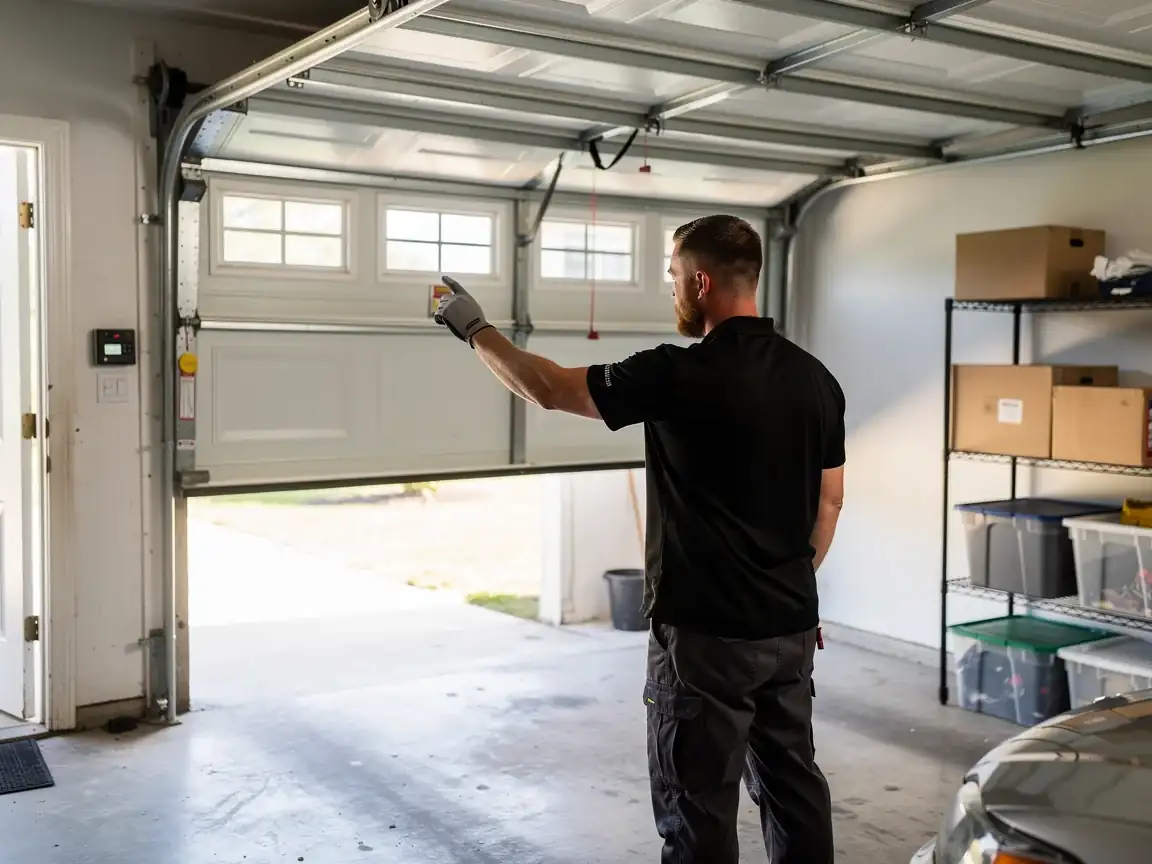
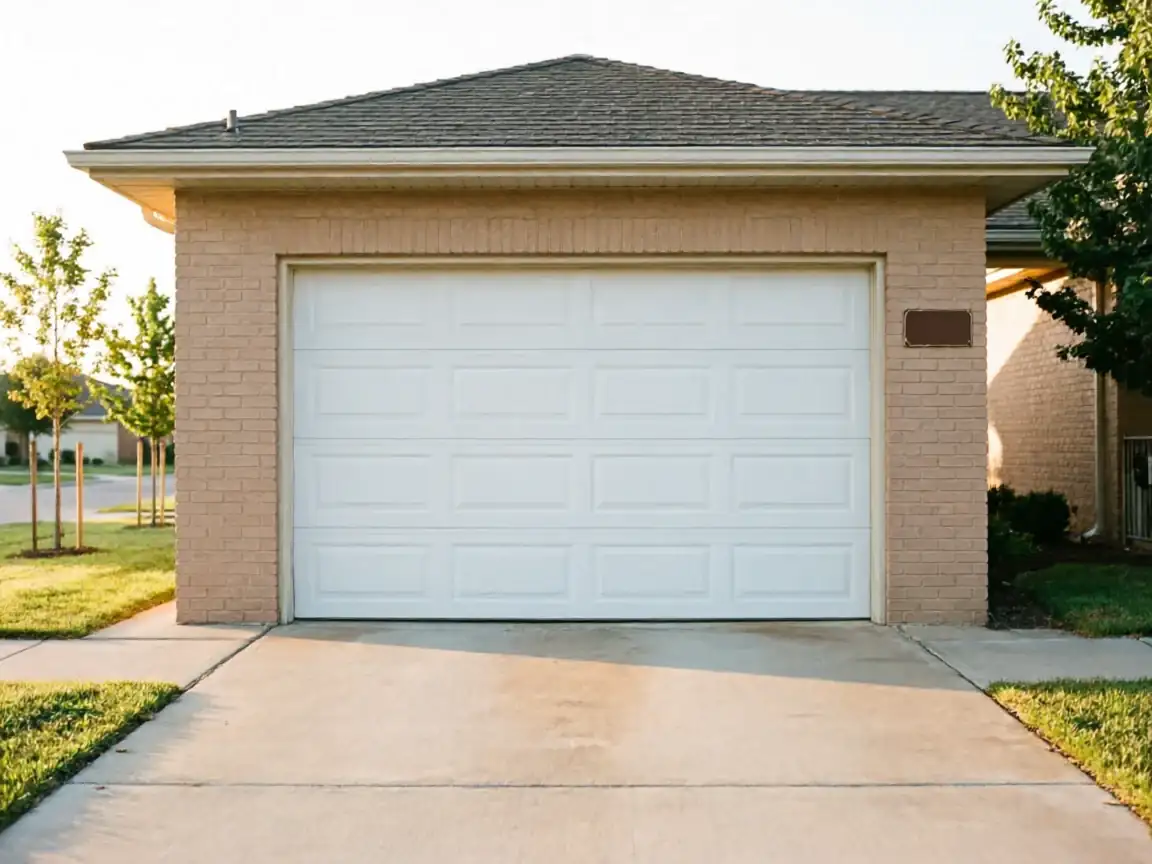
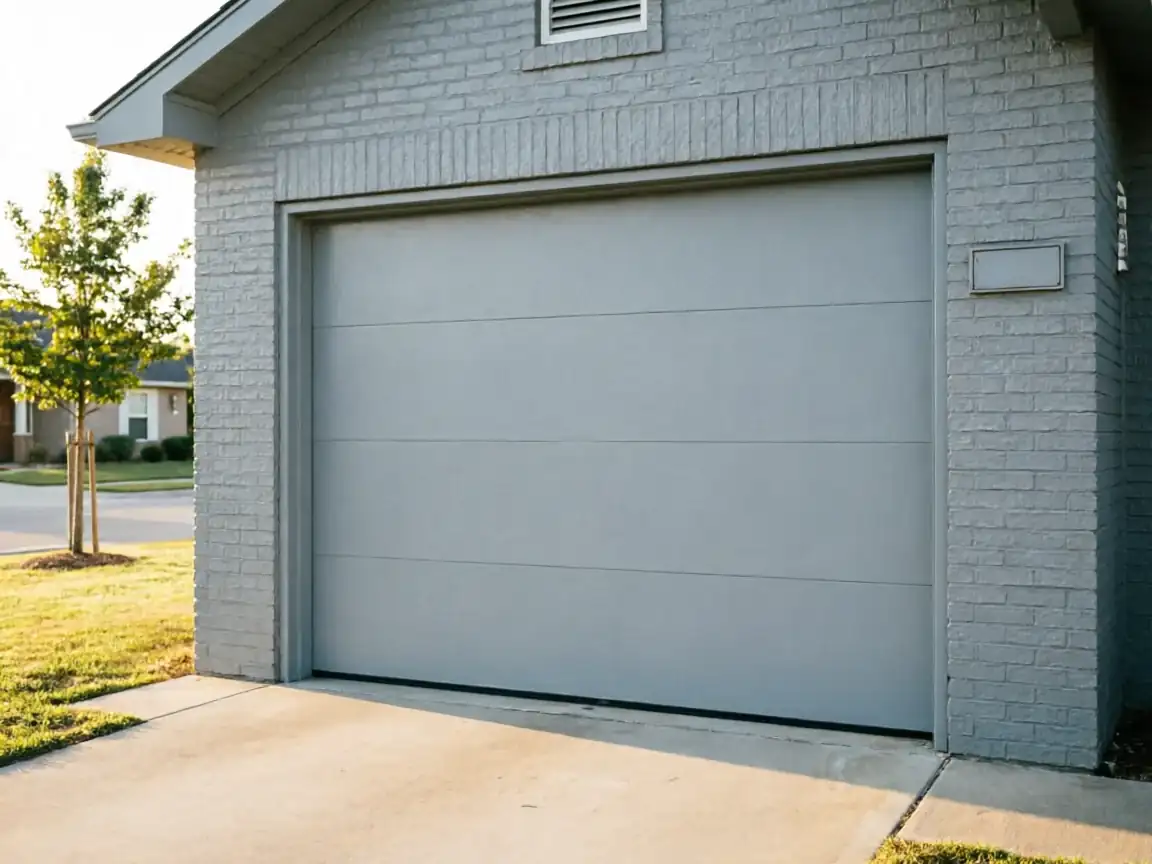
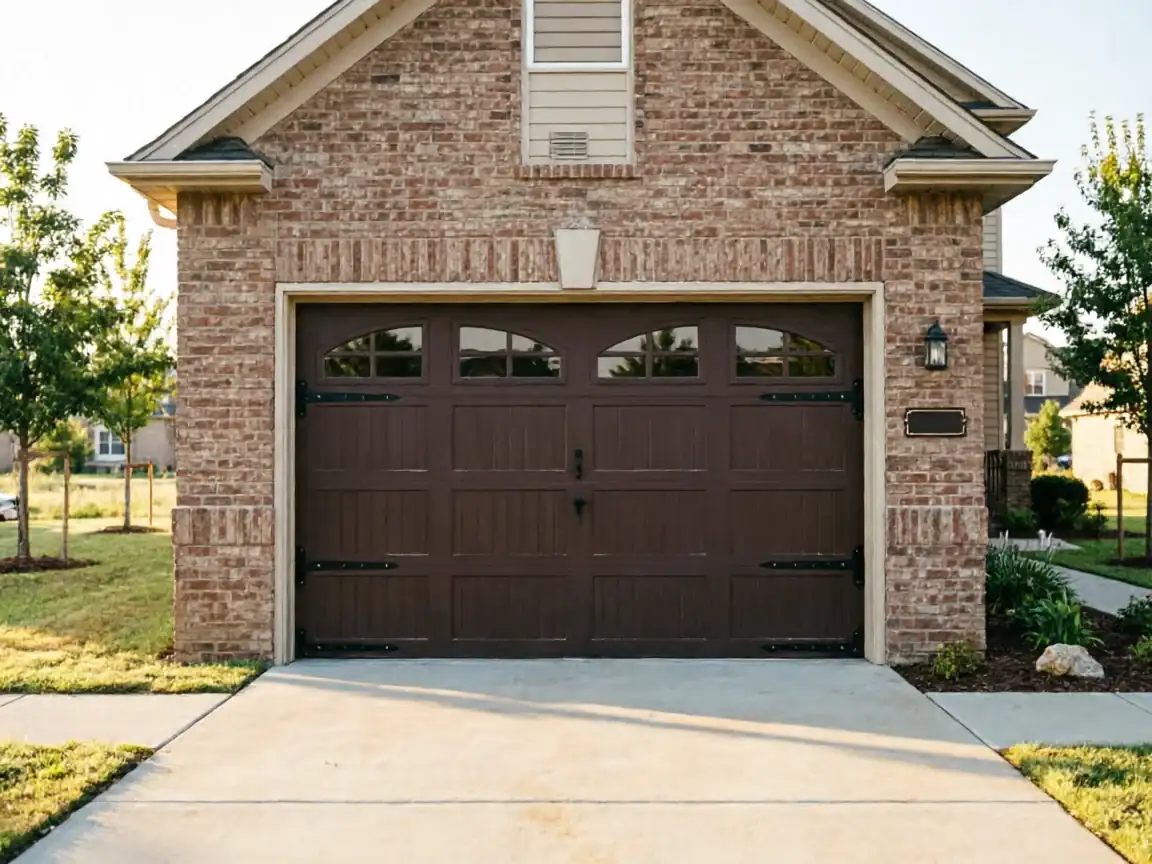
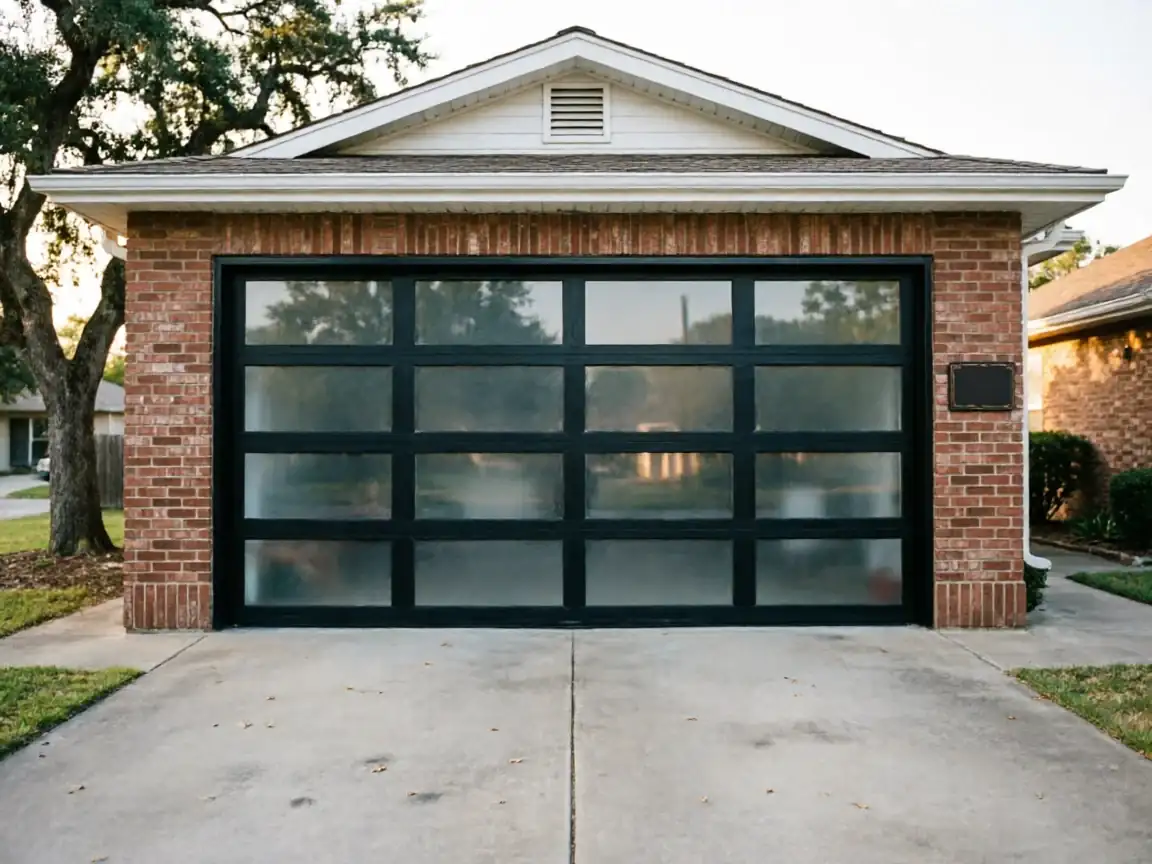
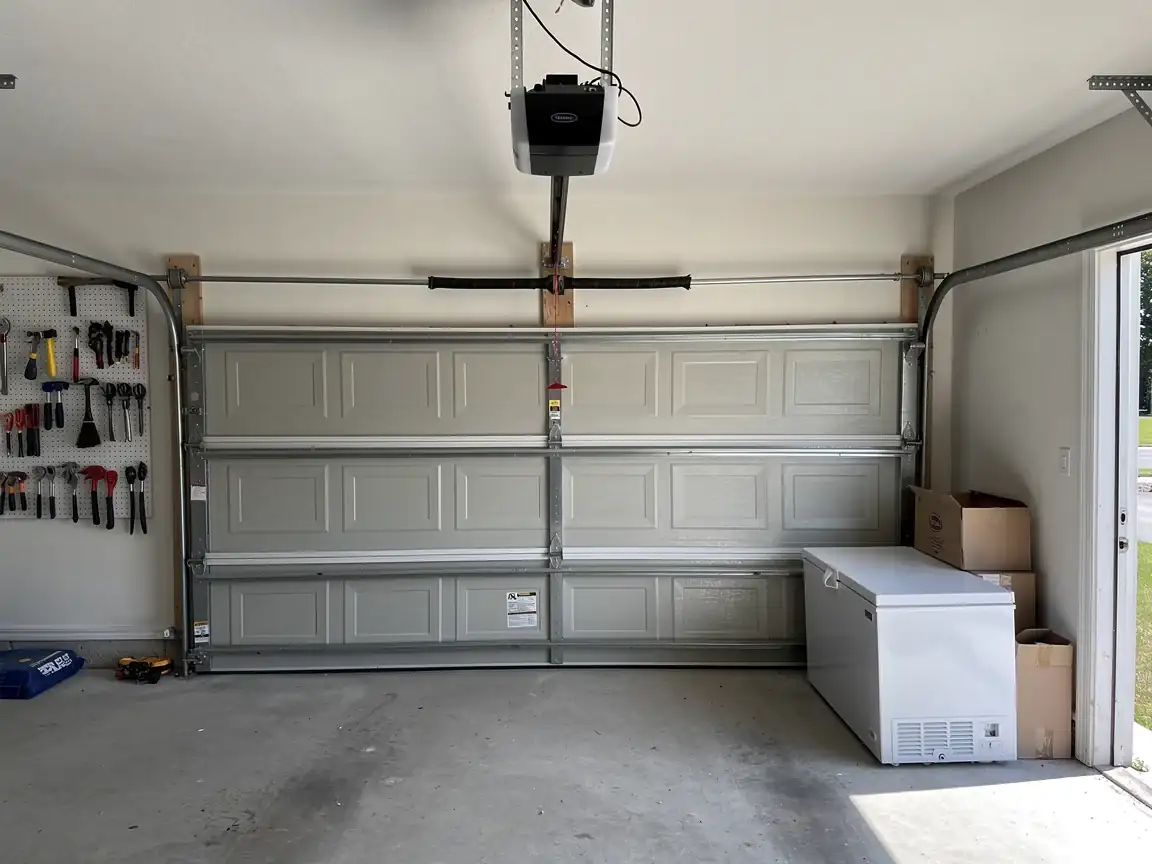
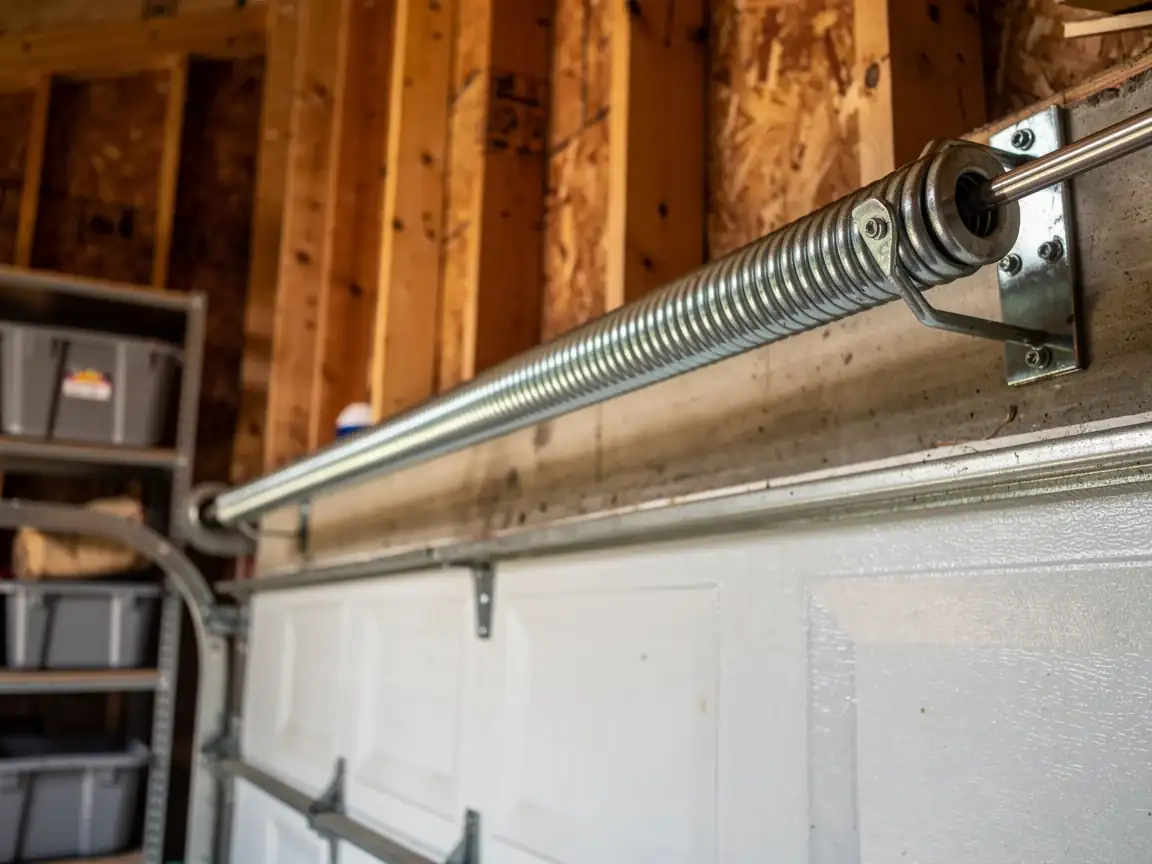
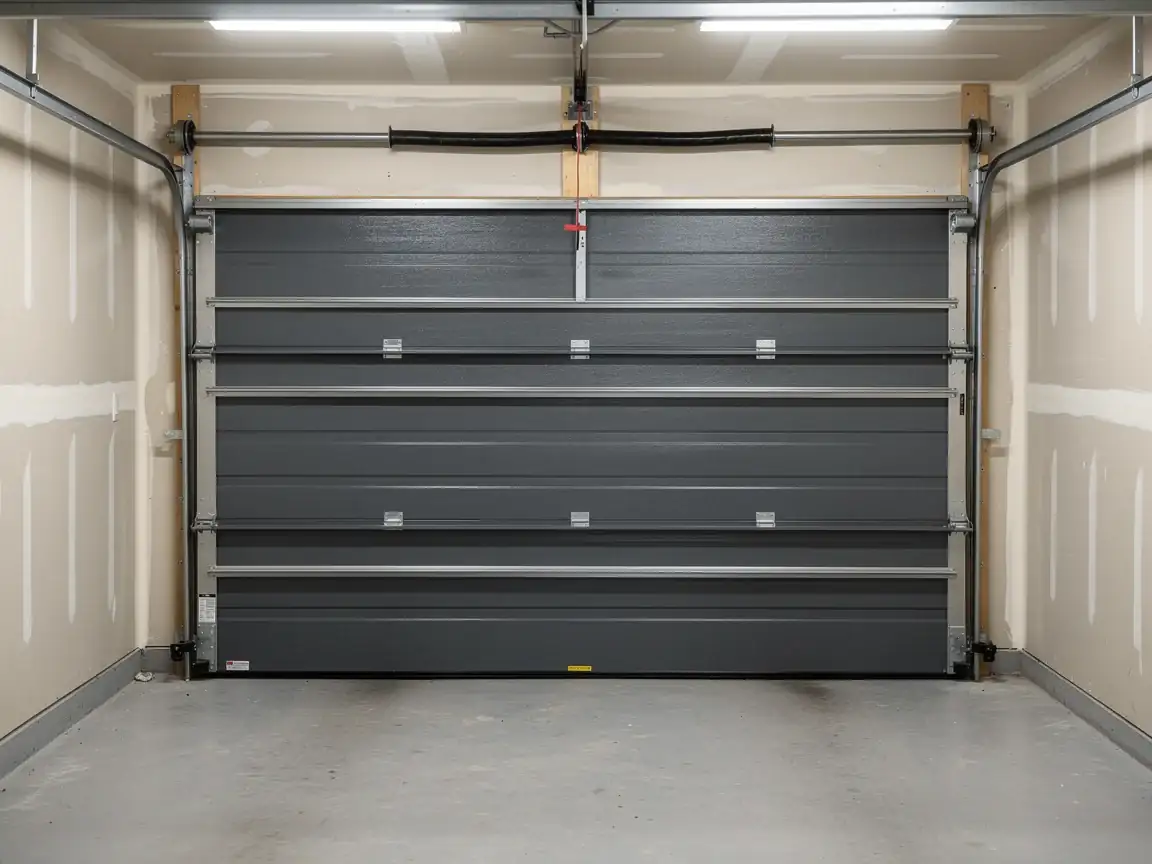
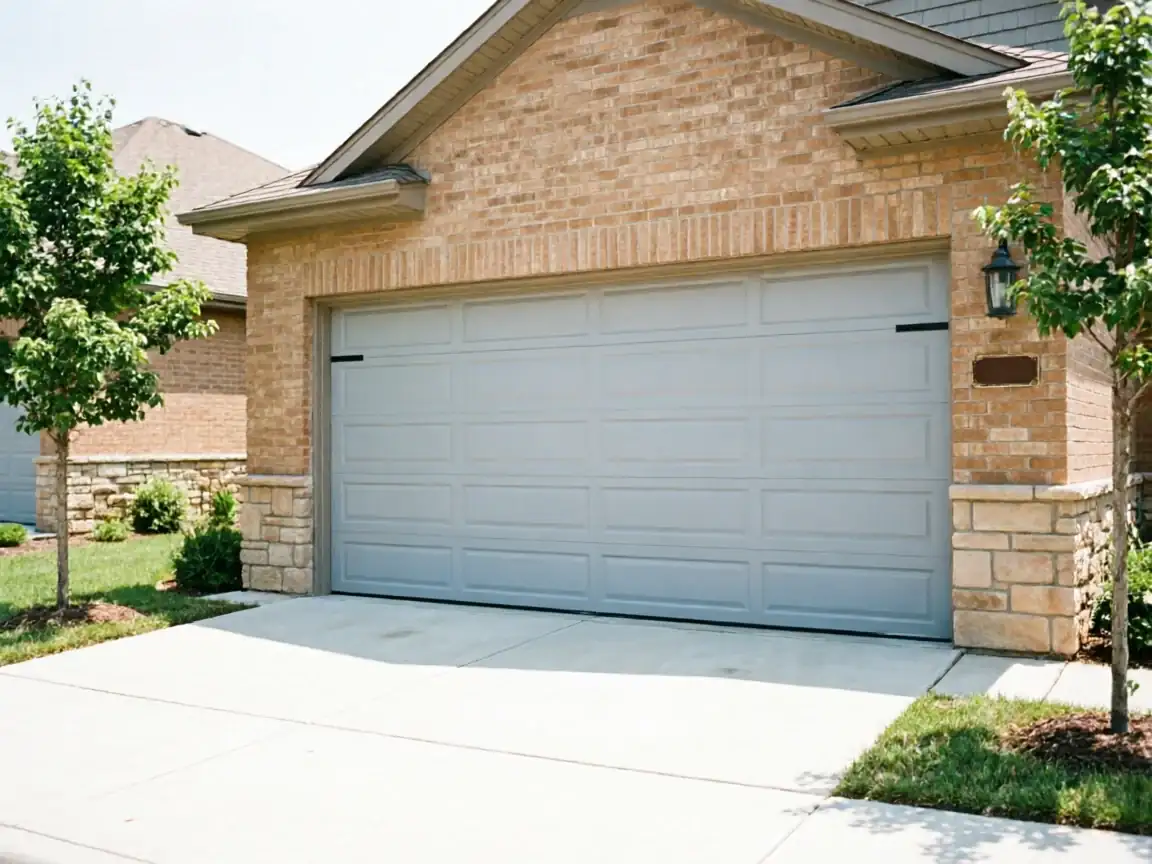
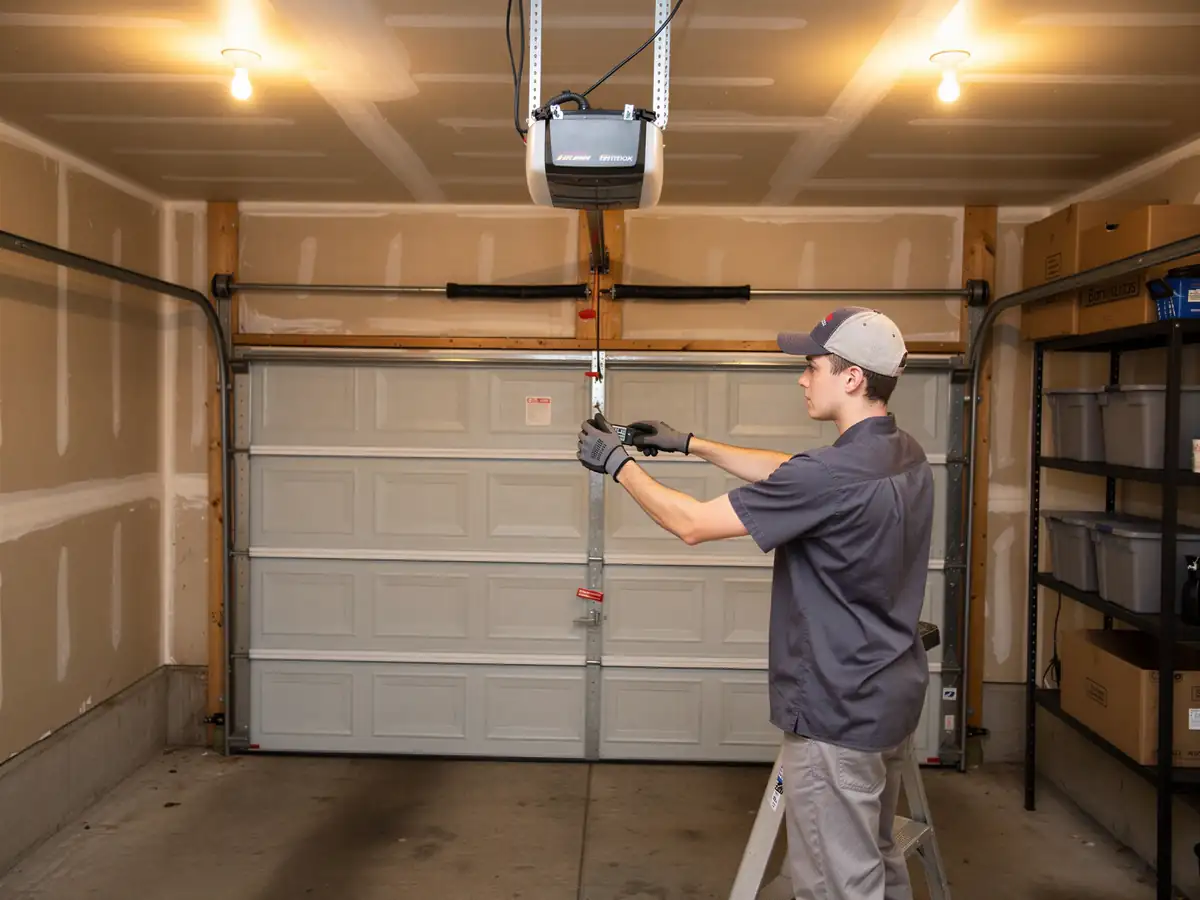
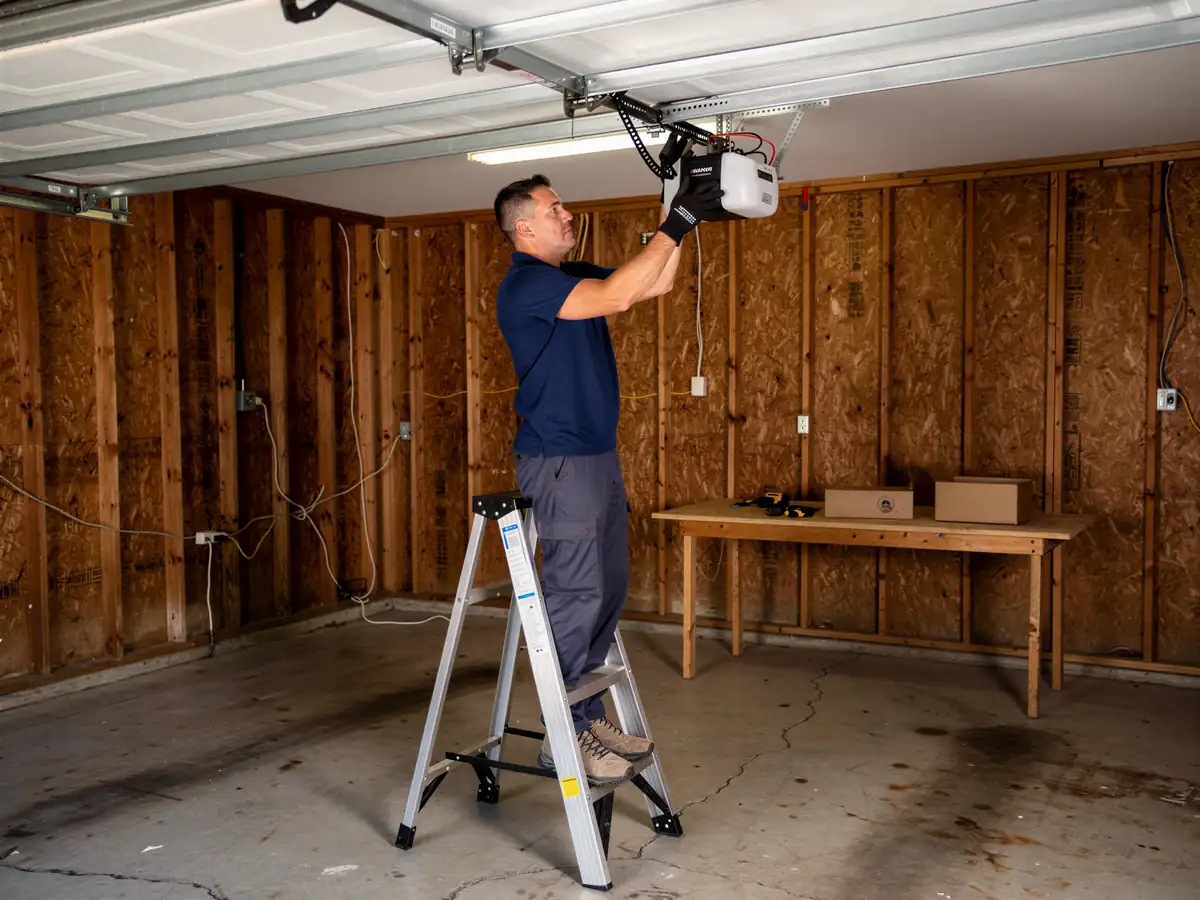
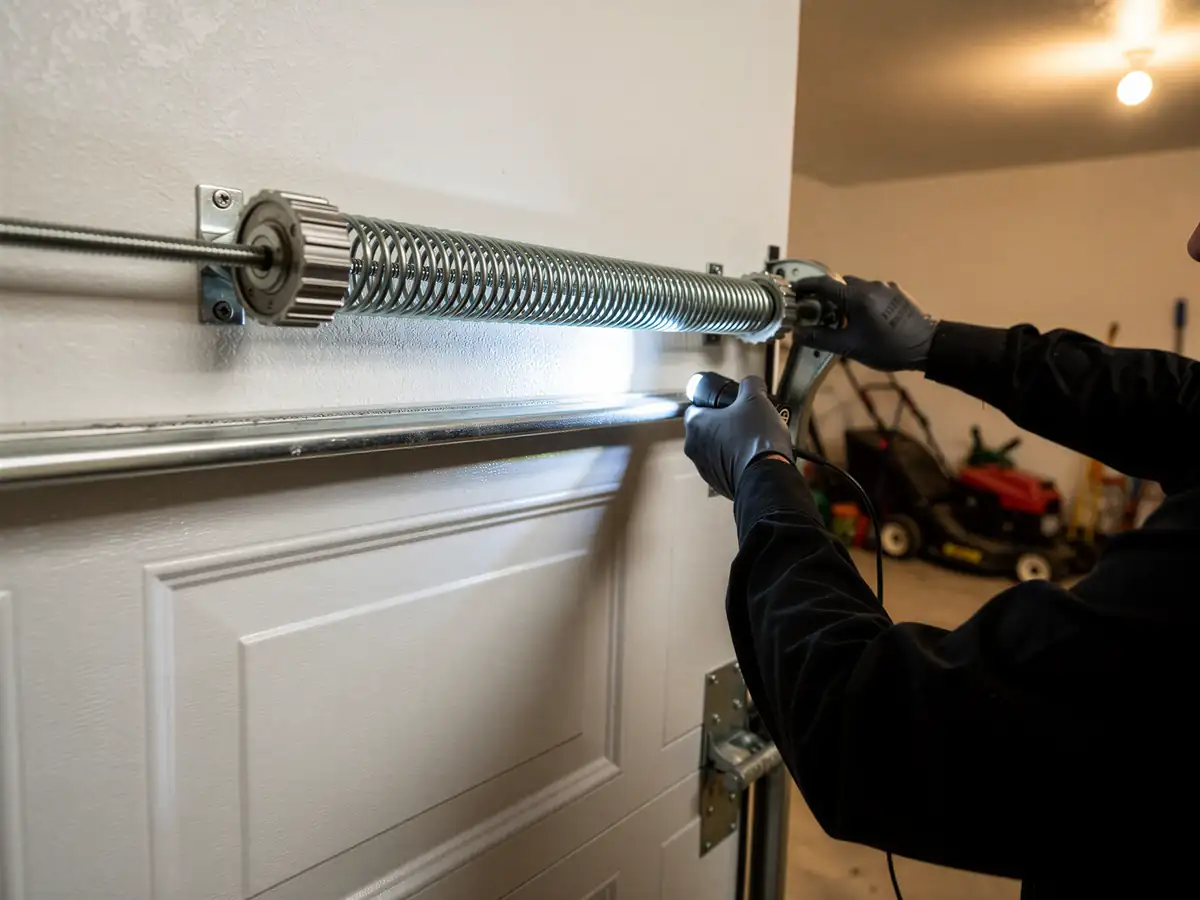
Most houses in Midwest City went up around 1974, and that era brought a particular kind of garage door with it: a steel sectional door, usually the 16-by-7 double-car size, hung on a torsion tube with two springs mounted on a center bracket above the opening rather than the single-spring extension setups seen on older homes. That hardware was standard through the 1970s and it's still what's up there on a lot of these garages, original or close to it. When a spring on one of these goes, the door doesn't ease open - it either won't budge past a few inches, or one side drops and the panel racks sideways in the track. If you see the door hanging crooked, hear a bang from the garage before any of this happens, or notice the opener straining and reversing, that's a spring, not the opener motor, and running the opener again will just load the drive gear until that fails too.
The Complications
This area sits in a cold-moderate climate band, which means the torsion springs go through real seasonal temperature swings - not extreme cold, but enough freeze-thaw cycling over a 50-year-old door to work-harden the steel faster than a spring in a milder climate would see. On the double doors common in 1970s Midwest City construction, a single broken spring on a two-spring system doesn't always show up as total failure right away; the door may still open on the opener's strength alone, masking the problem until the second spring gives out and the door drops hard. Bent track from a door that's been running unbalanced for weeks is the complication we see most - by the time the spring is obviously broken, the rollers have often already chewed up the track enough that spring replacement alone doesn't fix it.
What the Fix Involves
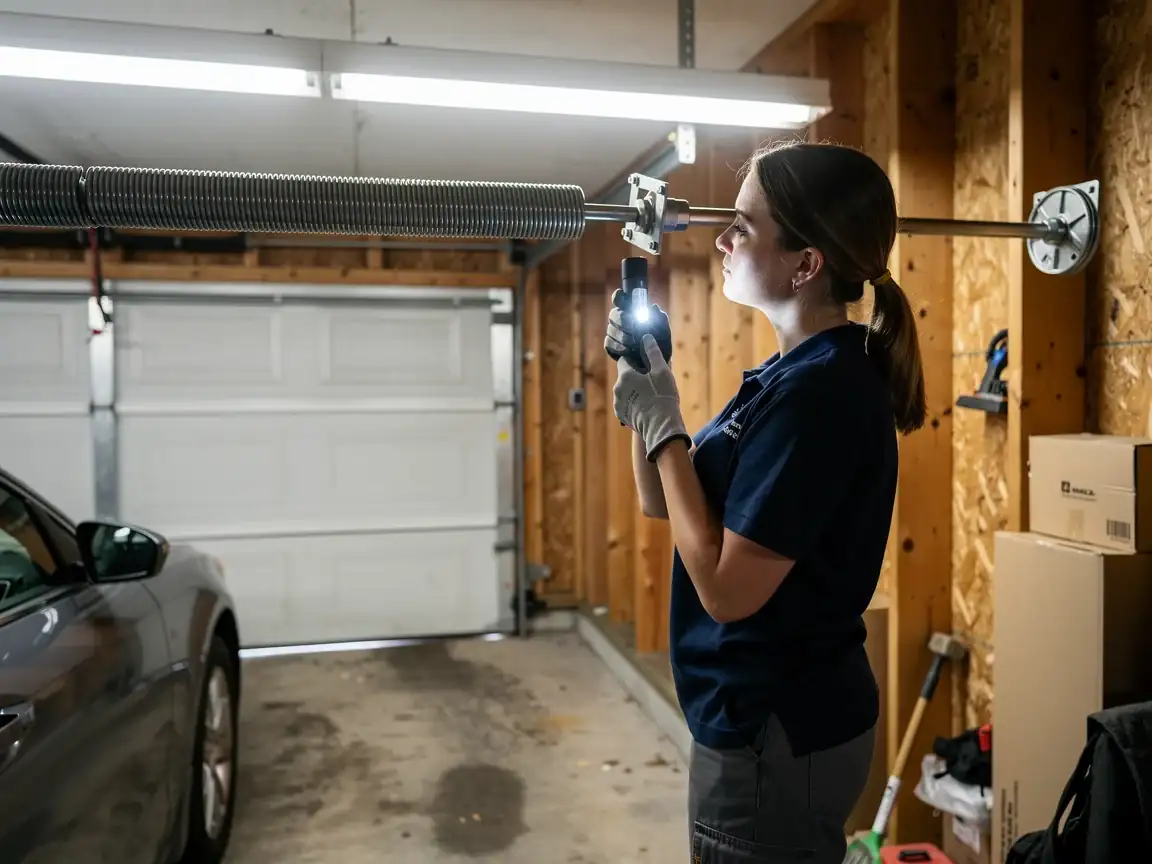
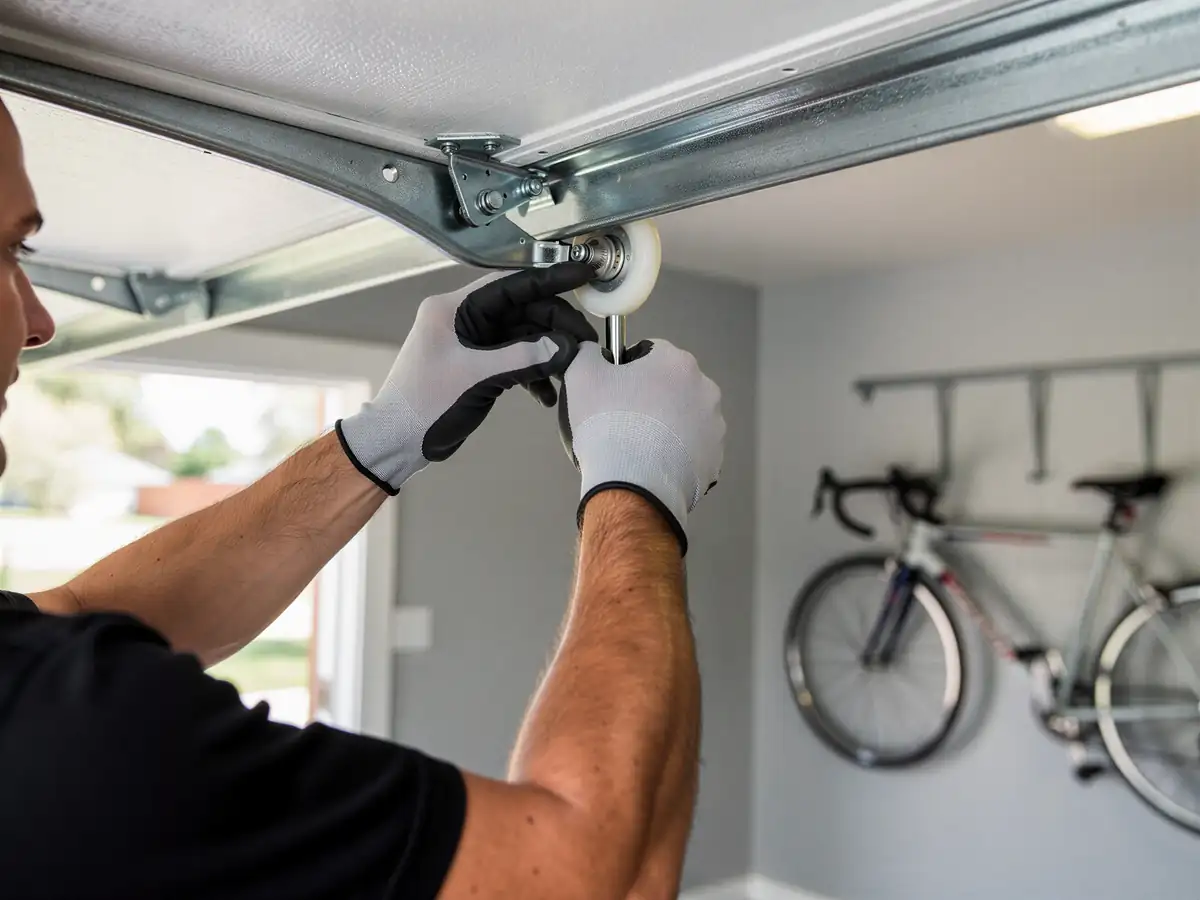
We match the replacement spring to the existing one on wire diameter, coil length, and wind direction - torsion springs aren't interchangeable by door size alone, and the wrong wind on a double door throws the whole balance off even if the door looks fine with the springs unwound. We check the center bearing plate and cable drums while the tension is off, since on a door this age the bearing's usually worn even if nobody's noticed yet. Cables get inspected for fraying at the drum, and if the track's been bent from months of running unbalanced, that gets straightened or replaced before the new springs go on - putting new springs on a bent track just repeats the failure. We won't quote a repair without opening the door up and looking at all of it; a spring swap on top of a bad bearing is a callback waiting to happen.
What Causes It Around Here
The 1974 median build year in Midwest City means a lot of these torsion springs have been winding and unwinding for decades past what manufacturers rate them for, and the cold-moderate climate here adds enough temperature cycling to speed that fatigue along faster than it would in a warmer region. Across the wider service area the housing runs from 1959 to 1999, but Midwest City's own stock clusters tighter around the mid-70s, which means the springs failing now are largely original or first-generation replacements, not recent installs. At a median household income here of about $57,739 - a bit under the broader area's $60,822 - we see more owners asking for a straight spring swap over a full door replacement, and for a door that's otherwise sound, that's usually the right call.